Chronicle Editor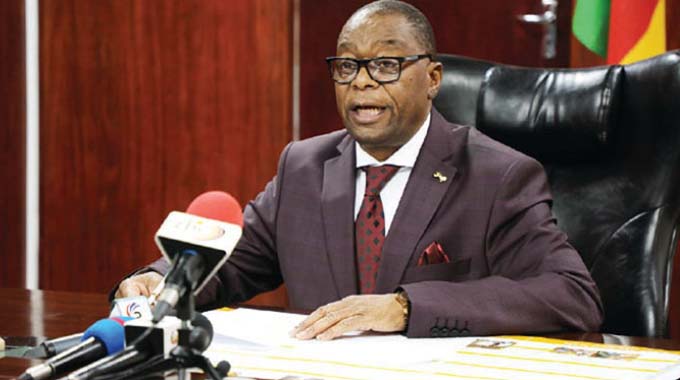
Robin Muchetu, Senior Reporter
THE health sector recorded commendable progress in 2024 towards the attainment of its Eleven Priority Outcomes as outlined in the National Development Strategy 1 (NDS1) and the National Health Strategy (NHS) 2021-2025.
While steady progress was reported, there are also various challenges that the Ministry of Health and Child Care said they will look into and ensure that they are resolved and provide essential service to the people.
Minister of Health and Child Care Dr Douglas Mombeshora outlined some of the wins saying there is improved reproductive, maternal, new-born, child and adolescent health and improved nutrition status.
“While the available population-based surveys have shown a decline in maternal mortality and stunting levels, more efforts are needed to further reduce maternal mortality to targeted levels and address the increasing newborn deaths as shown by reports from our various health care institutions. No woman should die while giving life,” said Dr Mombeshora.
On reduced morbidity and mortality due to communicable and Non-Communicable Diseases, the minister said resources have been allocated from the treasury towards cancer treatment machines.
“We continue to register successes in the fight against communicable diseases such as malaria, TB and HIV. In 2024 our reports showed a 76 percent decline in malaria and 69 percent decline in malaria deaths. We also successfully managed to control a protracted cholera outbreak which started in 2023.
“While cases have been reported in Kariba recently the situation is under control. We however, continue to advocate for the relevant sectors to address the major drivers particularly the water and sanitation issues in the country,” he said.
The minister further noted that in 2024 most of the health care institutions received equipment courtesy of the Government that were further complemented by development partners.
“The Government has identified an investor to support the construction of state-of-the-art NMS hospitals using new technologies. To date, several such institutions have been constructed, and six district hospitals are in the pipeline, and this will include one to be constructed in Harare to decongest the central hospital and improve the quality of care at our Quaternary Institutions,” he added.

To improve access to Primary, Secondary, Tertiary, Quaternary, and Quinary Care Health Services, the ministry has also developed an Essential Health Service Package to improve access to various levels of health services.
“Our focus in 2025 is to improve service delivery at all levels; the medicines must be there, the adequate staff, diagnostics and all that is needed to offer the service. I call upon all our institutions to be innovative in running the health institutions, let’s maximise on the few resources that we are getting, let’s reduce wastages and always be effective and efficient,” said Dr Mombeshora.
The Government also has ventured into bilateral arrangements with certain countries, though survey reports have shown that outside TB/HIV and malaria medicines, most institutions have sub-optimal levels of essential medicines.
“Our priority is to revamp the financing for medicine in our system. I met with the Natpharm Board and management to receive their reports. We agreed on a number of strategies aimed at ensuring increased availability of medicines. Implementation of these strategies calls for all our support,” said Dr Mombeshora.
Looking at the outcome for increasing Domestic Funding for Health Services, the Ministry of Health said it has consistently been among the top five priority ministries in budget allocations.
“Innovative health financing initiatives, such as the National Aids Trust Fund, the Sugar in Drink Tax, and the Airtime Levy, have been implemented. We are also closer than ever to launching a national health insurance scheme, with draft principles currently with the Attorney General for drafting.
“The 2025 budget announcement made recently has shown an increase in the allocation towards health of the total Government budget from 9,8 percent in 2024 to 13,01 percent in 2025 a step in the right direction towards the Abuja Target,” added Dr Mombeshora.
The Abuja Declaration is a commitment made by African Union Governments in 2001 to allocate at least 15 percent of their budgets to health care.
The Ministry of Health and Child Care, in collaboration with the Health Service Commission, is currently undertaking a restructuring exercise to create an efficient and purpose-fit structure. This will ensure better health outcomes for our citizens.
@NyembeziMu



 Online Reporter