Online Reporter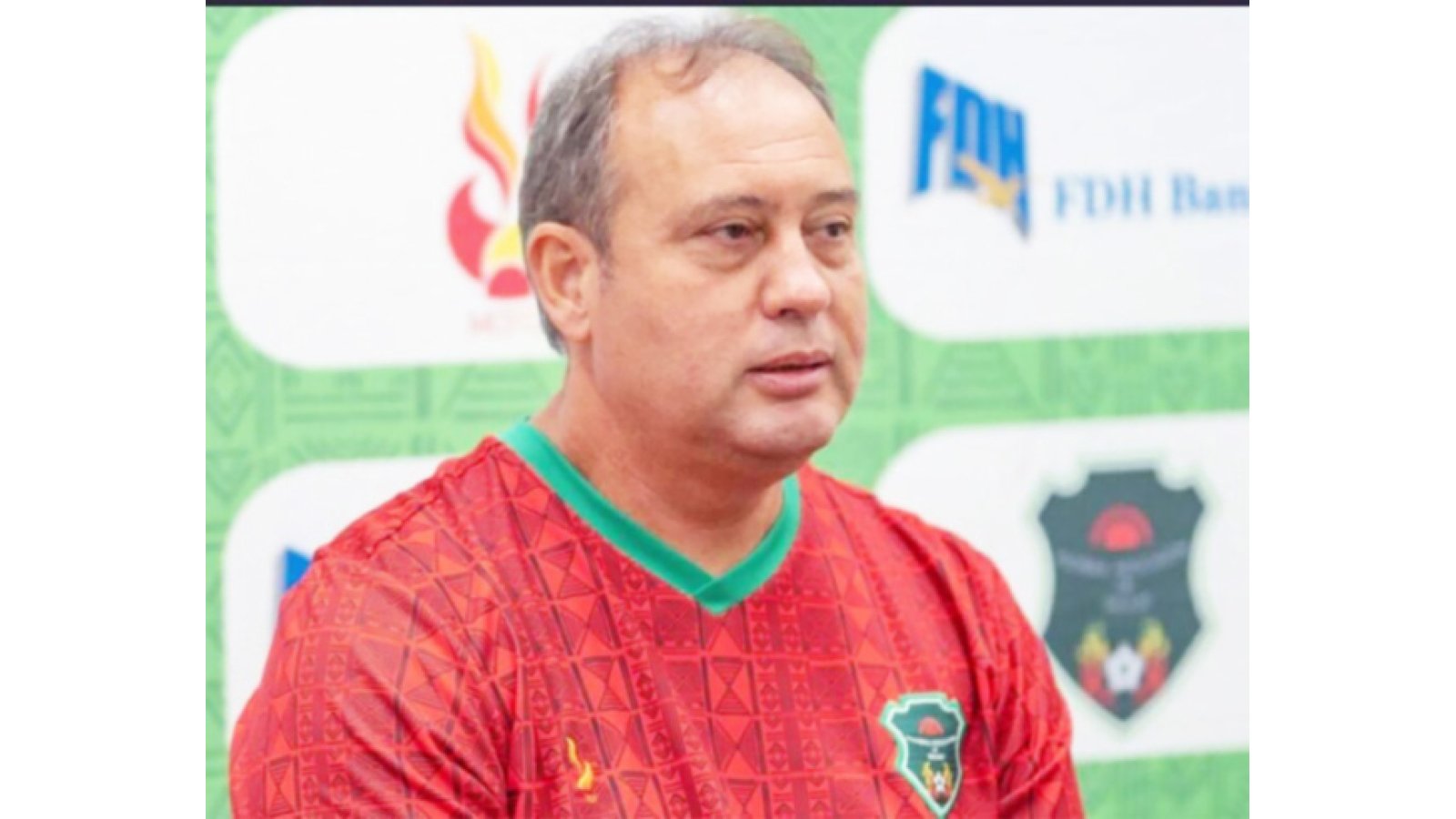
Howard Musonza-Group Sports Editor Zimpapers
WELCOME to Helicopter Football, fast, noisy, and rarely sure where it’s landing.
You have to wonder what those who hire our national coaches really think when they make some of these decisions.
The appointment of Romanian coach Mario “Marian” Marinica has triggered a storm online, and rightly so.
Most Zimbabweans are not celebrating this one. The mood feels uneasy. And who could blame them?
The announcement was slipped out at 10:35pm, a quiet, almost guilty press release posted long after bedtime. Why the secrecy?
What was ZIFA afraid of by dropping the news under the cover of darkness?
And yet the irony runs deep. Marinica arrives carrying the very nickname that now headlines this story, Helicopter Football, a tag first coined in Liberia to describe his brand of play.
Fans there said his teams flew at full speed, always whirring, never pausing and often circling without direction.
He didn’t mind the label.
- Related story: https://www.heraldonline.co.zw/breaking-marinica-magic-begins-zifa-unveils-new-warriors-boss/
“I’m not concerned about the style of play. I’m only focused on winning matches,” Mario once told reporters before a qualifier against Togo.
It is that same stubborn streak that has now landed him in Harare.
Because in Zimbabwe, the new unwritten rule seems to be, beat the Warriors, and you’ll get the job.
Marinica beat Zimbabwe at the 2021 Africa Cup of Nations when his Malawi Flames side came from behind to win 2–1.
Striker Gabadinho Mhango’s double that night sent the Warriors packing and, apparently, earned their coach a future contract.
Now, three years later, the man who masterminded that defeat is the one expected to inspire the revival.
It seems a pattern.
Marinica’s Warriors’ predecessor, Michael Nees, once led Seychelles to a 2–1 shock win over Zimbabwe in 2003. Two decades later, he too landed the Warriors post.
You almost start to think the real qualification test for ZIFA’s short-list is to have once humbled Zimbabwe.
When ZIFA began this recruitment drive, they promised the highest standards, CAF or UEFA Pro Licence, at least five years managing an African national team. It sounded serious, ambitious, even professional.
Then the short-list emerged. Antonio Conceicao, who took Cameroon to third at AFCON 2021; Stuart Baxter, who guided South Africa to the last 16; and a few others with proven resumes.
And yet the final pick was Marinica, a man fired by Malawi for poor results and chased out of Liberia for uninspiring football.
So what happened to the grand standard?
Marinica’s football has always divided opinion. He calls it “fast and very fast football.” His critics call it chaos. In Liberia, they branded it helicopter football, spinning furiously, making noise, but barely moving forward.
Under his watch, Liberia finished bottom of their AFCON qualifying group, winning once in six matches. Former internationals said his tactics were too direct and stifled creativity. The fans agreed, flooding local radio with calls for his dismissal.
In Malawi, it wasn’t much better. The Football Association of Malawi (FAM) declined to renew his deal after back-to-back losses to Egypt, 2–1 in Cairo and 4–0 in Lilongwe, despite polite press releases thanking him for “historic joy.” Supporters marched outside the stadium with placards demanding change.
He remains proud of guiding Malawi to the AFCON 2021 round of 16, but results since then have offered little comfort.
Marinica’s life reads like a coaching odyssey. From Romania to England, India to Ghana and Tanzania to Liberia, he’s been everywhere and worked with everyone.
He once coached youth sides at Arsenal and Crystal Palace, managed non-league Haringey Borough, and even provided technical analysis for Paraguay at the 2006 World Cup.
He’s intelligent and cultured, no doubt. But football isn’t measured in passport stamps. His methods travel easily; his results, less so.
He once even claimed that his philosophy of “fast and very fast football” helped Argentina win the World Cup, citing how most goals in Qatar came from transitions rather than set pieces. It’s an imaginative theory, one that perhaps explains why his teams often look like they’re trying to outrun thought itself.
You can understand why fans are sceptical. For all the talk about “modern philosophies” and “long-term vision,” ZIFA seems to have chosen the cheapest available coach with a passable resume.
This isn’t a swipe at Marinica’s ambition. It’s a challenge to the decision-makers.
Why spend months hyping up heavyweights like Conceicao or Baxter, then settle for someone who just lost his last job?
And if this is part of a plan, why announce it in the shadows? Why not face the nation in daylight and explain the vision?
Let’s be honest, AFCON 2025 isn’t a warm-up tour. Zimbabwe open their Group B campaign against giants Egypt in Agadir, face Angola in Marrakech, then close against South Africa in Casablanca.
That is a group with no room for spin.
If helicopter football does not find its flight path quickly, it will crash before the 2025 Christmas festivities.
Every Warriors coach inherits chaos, but this one begins mid-storm.
Marinica’s challenge is not just to win. It is to prove that this appointment was more than convenience dressed as conviction.
He takes charge of one of Zimbabwe’s most gifted squads. Munetsi, Zemura, Chirewa, Garan’anga and Hadebe.
Players who already live in structured football worlds. They don’t need another experiment. They need leadership, belief, and clarity.
ZIFA insist this was about “experience and vision.” The question is, whose vision?
Because right now, helicopter football feels like a perfect metaphor for where the Zimbabwean game stands, plenty of motion, lots of noise, but still hovering in the same place.
Until ZIFA stop spinning and starts steering, even the best pilot will not take the Warriors anywhere new.