Online Reporter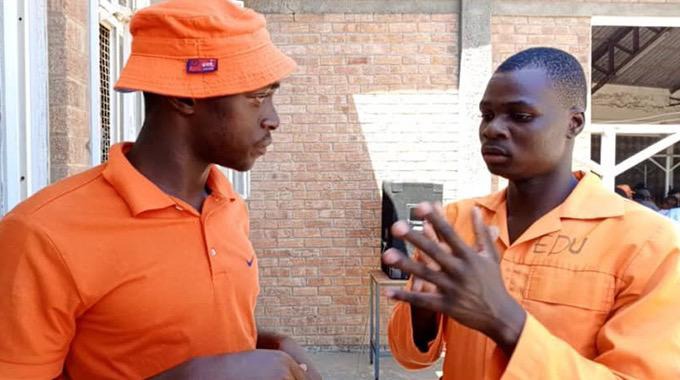
Gibson Mhaka, Senior Features Writer
WORLD Hearing Day went unnoticed by Petros Mnyanyiwa (20), an inmate with speech and hearing impairments at Khami Maximum Prison on the outskirts of Bulawayo.
Mnyanyiwa is currently serving an effective 10-year jail sentence after being convicted of raping an 18-year-old girl he says was his girlfriend.
His isolation within the prison walls, coupled with his communication challenges meant he was unaware of this global event, marked every 3 March, which aims to raise awareness about hearing loss, the importance of ear and hearing care as well as promoting accessibility for individuals with hearing impairments.
The event, celebrated under the theme, “Changing mindsets: Empower yourself to make ear and hearing care a reality for all!” is also aimed at providing an opportunity to reflect on the challenges faced by those with hearing disabilities and to celebrate the progress being made in addressing them.
Speaking during the Zimbabwe Prisons and Correctional Services (ZPCS) Family Week recently, Mnyanyiwa, through his cell-mate Sipho Ncube (24), who has taken time to learn sign language from Mnyanyiwa and is now his interpreter, believes the 10-year sentence he was slapped with over a rape charge in 2023 seems to be a travesty of justice, as he feels there was no adequate interpretation availed during trial.
“I come from Gokwe District and the matter that led me to incarceration started when I lost my relatives who were my guardians.
“I was arrested and taken to court where I did not get an interpreter to explain to me the details of my case properly. I did not understand most of the things that transpired during my trial up until I was convicted.
“The girl in question was my girlfriend, and we were in love. However, what I heard is that the State based its argument on how I could be in a relationship with someone who had no hearing or speech impairments yet I had those impairments.
“I was then convicted and sentenced to 15 years, five of which were conditionally suspended leaving an effective 10-year prison sentence that I am currently serving and will be out in 2034,” said Mnyanyiwa through his interpreter Ncube.
He said communication barriers have deprived him of a rare opportunity to reconnect with his loved ones and share moments of joy and hope for reconciliation.
He not only longs to communicate with his relatives who are in South Africa, but also wants to benefit from prison rehabilitation programmes, receive counselling and communicate his requests to both prison wardens and fellow inmates.
Mnyanyiwa’s situation is a practical illustration of the challenges faced by individuals with speech and hearing impairments within Zimbabwe’s justice system.
It is a stark and deeply troubling example of the challenges experienced by hearing and speech-impaired individuals.
Mnyanyiwa’s plight, which extends beyond the courtroom, paints a vivid picture of the profound social and emotional deprivation faced by hearing and speech-impaired prisoners.
This highlights the urgent need for comprehensive sign language services within correctional facilities, not only to facilitate basic communication but to ensure access to rehabilitation programmes, counselling and essential support.
Although research indicates that the Zimbabwean Constitution guarantees the legal right to language access during court proceedings for litigants and witnesses, investigations revealed that sign language accessibility for hearing-impaired individuals within the justice system, particularly in prisons, remains severely limited.
For incarcerated individuals, advocacy efforts are further diminished by the stigma surrounding prisoners and the inherent challenges of reforming prison processes and policies.
Consequently, many organisations lack the necessary time and resources to drive the systemic changes required within the prison context. Indeed, prisons are among the most challenging public institutions to penetrate and transform.
For prisoners with hearing impairments, being hearing impaired in prison is akin to serving a double sentence. Beyond the deprivation of liberty, they face a systemic denial of basic rights, including access to legal representation, medical care, and rehabilitation programmes.
This further isolates them from justice and support, highlighting the urgent need for focused intervention within these challenging environments.
To address their plight and protect the rights of persons with disabilities (PWDs), the international community drafted the Convention on the Rights of Persons with Disabilities. Zimbabwe is a state party to the CRPD, having deposited instruments of ratification thereof in 2013, the same year the country adopted a new Constitution.
The World Deaf Federation estimates that about 80 000 people in Zimbabwe suffer from hearing impairments and the justice system, health care and economic development have been inaccessible to speech and hearing-impaired people in the country.
According to Mr Douglas Mapeta, founder and chairman of Sunrise Sign Language Academy, the lack of sign language interpreters in prisons poses significant challenges for deaf and hard-of-hearing inmates.
“Without sign language interpreters, deaf and hard-of-hearing inmates face significant barriers. They may struggle to communicate with prison staff, lawyers and even their own families.
“This communication breakdown leads to limited access to vital services such as counselling, education and medical care.
“Moreover, the absence of proper communication increases the risk of miscommunication, potentially resulting in misunderstandings, conflicts and even false confessions.
“Ultimately, the lack of sign language interpreters can lead to the denial of basic rights, including the right to a fair trial, the right to education and the right to healthcare,” said Mr Mapeta.
He explained that the lack of communication and social interaction can lead to increased isolation, loneliness and mental health concerns for deaf and hard-of-hearing inmates.
“Without access to interpreters, deaf and hard-of-hearing inmates also face difficulties participating in rehabilitation programmes, which can negatively impact their reintegration into society upon release.
“Therefore, it is essential to address these challenges and ensure that deaf and hard-of-hearing inmates have equal access to communication and services.
“This can be achieved by providing on-site sign language interpreters, utilising video remote interpreting, and implementing other accessible communication methods,” Mr Mapeta further explained.
Legal advisor and human rights defender Mr Cephas Mpofu emphasised the profound injustices experienced by deaf and hard-of-hearing inmates due to a shortage of sign language interpreters.
“This lack of access creates a fundamental barrier to legal representation and fair treatment.
“Without interpreters, inmates are unable to effectively communicate with their legal counsel, understand court proceedings, or even comprehend the charges against them.
“This situation not only violates their constitutional rights but also undermines the very foundation of justice, as it denies them the ability to participate meaningfully in their own defence,” he said.
Mr Mpofu further pointed out that the consequences extend beyond legal proceedings.
“The inability to communicate effectively within the prison environment leads to increased vulnerability and isolation. Deaf and hard-of-hearing inmates are often unable to understand basic prison rules, access essential services like healthcare, or participate in rehabilitation programmes.
“This lack of access significantly hinders their ability to reintegrate into society upon release, perpetuating a cycle of disadvantage.
“Therefore, there is need to implement comprehensive sign language interpretation services within prisons, as this is not merely a matter of accommodation but a fundamental human rights imperative,” said Mr Mpofu.
During the ZPCS Family Week, ZPCS Officer Commanding Bulawayo Province Commissioner Mkhunjulelwa Ngwenya said they are set to undertake a programme in which they will train officers in sign language in order to accommodate inmates with hearing and speech impairments.
“We are set to assist one inmate who is deaf through our recently introduced virtual communication system to be able to communicate with his relatives who are in South Africa through sign language.
“May I also state that we have some communication challenges with hearing and speech impaired inmates and so far we have a programme that will soon commence where we will be teaching our officers sign language, with the assistance of a partner who is based here in Bulawayo.
“We believe that way, we will include everyone and not leave anyone behind,” said Comm Ngwenya.
His sentiment underscores the ZPCS’ commitment to inclusivity and addressing the specific needs of all inmates.
Zimbabwe has recognised Zimbabwean Sign Language (ZSL) as one of its official languages.
As part of efforts to ensure that people with hearing impairments are not excluded from public information, the practice of including Sign Language interpreters at public events and in news broadcasts has been implemented.
This move facilitates greater inclusion for the hearing-impaired community, but challenges remain.
It is important to note that ensuring these policies effectively reach those in prisons, rural, and under-served areas is still a concern.
Even with the legal framework in place, enforcement continues to be a key obstacle.



 Colletta Dube