Online Reporter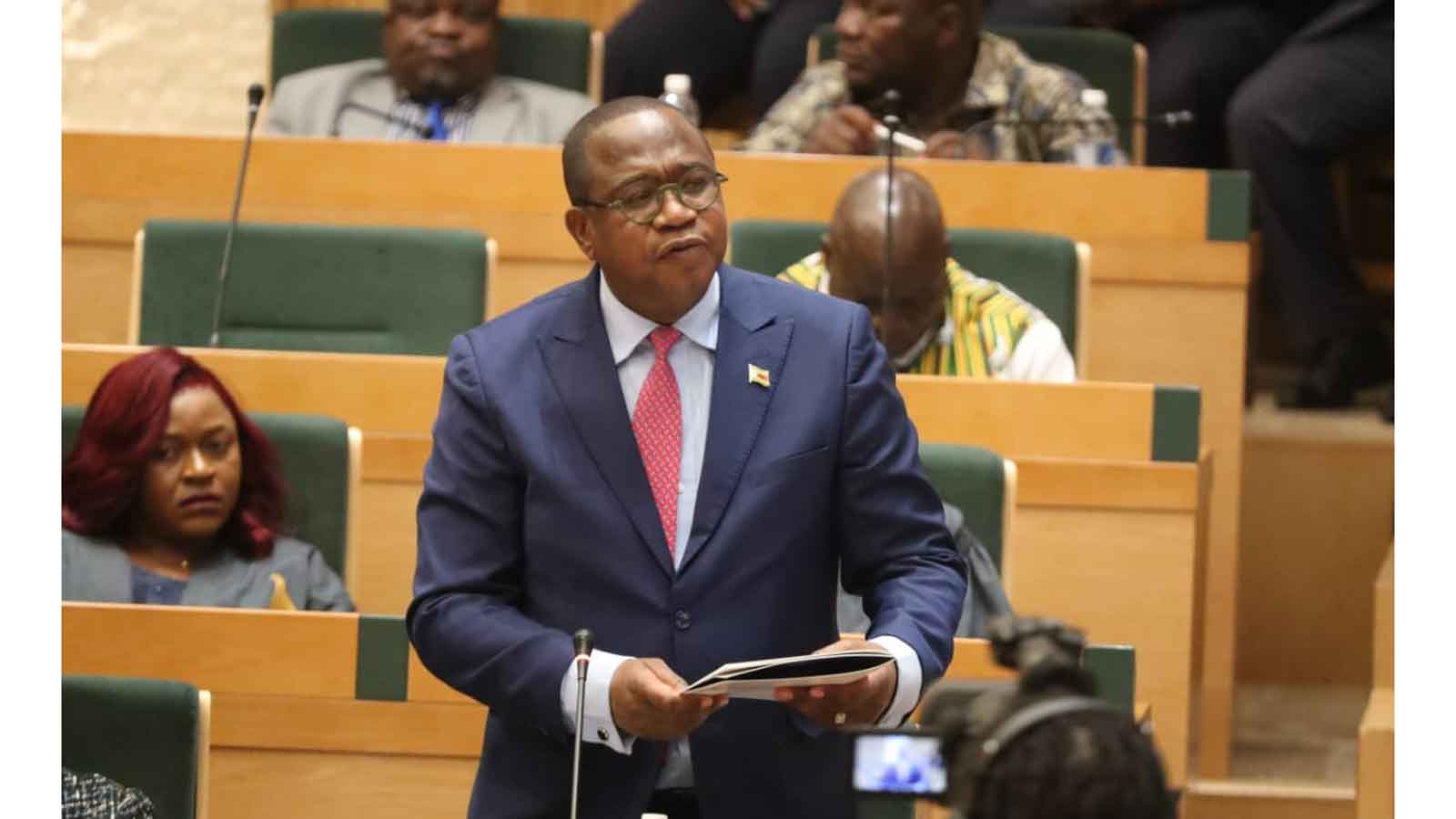
Business Reporter
ZIMBABWE’S mid-year fiscal performance reflects the growing efficacy of the country’s public finance management.
This follows the Government’s success in containing expenditure within approved budget limits.
Economists believe this development strongly reinforces the nation’s macroeconomic stability.
Commenting on data from the 2026 Mid-Term Budget and Economic Review, economists said Treasury’s ability to keep spending broadly in line with the approved budget marks a departure from the expenditure overruns of yesteryear and unplanned spending that stretched fiscal limits and fuelled economic instability.
Presenting the mid-term budget review on Thursday, Finance, Economic Development and Investment Promotion Minister Professor Mthuli Ncube said the Government utilised ZiG123 billion, about 42,5 percent of the ZiG290 billion annual budget allocations during the first half of this year.
According to Minister Ncube, this reflects improved fiscal discipline and an unwavering commitment to the country’s durable macroeconomic stability agenda.
The approach complements the Reserve Bank of Zimbabwe (RBZ)’s tight monetary policy stance to maintain exchange rate and price stability.
National budget overruns have historically caused runaway inflation, soaring national debt and severe currency devaluation.
When the Government spent more money than it collected, it relied on borrowing and printing money to cover the gap.
Fiscal and monetary discipline since April 2024, when Zimbabwe introduced Zimbabwe Gold (ZiG) amid rampant inflation and exchange rate volatility, has not been without tangible results.
Low and stable inflation has laid the foundation for stronger-than-expected growth, with the economy expanding by 6,8 percent in the first quarter of 2026 and putting it on track to outperform the Government’s initial full-year growth forecast of 5 percent.
Economic analyst Mr Persistence Gwanyanya said the Government’s expenditure, which is tracking close to half of the annual budget at the halfway stage of the year, demonstrates improved fiscal discipline.
“This is an improvement. We are almost at half year and spending is almost half of the budget, which means we are living within our budget,” he said.
“Normally, revenue collections peak in the second half of the year, meaning the Government will have greater fiscal space to meet its planned expenditures during the remaining months. That is a good sign.”
Mr Gwanyanya noted that prudent fiscal management has complemented the central bank’s tight monetary policy stance in containing inflation, which averaged 4,2 percent during the six months to June, the lowest level in nearly three decades.
“There has been significant improvement in the management of public finances and these numbers demonstrate exactly that,” he said.
Printing unbacked money to fund budget deficits drastically increased money supply, leading to catastrophic inflation spikes and wiping out the value of local savings.
Excessive Government borrowing and money creation devalued the local tender, destroying public confidence in national financial systems.
Unbudgeted spending and fiscal deficits ballooned both domestic and foreign debt, pushing interest payments beyond the nation’s capacity to pay.
Economist Mr Eddie Cross said the figures indicate that the Treasury has strengthened expenditure controls, ensuring that ministries, departments and agencies operate within approved allocations instead of relying on off-budget spending or excessive borrowing.
Mr Cross said fiscal prudence has become a key pillar supporting Zimbabwe’s improving macroeconomic
environment, helping to sustain stability through disciplined management of public finances.
“We used to have a problem of over-expenditure and spending outside the budget. It appears the Treasury has addressed that challenge, judging from these numbers,” he said.
“In the past, instability was largely caused by fiscal deficits because the Government was spending beyond its means.
We now seem to be spending within our means and this is helping to deliver the stability we are seeing in the economy.”
Expenditure has remained below the proportional mid-year level, signalling disciplined budget execution, improved liquidity management and adequate fiscal space to finance planned programmes during the second half of the year.
The budget outturn comes as the Treasury continues to pursue prudent fiscal management to preserve macroeconomic stability by ensuring that expenditure does not exceed available revenues.
According to Treasury, the approved budget is adequate to go through the last half of the year without the need for a Supplementary National Budget.
Prof Ncube said the expenditure performance was achieved despite several headwinds during the period, including the Middle East crisis, which forced the Government to defer some fuel-related taxes, resulting in revenue losses exceeding US$74 million.
Treasury intends to undertake strategic reallocations within the approved budget to cater for emerging priorities, including preparations for a potentially drought-affected 2026/2027 agricultural season and the provision of social safety nets for Zimbabweans returning from South Africa.