admin
admin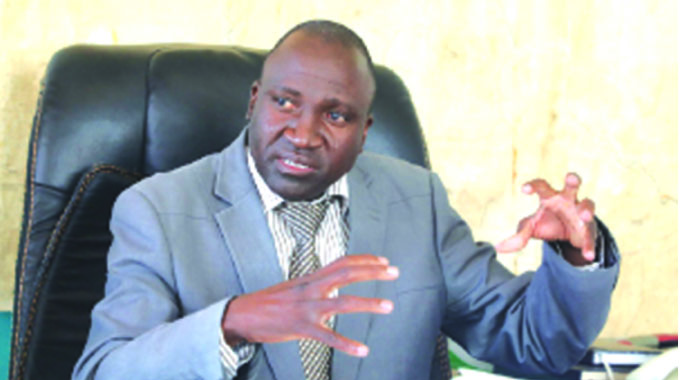
Lovemore Chikova Development Dialogue
President Mnangagwa commissioned the Chombwe Piped Water Scheme in Chivi District in 2020, kicking off the developmental plan for the district. This week, Lovemore Chikova (LC) visited the often referred to as an arid region to find out about this and other development progress taking place in the district. In this interview, Chivi Rural District Council chief executive officer Mr Tariro Matavire (TM) talks about Chombwe, the smart city at Chibi turn-off, devolution projects and Tugwi Mukosi Dam.
***
LC: Let’s start with Chombwe, it was being presented as a high impact development programme. How has it benefited the people?
TM: From the time it was launched, let me start in terms of education. The project is helping four schools — Jenya Primary School, Jenya Secondary School, Denga Primary School and Makovere Primary School. The fifth school, Tambudzai Secondary School was put on line recently.
The schools are using the water for gardens and orchards at their premises and the teachers are also benefiting.
LC: What about the community? This is an extremely dry area.
TM: Beside schools, we have communities and a number of households are connected to the main line and have water taps at their households. They are using that water mainly for domestic uses — laundry, bathing and other things. We also have some boreholes in the area to compliment the pipeline.
We cover a vast area including wards 6, 8, 7 and part of ward 11. The project is still expanding and many more people will be included. In other areas we have communal tanks which we fill with water and the community draws water from those tanks. Livestock is also getting water from these tanks.
Besides domestic uses, some people have stated agricultural projects using this water. When President Mnangagwa launched the project, there was a garden along the tarred road and they are now in the process of buying a big tank so that they can irrigate the garden throughout the year, from January to December, without any challenges.
We are also encouraging interested people along the way of the pipeline to open up gardens so that they can draw water from the mainline for irrigation.
LC: Does all this come for free to the communities?
TM: For the sustainability of the project, beneficiaries should pay something, but it seems this has discouraged some community members from venturing into projects like gardening. The money should run the scheme and cover costs including electricity charges, maintenance costs and paying for labour.
We have arranged meetings with beneficiaries so we can put mechanisms on the best payment modalities we can use to ensure the scheme is sustainable.
LC: Are you facing any challenges?
TM: There are some challenges, the major challenge is that the project needs constant rehabilitation. We used new and old equipment and when we pump water we sometimes experience breakdowns, mostly on old pipes. At one time we encountered a problem of vandalism soon after we had bought some pipes.
The people who vandalised the pipes were complaining that the water was passing through their village and they were not benefiting from it. We later engaged them and explained that there were future plans to enable them to also benefit from the facility.
The other problem we encountered recently was that the pump broke down because of clogging as a result of siltation. Electricity charges are also quite high. We are paying almost $550 000 per two weeks and this is another area which we need to engage beneficiaries. We have many beneficiaries and they should be able to manage the bill and even the maintenance costs.
LC: The Government recently gazetted the construction of a smart city at Chibi turn-off on the Masvingo-Beitbridge Road. Are we seeing this coming to fruition anytime soon?
TM: After it was gazetted and with the help of the department of physical planning, we managed to come up with the layout plan. Unfortunately, it took time before it was approved, but was finally approved this year in April. With that approval, the next stage is looking for investors to put the requisite infrastructure — that is tarred roads, sewerage system, water reticulation and electricity.
When there are services, investors can now construct buildings so that people can start utilising them. The idea we have is to have a residential section with 500 stands and our plan is that we use solar power for each house.
Water is provided by the Zimbabwe National Water Authority, but we want to upgrade the water reticulation system so that there is no shortage of water. A smart city means everything must be provided 42/7. We want it to have its own water plant so that we have water pumped from the nearby Tugwi River into the plant specifically for Chibi Turn-off.
We have a big stand for a 3 to 5 star hotel, we want a mini-shopping mall built going upwards so that on top there is accommodation for different businesses. For an industrial site, we want a big infrastructure so that people can go in and do various industrial projects.
If we get an investor we want to demolish the existing structures at the business centre so that we have one big block and those already operating there can occupy the ground area while on top there are other businesses. We want to change the face outlook of the centre.
We also created supermarkets, filling stations etc. The idea is that when you are there you must get everything in one space. We have plans for the environment, the smart city is about cleanliness. Internet connectivity will be available.
We are partnering with the Infrastructure Development Bank of Zimbabwe and they were here two weeks ago for a discussion and now they are working on the costings. They want a clear MOU in terms of payments. This morning (Wednesday this week), we had officials from Exodus who are interested in partnering with council on the project.
LC: What is happening at the giant Tugwi Mukosi Dam in terms of development?
TM: We sat down as Chivi Rural District Council and Masvingo Rural District Council, the two councils that share the dam. We agreed that we should create a plan preparation combination authority which covers the two local authorities. Councillors with wards around the dam — four Masvingo and four for Chivi formed this authority.
They will have responsibility of planning all developments around the dam as councils. Although the authority was formed and gazetted, it can only proceed doing some development plans after the master plan has been approved by central government.
As we speak, I don’t have much information on the master plan, what I know is that Government engaged universities and they did the research and wrote reports and submitted them to Government. I am sure anytime soon, the plan will be approved.
Once approved and gazetted, then it gives powers to the plan combination authority to prepare the plan, creating stands for hotels, lodges, shopping mall, houses.
There is also the issue of the national park to be created around the dam to protect it, whose boundaries are not yet gazetted. As we speak, there is nothing we can do as Chivi and Masvingo councils. But Government has said development cannot stop at the dam because of lack of a master plan.
Investors with interest are coming in, but not through councils, through the resident minister’s office.
LC: Let us turn to devolution. What has been happening in that area in Chivi district?
TM: We constructed a new clinic in the Bwanya area where we already have the main block, three staff houses, mothers’ shelter and the toilets. The clinic is solar powered. We also have a solar powered water system that supplies water at the clinic.
We have already bought all the equipment and furniture for the clinic. Just yesterday (Tuesday this week), we had people from the Health Services Board (HSB) from Harare who came for inspection in preparation for the opening of the clinic. We received a report from HSB noting small things like the placement of bins, putting a curtain in the bathroom for women, things we can put in place within a week.
They said we should expect their final report and the certificate within three weeks from now. Once we get that certificate, it means that District Medical Officer can start deploying workers. The clinic will serve the whole of ward 3 and that ward had no clinic since independence, that is why were chose it. This is a high impact project.
Under devolution, we are also constructing Rubweruchena Secondary School to cut the 15km distance to the nearest school. We also have Tugwi Mukosi Secondary School under construction. These should be open in January 2023. We also renovated two schools affected by a storm that hit us in January, and we drilled six boreholes, but unfortunately only three had water.
We are also prioritising equipment for road construction because our roads are now very bad. We want every constituency to have a grader. We want two tippers and one front-end loader.
Feedback: [email protected]



 Online Reporter