admin
admin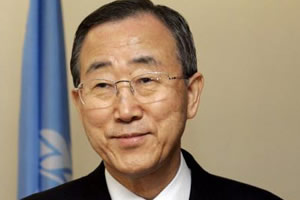
beautiful and majestic continent, we start to question whether the UN treats its member states differently, and what criteria it uses to deal with certain situations.
We raise these alarm bells because it now looks like there is a UN policy framework for Africa, which is different from the one used on other member states. The goings-on also make us ask this critical question: who drives the agenda at the 193-member organisation? Is it the UN Secretary General’s mandate to coerce African states to institutionalise behaviour systems that they frown upon or are deemed illegal?
Is the UN Secretary General’s office being used by Western nations to advance their agendas on the continent? Barely a month after the world’s top diplomat Mr Ban Ki-Moon lectured African leaders at the African Union summit in Addis Ababa, Ethiopia about the need to recognise and protect the rights of homosexuals, he was at it again last weekend when he visited Zambia.
He repeated his call for protecting gay rights, and did so in Zambia’s parliament, which in itself was a telling statement, since parliament is the supreme law-making body. Mr Ban’s calls regarding an issue he is very much aware is a thorny issue was not only surprising, but showed contempt of the Zambian parliament and its people.
The angry reactions to Mr Ban’s calls from Zambians across the board are not surprising. Zambians have argued that the Secretary-General’s calls smacked of double standards and ulterior motives.
How could he travel all the way from New York to come and tell Zambians the values they should protect, considering the myriad of challenges they face, which should top most of the UN’s programmes of action?
They asked whether this was not a ploy being used by the West, using the Secretary General’s willing office to re-enter and recolonise Africa under the pretext of protecting minority rights.
We do not believe that Mr Ban’s concern about the rights of homosexuals in Africa has anything to do with those people’s “rights” at all, but it has everything to do with the motives of those who are driving the agenda that the Secretary General is not only playing an advocacy and activist role, but is public relations officer as well.
Surely, Mr Ban cannot say that he is speaking on behalf of UN member states, when Africa’s 54 countries make up the UN as well. As Africans, we do not remember the UN member states through the General Assembly debating this issue, and putting it under consideration as part of the Universal Human Rights code. We have not also heard that this is one of the prominent rights being advanced by the UNHRC. This is why we are non-plused that Mr Ban has so far come to Africa three times in less than a year, to speak about gay rights. When a Malawian gay couple was jailed last year, Mr Ban visited Malawi, and the next thing we heard was that president Bingu wa Mutharika had ordered their release after discussions with Mr Ban.
The Zambian visit followed media reports that president Michael Sata will probably pay a visit to the United States of America some time this year. Mr Ban also made these remarks at a time when Zambia is considering constitutional reforms.
Are these mere coincidences?
There is a backlash against Africa for being homophobic because the West believes that it can continue to use the same old tricks to arm-twist African leaders to enter into deals that are anathema to the moral, cultural and spiritual values of the continent just because the United States and Europe are wielding a carrot and stick in form of aid?
Apart from observance of gay rights being tied to disbursement of aid by some Western nations, it is also not coincidental that Mr Ban is calling on the recognition of these rights soon after Britain’s David Cameron and Hillary Clinton threatened that aid will be tied to upholding gay rights.
Apart from South Africa whose constitution is open to gay rights, it is critical to see how Africa will deal with this latest manoeuvre by the West to divide and conquer the continent in the name of humanitarian assistance.
If the UN Secretary General decides to be a foot soldier that advances the interests of powerful nations, is it a wonder then that in 2012, calls for reforming the United Nations should not only get louder, but they should also be heeded, unless if the West wants to continue to believe that some animals are more equal than others.
This a chance for Africa to use its net worth to dismantle the entrenched dependence syndrome, and to also say “no”, no matter how many times they are accused of being homophobic. Aid given under strings attached is not worth it. The continent cannot lose its moral and spiritual integrity for the sake of aid.


 Online Reporter