Online Reporter
Bruce Ndlovu, Sunday Life Reporter
ONLY three years ago, Sylvia Tshanda was speaking openly about the difficulties of trying to protect the musical empire left behind by her husband, Dan Tshanda, following his death.
There was uncertainty around the future of the Splash brand, with key departures from the group and growing frustration as people she believed was trying to take advantage of the void left by the legendary producer and composer. The vultures had started circling and many doubted if Sylvia could ward them off.
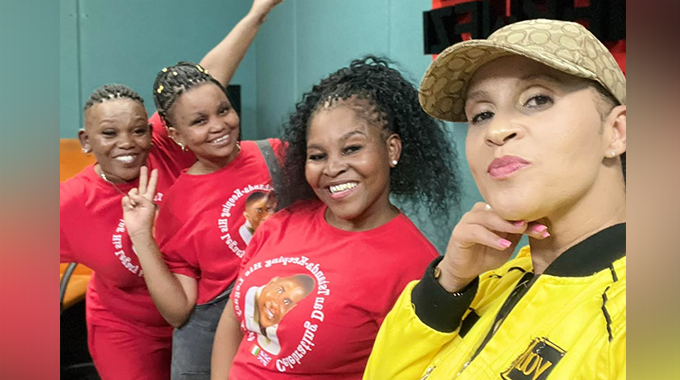
As she prepares to return to Bulawayo, the city where the Splash sound has arguably enjoyed the greatest support, there is something poignant about Sylvia’s current position.
Three years ago, the future of the brand seemed clouded by uncertainty, with the exodus of talent, competing interpretations of Dan’s music and questions about whether his musical empire could survive without the man who had built it.
Today, Sylvia is no longer simply defending what remains. She is rebuilding. The brand is still navigating the loss of some of the people who were central to Dan Tshanda’s operation, but it is also showing unmistakable signs of renewal.
Through remixes, collaborations and a new generation of musicians, Sylvia is attempting to do something that initially appeared almost impossible: keep the Splash flame burning without trying to pretend that Dan himself can be replaced.
“So, yes, it hasn’t been easy because after my husband passed on, some people who worked with him left the group. Some started doing things on their own, trying to imitate Dan, producing and copying Dan’s music without asking for copyrights and trying to form their own bands and all that.”
The departures could have signalled the beginning of the end for Splash. Instead, Sylvia chose to rethink the way the brand could survive.
“But that did not discourage me from pushing the brand and the group. I’m still pushing the group.
When I saw that there were so many people trying to do this and that, trying to imitate Dan, I stepped back and started trying to push it from another angle by remixing some of the songs.
Hence, I came up with a remix of Kineilwe just to push the music and get it to the younger generation.”
It was a strategic decision. Rather than expecting younger listeners to immediately embrace music from another era, Sylvia sought to build a bridge between the Splash classics and contemporary musical tastes.
“My plan was to draw young people to our music by remixing the very same old songs in that style.
As you can see now, the young ones, after listening to Kineilwe, want to know who these Dalom Kids are and what this music is. Then they will go back and listen to the old songs. Now I can see that the young ones are loving not only the remixes but also the old songs. So that was my plan to promote it.”
The approach has not come without criticism. For some fans, the Splash sound is so closely associated with Dan that any attempt to alter or reinterpret it risks being viewed as an intrusion into a legacy that belongs to a different musical era.
Sylvia, however, argues that preserving a legacy does not necessarily mean freezing it in time.
“So now, yeah, it has been challenge after challenge because people would leave me, the people who worked with Dan and some fans would attack me, saying I cannot do Splash music, forgetting that I am just keeping the legacy alive. I can keep the legacy alive by remixing and collaborating with other people. But one thing that they should understand is that no one can do what Dan did.”
That distinction is important. Dan Tshanda was not simply the frontman of Splash. He was the creative engine behind the music, handling multiple aspects of the production process that made the Dalom sound instantly recognisable.
“Dan was the only producer for all his groups and was also the composer. He was doing the melodies, writing, playing the instruments and creating the style by himself. So now, if they are expecting me to do the same, it is not possible. So, yeah, I have been pushing and pushing. This year, I am releasing Montana, Peacock and Machikos. I have already done so far — I am doing an
EP for Peacock and an EP for Montana. We are not remixing the songs, they are original songs.”
The move towards original material marks another stage in Sylvia’s attempt to rebuild.
Rather than relying entirely on nostalgia, she is developing new music while retaining the DNA of the Splash sound.
“What I do is work with different producers, telling them and directing them: this is how I want the song, this is how I want the instruments. Let’s do this, let’s check this and make it together. And then, from there, obviously, I’m good at writing lyrics and melodies. I do it very well in a Splash way. I also give them instructions on the instruments, telling them, “Put this instrument,” and so on, just like producing. I do produce with them, yes.”
It is a hands-on approach that mirrors, in some ways, the way Dan operated, although Sylvia is quick to acknowledge that she is not trying to become another Dan. Instead, she is finding her own role as custodian, producer and strategist.
“So far, so good. The brand is kicking. We are doing both remixes and original Splash music. Now
I’m stable. I have the group that is working with me. Some have left, while others are still with me. Yeah, so I am super excited. The legacy has gone very, very far. Everywhere, people are still talking about Dan. People are still enjoying his music”
Few places demonstrate that enduring affection more clearly than Bulawayo. The city has long been one of the strongest markets for the Splash sound, with Dan Tshanda’s music woven into the memories of generations of listeners.
It is therefore significant that Sylvia is preparing to return to a city where the brand’s emotional connection remains particularly strong.
“I’m super excited to be going back to Bulawayo again. There are people who love Bulawayo so very much.”
The Bulawayo show, initially scheduled for July 31, has now been moved to October 3, giving Sylvia and the group another opportunity to reconnect with a fan base that has remained remarkably loyal.
“This show for Bulawayo was supposed to be on July 31, but we said, no, let’s postpone it to October 3. So we are really excited to come to Bulawayo.”
That loyalty, Sylvia believes, is part of the reason the Splash brand has managed to survive the turbulence of the past few years.
“We are very much loved. That is why you saw that even when other artists were blocked from coming to Zimbabwe because of the things happening in South Africa, Zimbabweans welcomed us. On August 1, we were in Ngoma and it was fully packed. We are part of Zimbabwe, guys. We love Zimbabweans, and Dan Tshanda loved Zimbabweans. People in Zimbabwe love the Splash group.”



 Blessing Chizhande