


 Online Reporter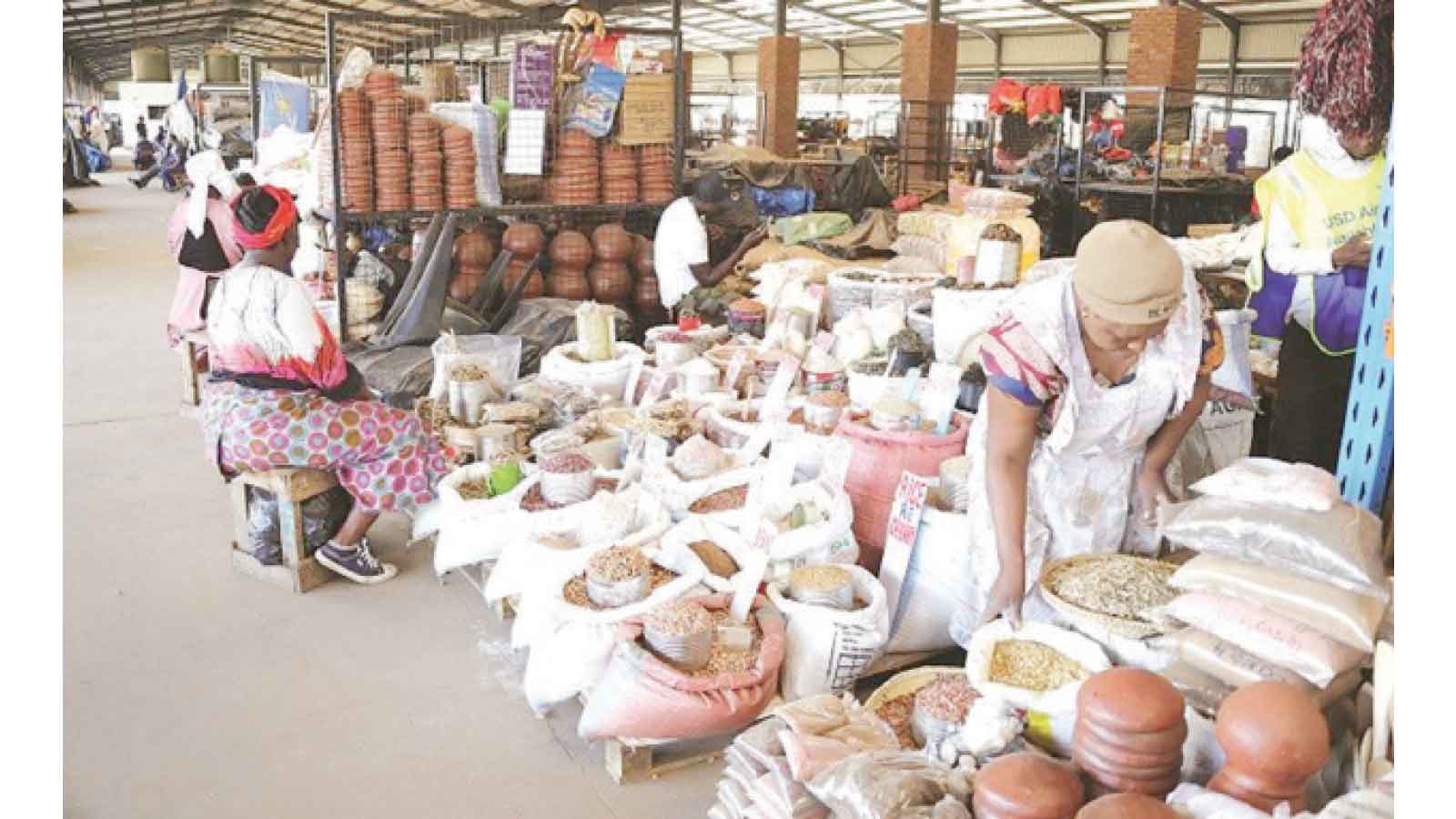
Nixon Chekenya
Every morning across Zimbabwe, the economy wakes up long before office doors open.
VENDORS set up stalls in Mbare, carpenters begin work in Glen View, cross-border traders prepare goods for transport and small-scale farmers deliver produce to local markets.
This is the heartbeat of Zimbabwe’s economy — the informal sector.
For many years, this sector has been described as a problem: unregulated, untaxed and difficult to control.
Policymakers often speak of “formalising” it, as if the goal is to replace it with something entirely different. But what if we have been looking at it the wrong way?
What if the informal sector is not a problem to be eliminated but a solution waiting to be structured?
Zimbabwe’s informal economy is not small.
Conservative estimates put it at an estimated 60 percent contribution to the nation’s gross domestic product (GDP).
It employs the majority of the workforce and sustains millions of households.
It is adaptive, resilient and deeply embedded in communities.
When formal systems falter, the informal sector absorbs shocks and keeps economic activity alive.
In that sense, it is not a sign of failure; it is a sign of survival.
The real challenge is not informality itself, but the gap between how people actually earn a living and how the formal system is designed.
Banks require payslips, collateral and credit histories.
Tax systems assume stable, traceable incomes. Regulatory frameworks are built for registered firms, not street-level enterprises.
As a result, millions of hardworking Zimbabweans operate outside systems that could support their growth.
This disconnect has consequences. Informal businesses struggle to access credit, limiting their ability to expand.
Governments lose potential revenue because economic activity is not properly recorded.
Investors see an economy that appears smaller and riskier than it actually is.
Yet beneath this disconnect lies a powerful opportunity.
Zimbabwe does not need to replace its informal sector.
It needs to connect it to the formal system in ways that reflect reality.
This begins with recognition.
Informal businesses are not temporary or marginal; they are a permanent feature of the economy.
Policy should, therefore, shift from control to integration.
One approach is to rethink financial access.
Many informal entrepreneurs have no formal records, but they do have economic histories — mobile money transactions, supplier relationships, savings group contributions and consistent trading patterns.
If properly captured, this information can be used to assess creditworthiness without traditional collateral.
Digital platforms already offer a pathway.
Mobile money systems have created transaction trails that were previously invisible.
With the right partnerships between financial institutions, mobile operators and policymakers, this data can be used to design products tailored for informal businesses.
Simplifying registration is another critical step.
Formalisation should not be a barrier; it should be an incentive.
If registering a business is quick, affordable and linked to tangible benefits such as access to credit, markets or training, more entrepreneurs will participate willingly.
Equally important is infrastructure.
Informal businesses thrive in spaces that are often underdeveloped.
Investing in markets, storage facilities and transport systems can significantly increase productivity and incomes without disrupting existing economic networks.
There is also a need to rethink how we measure the economy.
Traditional statistics often underestimate the true scale of informal activity.
Better data collection would not only improve policy design but also reshape how Zimbabwe is perceived by investors.
At its core, the informal sector represents entrepreneurship in its most organic form.
It reflects initiative, risk-taking and innovation under constraint.
These are precisely the qualities that drive economic growth in any context.
The goal, therefore, is not to force informal businesses into rigid systems, but to build flexible systems around them.
From street to system
If Zimbabwe can bridge this gap, the rewards will be significant.
Informal businesses will gain access to finance and opportunities for expansion.
The Government will benefit from a broader and more sustainable revenue base.
The economy as a whole will become more visible, more investable and more resilient.
The future of Zimbabwe’s growth may not lie in creating entirely new sectors, but in unlocking the full potential of the one that already exists.
The street is not outside the economy; it is the economy.
The task now is to build systems that recognise it, support it and allow it to thrive.
Nixon Chekenya is a PhD student, distinguished graduate student fellow, and teaching and research assistant at Texas Tech University.



