Online Reporter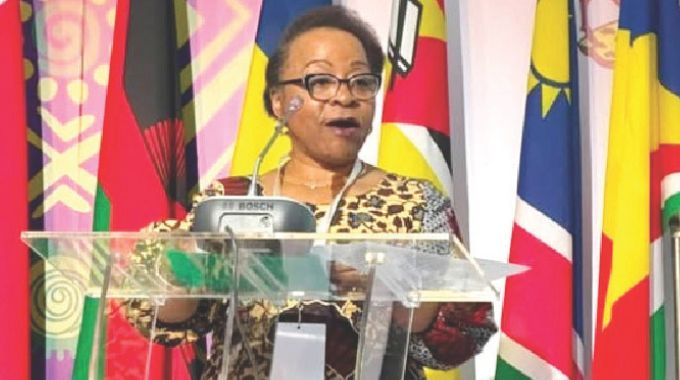
Gibson Mhaka, Senior Features Writer
EVERY day across Southern Africa, opportunities are lost long before they reach the marketplace.
Fresh flowers from Zambia miss lucrative export windows because cargo connections are slow. Tourism operators in
Zimbabwe and Botswana struggle to market seamless multi-country packages as travellers endure expensive and indirect flights between neighbouring capitals.

Manufacturers wait days for components delayed by congested border posts, while cyclones and floods routinely wash away roads, bridges and rail links that connect regional economies.
These are not isolated transport challenges.
They are barriers to Southern Africa’s economic integration.
For decades, the Southern African Development Community (SADC) has pursued regional cooperation through highways, rail networks, power pools and trade protocols.
Those investments have helped knit the region closer together, yet the promise of a fully integrated regional market remains constrained by fragmented transport systems, high logistics costs, climate-induced infrastructure damage and limited air connectivity.
Recognising that these challenges increasingly transcend national borders, SADC is redefining what regional integration means in the 21st century.
The shift was evident during the Sixth SADC Cluster Meeting of Ministers Responsible for Transport, Information and Communication Technologies, Information and Meteorology, held in Bulawayo recently under the theme:
“Liberalised Skies and Artificial Intelligence-Enabled Climate-Resilient Infrastructure to Accelerate Regional Integration and Sustainable Development in SADC.”
Far from being another ministerial gathering, the meeting underscored a growing regional consensus that SADC’s future integration will depend as much on liberalised skies, artificial intelligence and climate-resilient infrastructure as on roads and border posts.
The message was clear: unlocking faster trade, seamless mobility and sustainable development requires member states to embrace innovation alongside traditional infrastructure.
Addressing delegates, SADC Deputy Executive Secretary for Regional Integration Ms Angele Makombo N’tumba described the implementation of the Single African Air Transport Market (SAATM) as central to improving connectivity across the continent.
According to Ms N’tumba, liberalised skies are about creating freer movement of goods, services, investment and skills across borders, making aviation a catalyst for regional integration rather than simply another mode of transport.
Her remarks underscore a growing appreciation that aviation has become an economic catalyst rather than merely a transport service.
Zimbabwe’s Minister of Transport and Infrastructural Development, Felix Mhona, echoed the same sentiment, describing stronger transport connectivity, modern digital infrastructure and climate-resilient systems as indispensable pillars of regional development.
He reaffirmed Zimbabwe’s commitment to aviation infrastructure investment and to initiatives that promote seamless regional mobility while urging member states to work collectively in confronting climate risks that increasingly threaten shared infrastructure.
If roads and railways are the arteries of regional integration, aviation is increasingly its lifeblood.
Yet Africa remains one of the world’s least connected aviation markets, with indirect flights between neighbouring capitals driving up costs, delaying trade and limiting tourism, underscoring the need for seamless air connectivity to unlock Southern Africa’s economic potential.
That is precisely what the Single African Air Transport Market (SAATM) seeks to change.
Often described as one of the African Union’s flagship integration projects under Agenda 2063, SAATM aims to dismantle restrictive bilateral air service agreements and create a more competitive, accessible and affordable aviation market across the continent.
For SADC, where regional integration depends on the seamless movement of people, goods, services and capital, liberalised skies are not simply an aviation policy — they are an economic imperative.
Efficient air transport is a proven driver of investment, tourism and trade, making it indispensable to Southern Africa’s integration agenda.
The scale of aviation’s economic impact is reflected in IATA figures showing that nearly 16 000 aircraft are airborne worldwide at any given time, carrying about 12 million passengers and almost US$20 billion worth of cargo daily.
Aviation supports an estimated eight million jobs across Africa, yet the continent continues to account for only about two percent of global passenger traffic — a figure that has remained virtually unchanged for more than two decades.
African airlines continue to grapple with some of the world’s highest operating costs, driven by heavy taxation, ageing fleets, restricted market access and the fact that nearly three-quarters of the world’s blocked airline funds are held in Africa, limiting investment and growth.
Removing these barriers is not merely about improving airline profitability but about unlocking broader economic opportunities through cheaper and more frequent flights that would enable exporters to access markets faster, strengthen regional supply chains and allow tourism operators to market Southern Africa as a single, integrated destination.
For land-linked economies such as Zimbabwe, Zambia and Malawi, stronger aviation networks would complement road and rail corridors, providing more resilient trade routes when traditional transport is disrupted.
As the African Continental Free Trade Area (AfCFTA) gathers momentum, efficient air connectivity will be critical to reducing the time and cost of moving goods across borders and enhancing regional competitiveness.
Mozambique’s representative, Mr Emmanuel Chaves, reminded delegates that although air freight accounts for less than one percent of global trade by volume, it carries around 35 percent of global trade by value.
High-value exports such as pharmaceuticals, fresh agricultural produce, electronics and precision manufacturing increasingly depend on efficient air cargo systems.
Recognising that opportunity, Mr Chaves urged SADC to move beyond passenger transport by developing integrated air cargo corridors supported by dedicated freight terminals, modern cold-chain infrastructure, digital customs systems and bankable projects capable of attracting long-term investment. His proposal reflects a broader shift in regional thinking, where integration is measured not only by roads and border posts, but by how efficiently goods move across borders and how effectively member states coordinate infrastructure development.
A liberalised aviation market will succeed only if passengers, investors and airlines have confidence in the region’s regulatory systems.
If liberalised skies represent one pillar of SADC’s renewed integration strategy, climate-resilient infrastructure has become the other.
Climate change has become one of the greatest threats to SADC’s integration agenda, repeatedly damaging the roads, bridges, airports and transport corridors that underpin regional trade.
Cyclones, floods and droughts disrupt supply chains across borders, driving up transport costs and slowing economic activity, underscoring the need for climate-resilient infrastructure to safeguard regional connectivity and sustainable development.
For SADC, climate resilience is therefore no longer an environmental add-on. It has become a prerequisite for economic integration.
As climate risks intensify, meteorological services are evolving from weather forecasters into strategic drivers of regional development, providing critical data to protect infrastructure, support disaster preparedness and strengthen economic resilience.
Artificial intelligence is accelerating this transformation by enabling developing countries to generate faster, more accurate weather forecasts without relying on costly supercomputers, making climate-smart planning more accessible across SADC. The practical potential of that technology was demonstrated through Malawi’s participation in the United Nations’ Early Warnings for All initiative.
World Meteorological Organisation Representative for Eastern and Southern Africa Ms Hlobisile Sikhosana explained how an AI-powered forecasting system known as Forecast-in-a-Box, driven by the BRIS model, enabled Malawi to generate weather forecasts of up to 21 days using an ordinary laptop instead of costly high-performance computing systems.
The innovation reduced the time required to produce a 10-day forecast to about 90 minutes while significantly improving flood forecasting, agricultural planning, hydropower management and infrastructure risk assessment.
Rather than investing in costly computing infrastructure, developing economies can use artificial intelligence to leapfrog traditional technological barriers, strengthening disaster preparedness and protecting critical infrastructure.
The benefits extend beyond national borders, as improved weather forecasting and shared meteorological data enable SADC countries to coordinate disaster responses, safeguard regional transport corridors and minimise disruptions to trade.
Artificial intelligence is therefore emerging not merely as a technological innovation but as a regional public good.
Meteorological expert Ms Lebogang Mkgati reinforced this point, arguing that the future of African aviation will depend on balancing three inseparable priorities: liberalisation, decarbonisation and climate adaptation.
Expanding regional air connectivity without strengthening resilience, she warned, would simply expose airports, airlines and transport networks to growing climate risks.
The success of SADC’s integration agenda will depend not only on connecting member states more efficiently but also on ensuring those connections remain operational in an era of increasingly unpredictable weather.
For Southern Africa, building climate-smart infrastructure is no longer simply about protecting physical assets.
It is about safeguarding the regional economy itself.
Just as no country can liberalise its skies in isolation, neither can it harness the full potential of artificial intelligence alone.
As AI transforms sectors ranging from transport and border management to agriculture and mining, SADC faces a shared challenge of ensuring innovation is underpinned by harmonised regulations, robust cybersecurity and ethical governance.
With data and digital transactions flowing seamlessly across borders, delegates agreed that regional cooperation is essential to foster innovation, build investor confidence and safeguard the digital future of Southern Africa.
It is for this reason that the Communications Regulators’ Association of Southern Africa (CRASA) is advocating a common regional framework for AI governance.
Representing the organisation, Mr Brian Mwanza argued that SADC faces a defining choice: either shape the rules governing artificial intelligence or adapt to standards developed elsewhere.
He urged member states to establish common principles covering transparency, cybersecurity, cross-border data governance and regulatory mutual recognition, ensuring that innovation flourishes while citizens remain protected.
Such harmonisation would do more than regulate technology.
It would strengthen regional integration itself.
Harmonised digital standards can unlock cross-border commerce by streamlining customs, facilitating electronic payments and reducing regulatory barriers, creating a more predictable environment for business and investment.
UNESCO, however, cautioned that while artificial intelligence presents Africa with an opportunity to accelerate development, its adoption must be anchored in ethical governance and human rights — an approach that is already gaining momentum across the SADC region.
Zimbabwe, Botswana, Namibia, Mozambique and South Africa have undertaken UNESCO’s Artificial Intelligence
Readiness Assessment, using the findings to strengthen digital preparedness and governance. Zimbabwe has already translated the assessment into a National Artificial Intelligence Strategy, illustrating how regional knowledge-sharing can advance both national priorities and SADC’s broader integration agenda.
Director for Africa Affairs at the Civil Air Navigation Services Organisation (CANSO), Mr Thabani Myeza, warned that Africa risks becoming a passive consumer of technologies designed elsewhere unless governments invest deliberately in local research, digital skills and entrepreneurship.
“For decades, many African economies have exported raw minerals while importing finished technologies at significantly higher costs,” he said.
Such ambitions align closely with SADC’s broader industrialisation agenda.
Rather than viewing artificial intelligence solely as a tool for automation, policymakers increasingly see it as an enabler of value addition, industrial competitiveness and economic diversification.
Regional collaboration in research, education and innovation can reduce duplication, lower development costs and enable member states to pool scarce technical expertise.
In the digital age, regional integration extends beyond highways, airports and border posts.
It also depends on trusted digital infrastructure, interoperable regulatory systems and shared technological capacity.
South Africa’s Minister of Transport, Barbara Creecy, urged SADC member states to deepen regional cooperation by accelerating the liberalisation of African skies, investing in climate-resilient infrastructure and embracing emerging technologies to drive connectivity and inclusive growth.
Ultimately, the success of SADC’s integration agenda will be measured not by the agreements it signs, but by its ability to lower the cost of doing business, expand trade, strengthen climate resilience and improve the lives of its people.
Liberalised skies, climate-smart infrastructure and digital cooperation are the foundations of a more connected, competitive and prosperous Southern Africa.