


 tawandamusarurwa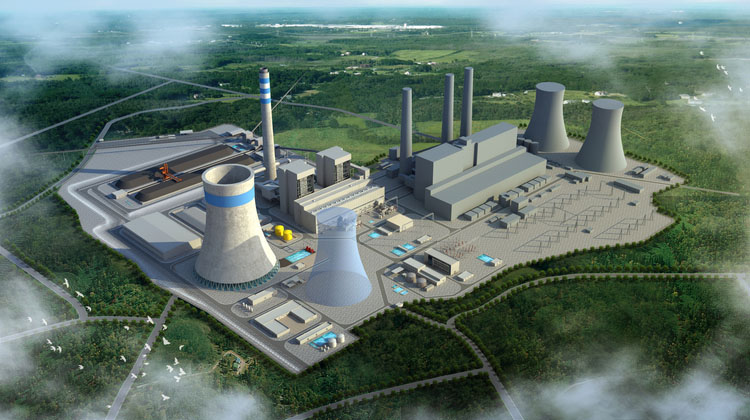
Oliver Kazunga
The successful synchronisation of the US$1,5 billion Hwange Thermal Power Station’s Units 7 and 8 has seen large-scale gold producers increasing output by 9 percent to 4 053 kilogrammes between April and July this year.
These units, which are already feeding over 600MW into the national grid, were officially commissioned by President Mna-ngagwa early this month, having been successfully synchronised between March and April this year.
The development has seen the country increasing power generation to an average of 1 500MW from 700MW.
Official data released by Fidelity Gold Refinery (FGR), Zimbabwe’s exclusive buyer of the yellow metal, indicates that between April and July last year, 3,7 tonnes were delivered by large mining houses.
In the past, production in the mining sector, which is Zimbabwe’s major economic mainstay, was largely weighed down by electricity constraints, compounded by frequent breakdowns by Units 1 to 6 at the Hwange Power Station and low water levels at the Kariba Hydro Power Station.
In an interview, Chamber of Mines of Zimbabwe (CoMZ) chief executive officer Mr Isaac Kwesu, whose organisation represents large mining houses, commended the Government for boosting power generation through projects such as the Hwange Thermal Power Station expansion project.
Should Zimbabwe’s power generation continue to improve, he said, this would stimulate productivity across the entire mining industry.
“As you know, since the beginning of the second quarter, we had some improvement in the power supply situation in the mining sector and this resulted in an improvement in output, specifically from large-scale producers.
“The main challenge specifically in the first quarter was predominantly power outages, but the coming on board of Hwange Units 7 and 8 — that synchronisation has seen most mining houses having adequate power to meet their production requirements.
“Also, some expansion projects that were starved of power have also resumed, so obviously this has seen output from the primary producers increasing,” said Mr Kwesu.
The mining industry is expected to grow by 4,8 percent this year, buoyed by increased production in minerals such as lithium, chrome, diamonds and platinum group metals.
According to figures from FGR, in the first seven months of the year, large-scale miners delivered 6,56 tonnes, up from 6,46 tonnes in the same period last year.
Furthermore, statistics from the country’s sole gold buyer indicate that small-scale producers, who traditionally deliver at least 60 percent of the yellow metal, between January and July this year produced 10,28 tonnes against 12,47 tonnes in the corresponding period in 2022. Overall, output by large and small-scale producers was 18,93 tonnes for the first seven months of this year compared to 16,85 tonnes.
“We pray that the power situation, specifically for the mining sector, remains stable as it is and obviously we would be happy if also the power supply improves to meet our expansion drive in the mining sector.
“There are quite a number of new projects that are in the pipeline. So, if the power supply remains stable and obviously improves, other things being equal, we anticipate that performance of the industry will record good output,” said Mr Kwesu.
Presently, the mining industry accounts for 73 percent of foreign direct investment, 83 percent of exports, 19 percent of Government revenues, 2 percent of formal employment and 11 percent of individual incomes and by 2030, the sector is projected to generate more than US$20 billion.
Under the National Development Strategy 1 (NDS1), the Government’s five-year economic development programme to drive the economy to an upper middle-income society by 2030, the mining industry is touted as a critical sector to propel the country towards the envisaged targets.
NDS1, which runs between 2021 and 2025, would be replaced by another five-year economic blueprint to lead the country to the envisaged upper middle-income economy.
In a separate interview, economic commentator Ms Wendy Mpofu commended the Second Republic for being pragmatic on improving the energy supply
situation.
“I think the Government, led by President Mnangagwa since coming into power in November 2017, has been putting into practice policies to attain an upper middle-income economy by 2030. On the infrastructure side — particularly roads, energy and power development — tremendous work has been registered. And predicated on energy projects that we have seen so far under the Second Republic, the mining sector as a whole is headed for a boom going forward,” she said.


 Online Reporter