Sundaymail Editor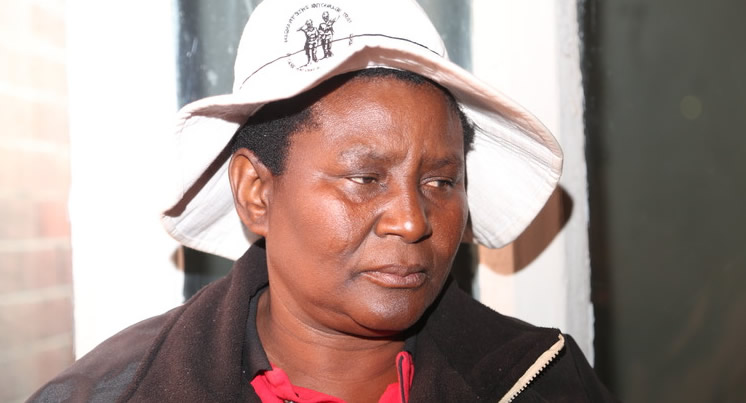
For the past 10 years Cde Rosemary Mathe-Maphala has religiously visited Freedom Camp and Mkushi Girls’ Camp.
“A part of me lies buried with those girls at Mkushi and every time I visit I reconnect with them. I am with them and they are with me, we are always together.”
Cde Mathe-Mpahala will never forget the events of October 19 1978 like they happened yesterday, the memories are still fresh in her mind. “We were on parade when the attack happened. Even up to this day I don’t even know how I survived, I can’t say I was clever. From all angles we just found ourselves under attack, we were caught unawares. Such memories can never be erased.”
Now 62-years-old, Cde Mathe-Maphala was 25 years at the time of the attack. “At the height of the liberation struggle almost every girl my age was joining the liberation struggle. The oppression was getting unbearable at home and we saw joining the struggle as the only way to free ourselves.”
After leaving Bulawayo, she made it to Lusaka where she was taken to Freedom Camp. Here they were trained in various aspects of military engagement.
“There many roles that we were being trained for. The idea behind Mkushi Girls Camp was for girls to be trained to provide support services. Some were being trained to be nurses. Girls were not meant to be at the front as soldiers, but since we were in a war zone, we had to get some military training. Hence Mkushi Girls Camp.”
She says the bombing was concentrated on the kitchen and parade area, where most of the girls were at the time. “It looks like the Rhodesians knew what they were doing and knew exactly what time to hit and where to hit.”
Because of the secret nature of Mkushi, which made it distant from many built-up areas, it only took the following morning for help to come, with the injured taken to Kabwe, about 120 kilometres away.
Though the attack happened in 1978 and the memorial shrine built in 2001, as late as 2010, bones were being picked in and around the camp.
Narrated Charles Mpabanga, of Zimbabwean parentage and now a keeper of the shrine: “It must have been 2010 when I was tending my cattle when I came across some bones. On further investigations, I discovered it to be a human skull and some arms, the legs were not there.”
He said he informed embassy officials who came and put the bones in a shallow grave with other bones inside the fence of the memorial shrine.
“When the memorial shrine was fenced, one mass grave fell outside the perimeter fence and it was decided that the bones in that grave be brought inside the fence. So a shallow grave was dug, pending proper burial. That is the same shallow grave that we put the skull that we found by the stream whilst I was tending cattle.
“The unfortunate part is that these bones are not buried, they are just covered by bricks and this is irking the local community, which always attribute any dry spell to the bare bones. So if the Government of Zimbabwe or any responsible authority can come and re-bury these bones, there can be some closure on the issue.”
But for Cde Mathe-Maphala, whose name in the liberation struggle was Cde Segoge, the annual journey to Mkushi Girls’ Camp is a must.
“This time of the year, I make sure I come here and be with my mates, those who could not make it into a new and Independent Zimbabwe. It is a time to re-connect, to tell them that we have not forgotten about them, that they are still very much part of us. I will keep on coming here for as long as I am able use my two feet.”



 Online Reporter