Online Reporter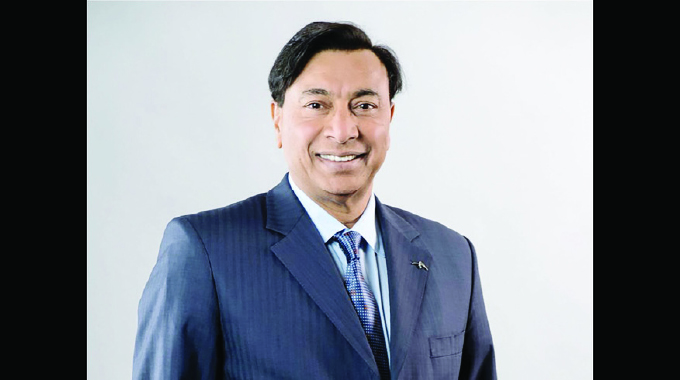
Communion with Bishop Lazarus
Bishop Lazi will begin this week’s homily by referring to Matthew 13:13-15.
IT reads: “Though seeing, they do not see; though hearing, they do not hear or understand. In them is fulfilled the prophecy of Isaiah: ‘You will be ever hearing but never understanding; you will be ever seeing but never perceiving. For this people’s heart has become calloused; they hardly hear with their ears, and they have closed their eyes. Otherwise they might see with their eyes, hear with their ears, understand with their heart and turn, and I would heal them.’”
Profound and seismic changes are happening all around us — if only we could open our eyes to see them.
Was it not last week that the Bishop told you that Zimbabwe is a giant that has awakened?
In fact, it is a giant that has come out swinging.
As it aggressively moves to reindustrialise, the impact is now being felt in the region and beyond.
Remember, we were once the second most industrialised economy in the Southern African Development Community (SADC).
Upsetting the applecart
As our giant steel manufacturing plant begins to crank up in Manhize, adding impetus to local economic growth, the fortunes of its peer in neighbouring South Africa, ArcelorMittal South Africa (AMSA), are waning — and fast.
Recently, the ailing ArcelorMittal, which is part of Indian steel magnate Lakshmi Mittal’s sprawling empire, indicated that increased imports from Zimbabwe might sound the death knell for an entity that was already considering winding up its operations.
In the January to June period, South Africa imported 94 000 tonnes of steel billets from Zimbabwe.
That the Dinson-run US$1,5 billion Manhize steel plant only began exporting recently is all the more reason why ArcelorMittal, which is presently locked in negotiations with Pretoria to prevent the closure of its operations, has become fretful.
In the first six months of the year, AMSA reported a staggering R1 billion loss (about US$57 million) owing to a plethora of adverse factors.
One of the loss-making plants in Newcastle is presently under care and maintenance, while the other in Vereeniging is teetering on the brink.
Close to 3 500 jobs are on the line.
But closure of the plants is likely to have a grim knock-on effect on iron producer Beeshoek — jointly owned by billionaire Patrice Motsepe’s African Rainbow Minerals and Assore — which supplies the critical raw material to AMSA’s operations.
This, too, could claim 688 jobs.
So, it is a potential bloodbath.
Inasmuch as its impact has been adverse for rivals, Manhize has added a lift on the local economy, which is encouraging, especially as its operations are still fledgling.
From January to June, shipments of semi-finished iron and steel jumped from US$13 million last year to US$46 million, helping to grow Zimbabwe’s cumulative exports in the period to US$3,9 billion, up from US$3,4 billion last year.
Apart from South Africa, Dinson has already received orders from the Democratic Republic of Congo, Zambia and Mozambique.
And this is just the beginning.
For those who are old enough to remember, in Ziscosteel, Zimbabwe had the biggest steel manufacturer in the region.
In Botswana, it owned Ramotswa Iron and Steel Company, which processed steel billets, while Monarch Steel — a renowned manufacturer of doorframes, geysers, wire mesh, wheelbarrows and window frames, among other products — represented its Zambian footprint.
Considering the grand plans that billionaire Xiang Guangda’s Tsingshan Holdings has for Dinson to become the largest steel manufacturer in Africa, Manhize will probably eclipse Ziscosteel’s storied milestones.
This holds significant meaning for Zimbabwe’s remarkably growing economy. Remember that Zisco was once the country’s biggest foreign currency earner.
Also bear in mind that Tsingshan is the world’s largest stainless steel producer, with a more than impressive track record of bankrolling mega projects.
Its operations in the Indonesia Morowali Industrial Park in Central Sulawesi are instructive.
So, while Mittal and Motsepe might be agonising over their fortunes and possible fate, Xiang and Zimbabwe have every reason to feel optimistic.
But Manhize is more than just a steel plant; it is an example of Zimbabwe’s steely fortitude and determination to rewrite its fortunes and reclaim its past glory in spite of continued sanctions from the West.
“Our enemies need a lot more than sheer pleas and persuasion. They need to see us forging ahead in spite of their sanctions, to hear and respect us,” President ED once wrote in an opinion-editorial for The Sunday Mail in October 2023.
“We have to show real determination to beat those sanctions, and to prosper our people and nation under the adverse conditions they create.”
Building Africa
But Manhize is not an exception; it is part of a pattern that has been developing over the past seven years under the Second Republic.
Norton-based ceramic and porcelain tiles and tableware manufacturer Sunny Yi Feng Tiles has also upset the applecart in the region.
South Africa’s biggest floor tile manufacturer Italtile is now feeling the heat from the Zimbabwean competitor.
What makes this all the more remarkable is the fact that it was only in October 2018 when the Government gave the nod to a Chinese investor to begin building a state-of-the-art US$30 million tile and ceramic plant in Norton.
While this has been happening, there is a silent revolution also underway in Zimbabwe, where investors are shelling out millions to establish new cement plants.
For instance, Yaobai International, through its subsidiary WhiZim International, is setting up a US$1 billion plant in Hurungwe, which is set to employ more than 2000 people.
Construction works are already advanced.
In Chegutu, another cement project by Shuntai Investment is well underway in Chegutu, with full production expected next year.
All told, 4 000 people will be employed at the plant.
The company’s administration manager, Yan Bo, has already indicated that the advanced technology that will be installed and the readily available resources are likely to drive down cement prices.
The new entrants will add to an impressive field that includes Huaxin Zimbabwe Industries (Pvt) Ltd and Sino-Zimbabwe Cement Co.
Nigerian billionaire Aliko Dangote is understood to be still interested in setting up a cement plant in Zimbabwe.
The resultant low cement prices will inevitably further drive local construction activity.
What this means is that a resurgent Zimbabwe, as a supplier of critical materials, will be a vital cog in the industrialisation and modernisation of the region and continent.
However, most critically, our people should not be left behind.
Instead of interminably whining, whingeing and parroting misleading Western narratives, they should open their eyes to available opportunities that are being seen by investors from faraway lands.
The time is now propitious for our local entrepreneurs to exploit the country’s immense mineral resources and become the next billionaires.
Clearly, Zimbabwe is on an irreversible path to prosperity.
Bishop out!