

 admin
admin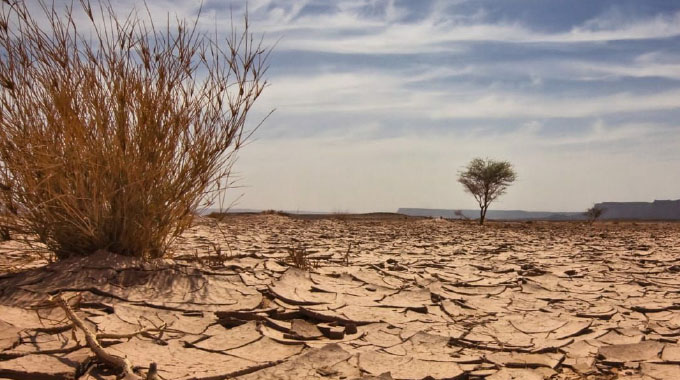
Enacy Mapakame
Business Reporter
Government officials, private sector players and key stakeholders in the climate change space will next week hold a conference in Harare to deliberate on the nexus between climate and development, climate adaptation and resilience.
The conference comes at a time global economies are fighting the negative impacts of climate change-induced problems and seized with strategies to build resilience.
Hosted by our sister paper,-Business Weekly in conjunction with Financial Markets Indaba (FMI) at the Golden Conifer in Harare, the Climate Change Adaptation Conference also seeks to emphasise that building forward requires a development approach that is green, sustainable and climate resilient.
Panellists will discuss climate change in relation to mining, agriculture, energy, water security, societal response and policy development among others.
Senior Government officials from the Ministry of Environment and Ministry of Energy are expected to participate at the conference together with other panellists including Simbarashe Mhungu – CBZ; Wendy Madzura – Seed Co; Cynthia Tapera – Planet Africa; Welcome Mavingire – Intellego Investment Consultants; Simbarashe Mafukidze – Econet, and Jeremiah Mushosho – United Nations Development Programme (UNDP).
FMI managing director Mr Patrick Muzondo said the country has a significant role to play in meeting climate mitigation objectives.
“For the Government, strong climate action offers many co-benefits in addition to delivering less carbon-intensive economies.
“Different regions and communities suffer from different impacts and so effective adaptation strategies need to be contextualized to local needs and conditions.
“As countries seek to address the challenges of a warming planet, it’s crucial that local voices are heard, and that communities and local governments on-the-ground are at the forefront,” he said. Cases of climate-induced disasters have been on the increase in Zimbabwe and across the globe. The country has seen an increase in the severity of climate-related disasters, threatening agriculture production and value chains.
In 2019, Zimbabwe was hit by tropical cyclone Idai, which caused loss of human lives, infrastructure damage, and disruption of value chains and trade. Business Weekly editor Mr Herbert Zharare said: “Given the scale of climate change, and the fact that it will affect many areas of life, adaptation also needs to take place on a greater scale.
“Our economies and societies as a whole need to become more resilient to climate impacts and this will require large-scale efforts.”
While the case for adaptation is clear, some communities most vulnerable to climate change are the least able to adapt because they are poor and/or in developing countries already struggling to come up with enough resources for basics like health care and education.
The UNDP is helping countries to translate their adaptation commitments into measurable impact on the ground by identifying action entry points and cost options; identifying investment opportunities; supporting concrete planning; enhancing cooperation with partners; and helping secure adaptation finance.
The Conference of the Parties to the United Nations Framework Convention on Climate Change (COP27) held in Egypt concluded with a historic decision to establish and operationalise a loss and damage fund.
Developing countries have been seeking financial assistance for loss and damage, which is money needed to rescue and rebuild the physical and social infrastructure of countries devastated by extreme weather.


 Online Reporter