

 Online Reporter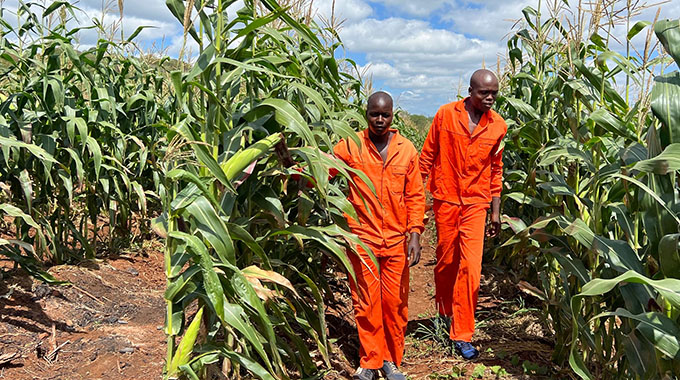
Sukulwenkosi Dube-Matutu, [email protected]
TO prepare prisoners for productive lives after release, the Zimbabwe Prisons and Correctional Service (ZPCS) rehabilitation programme is focusing on equipping them with adaptive farming skills and techniques.
In Gwanda Prison, inmates have been trained in climate-smart agriculture, which they foresee as essential for establishing successful agricultural businesses upon their return to the community. This farming season, the curriculum has also included soil and water conservation farming methods.
Working in partnership with the Department of Agricultural Engineering, Mechanisation and Soil Conservation, the prison trained farmers in soil conservation methods in October last year before planting two hectares of maize.
Conservation methods implemented include dead level contours, infiltration pits, tied ridges, mulching, rip lines, and live mulch. The inmates have also been trained in other farming techniques such as silage making and fodder production.
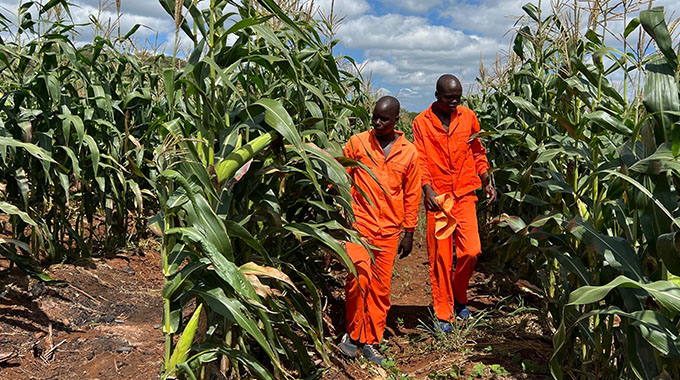
An inmate, Previous Ndlovu, said the knowledge he has acquired will help him sustain his family.
“When I came here, I had basic knowledge of farming but now I have better and improved knowledge. I now know about smart agriculture and soil and conservation techniques. Once I am released, I will utilise the knowledge that I have acquired to start my own farming venture and sustain my family.
“I now know various farming conservation methods such as dead level contours, infiltration pits, tied ridges, mulching, rip lines, and live mulch. Such farming methods are crucial, especially now that we are experiencing climate change. We are receiving low rains but we still have to produce so that we can feed our families,” he said.
Another inmate, Shelton Moyo, said he has also gained knowledge in fodder production. The prison has 22 hectares of grass which is set to be baled to support their livestock. Moyo said he has also gained knowledge on farming as a business. He said a farmer has to strive to produce the best.
“As farmers, while we focus on quantity, we also have to consider quality so that our products can meet market demands. When one has a piece of land, they shouldn’t just produce for consumption only but business as well.
“No matter how small the land is, it can bring some returns. I also know that in farming, nothing is rubbish or useless. If we grow our crops like maize or small grains, the residue after harvesting can be used for fodder. What is needed is to add other contents in order to improve the nutritive value,” he said.
Another inmate, Sam Ncube, said the choice of crops is also important in farming. He said there is a need to prioritise cash crops for quick returns. Ncube said being informed about crop varieties and their performance is also crucial.
Gwanda Prison Farm manager, Assistant Principal Correctional Officer Fungai Muranda, said under their rehabilitation programme, they try to expose farmers to new farming techniques as much as possible.
He said the target is to expand land under tillage from two hectares to 15 hectares and to introduce more conservation methods.
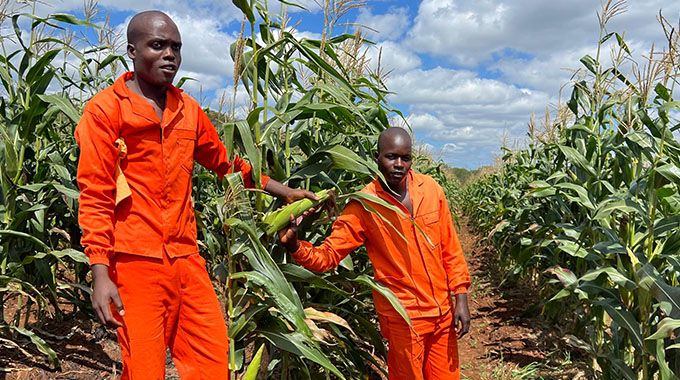
Matabeleland South Provincial Mechanisation Engineer, Mr Dalisto Varegeyi, said it is important for farmers to adopt water and soil conservation methods in their farming. He commended Gwanda Prison for equipping inmates with these crucial skills. Mr Varegeyi said prisoners are trained on how to implement water and soil conservation techniques and their purpose.
“Here we integrated a number of infield water harvesting techniques where we were harvesting a lot of water within the field to ensure that there is maximum infiltration of rainfall, thereby reducing runoff. We were trying to ensure that every raindrop is harvested instead of running off.
“Matabeleland South is a dry region and we need to harvest all available water instead of diverting it. The conservation methods we used here include dead level contours which harvest water.
“In the dead level contours, we put infiltration pits which help in harvesting even more water. Even during the dry season, the water table will be high, thereby reducing moisture stress to the crops,” he said.
Mr Varegeyi said tied ridges are also a form of infield water harvesting technique which increases the amount of water harvested.
He said adding mulch helps to conserve water during dry conditions. Mr Varegeyi said they used live mulching with cowpeas.
He said this was a learning phase to identify which conservation techniques to adopt for best performance, adding that more area would be placed under conservation technology during the next farming season.
Mr Varegeyi said it is important for farmers to adopt such techniques for improved production, especially now in the face of climate change.
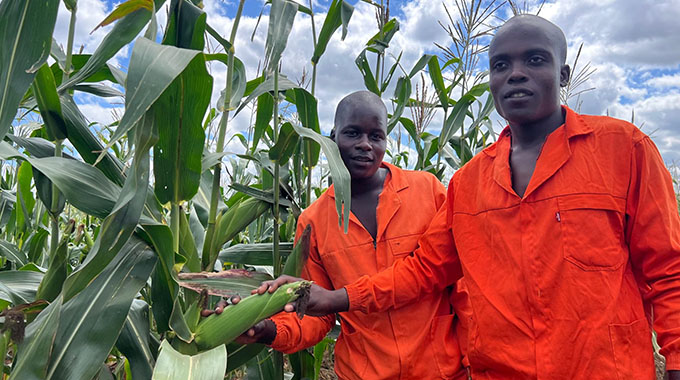
ZPCS Matabeleland South Acting Officer in Charge, Assistant Commissioner Rever Mbedzi, said the partnership with the Department of Mechanisation has helped enhance the rehabilitation process.
“As ZPCS, we are looking at modern trends across various sectors and then train or equip inmates in that regard. We don’t only focus on farming but there are other skills development areas such as tree production, carpentry, building, motor mechanics, and craft, among others.
This particular project has brought huge benefits as it reinforces our efforts of rehabilitating inmates. Our inmates have been equipped with conservation farming knowledge which will help them even when they have been released. It will help them lead improved lives and reduce the rate of recidivism,” he said.
Development of the agricultural sector has been identified as one of the key measures towards attaining Vision 2030, thereby ensuring household food security. The Agriculture and Food Systems Transformation Strategy seeks to achieve an US$8,5 billion agriculture economy by 2025.
This strategy is a composite plan of action drawn from the agricultural recovery plan, Horticulture Recovery and Growth Plan, and Livestock Growth Plan as well as National Development Strategy (NDS1).
These strategies enhance the attainment of Vision 2030 which is anchored on NDS1. Soil and water are major components in achieving food security objectives. —@DubeMatutu


