Dr Brian Tawanda Marwenze
Correspondent
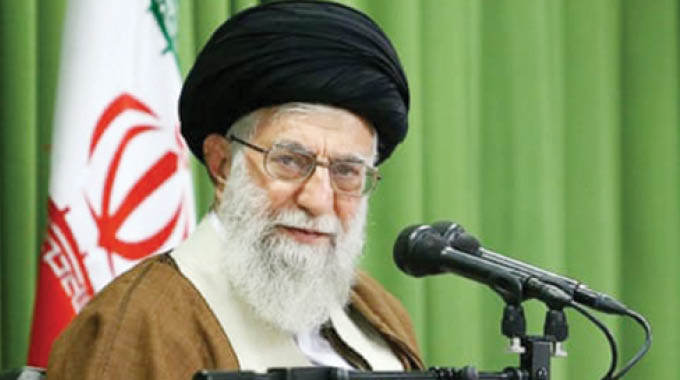
When 20 million people filled the streets of Tehran to stand at the funeral of Ayatollah Ali Khamenei, the moment ceased to be about mourning alone, it became a declaration.
According to the accounts that circulated, this was not just grief, it was political will made visible. Twenty million in the streets is a number that governments use to measure sovereignty. It is the answer to years of sanctions, to information campaigns, to designations and pressure.
The message being amplified was clear.
The Iranian nation showed up for its government, and in doing so it signalled what comes next and after the funeral, the nation will stand up and defend itself, that is how the crowd was framed not as mourners dispersing, but as a united front forming against what is called global arrogance.
The guest list inside Imam Khomeini Grand Mosalla reinforced that same message from the outside, Russia sent Dmitry Medvedev as President Vladimir Putin’s personal envoy, China sent a senior parliamentary leader, Pakistan’s prime minister came with the army chief. Presidents from Iraq, Oman, Tajikistan, Armenia, Georgia and Azerbaijan were present. The Taliban’s deputy prime minister was in the hall. Hezbollah and Hamas delegations sat with Shia scholars from across the world and in a move that drew the most attention, Saudi Arabia sent Deputy Foreign Minister Waleed al-Khuraiji with a senior delegation.
That is not courtesy in statecraft, presence at a rival’s funeral is recognition of durable power. Months after Iranian retaliation struck US-Israel bases in Saudi territory during the war, Riyadh stood at the coffin not because differences were erased, but because Tehran’s survival after the confrontation became a fact the region now has to build around.
European governments were, according to the reports, explicitly told they were not welcome. Iran’s foreign ministry informed them they were on the wrong side of history and none came. No diplomatic courtesy was extended, that empty space was used to draw a line one bloc came to legitimize the other was kept out.
Inside, the symbols were equally pointed, IRGC Chief Ahmad Vahidi, unseen publicly since February, emerged to place his hands on the coffin. Scholars filled the hall and across Tehran, the scale of the crowd was presented as proof that the Islamic Republic still commands its people. Commentators called it a crushing blow to the US-Israel narrative that Iran is isolated or rejected by its own population. The claim being pushed was that MOSSAD and CIA campaigns, years of sanctions, and wartime pressure failed both in the information space and on the ground.
This is where the new light comes in. The funeral is being cast not as an ending, but as a blueprint for sovereignty in the 21st century.
First, sovereignty through mass, 20 million did not just attend,they were presented as a mandate. The political will on display is being read as a promise that after this, the Iran will mobilise to defend itself that turns a religious ritual into a national mobilisation signal.
Second, sovereignty through alignment. The room held Russia and China, the Gulf and the Caucasus, Pakistan and resistance movements, rarely do those actors share a stage, their presence together says the region is no longer waiting for Washington’s cue, it is building its own architecture of recognition, and Iran is at the centre of it.
Third, sovereignty through rejection by keeping Europe out, Tehran asserted that legitimacy no longer requires Western validation that is the core of the new era being described an era where endurance, not approval, is the basis of standing.
The theological framing matched the political one. Interviews and commentary shared online described the moment as a religious and cultural renaissance, the confrontation, it was argued, did not weaken convictions.
Mojtaba Khamenei’s absence from public view keeps the focus on the institution. The millions in the crowd and the delegations came to affirm one thing: allegiance to him and to the system he represents with shouts and pledge.
Even so, the narrative being built around this event matters, it presents Iran’s sovereignty as three things at once. POPULAR, because 20 million stood in the street. REGIONAL, because rivals and partners came to Tehran without Western mediation and IDEOLOGICAL, because the funeral was used to argue that resistance itself is the source of legitimacy.
In that light, the funeral is being written as the first page of a new era, an era where Iran defines its own legitimacy, where the region recognises power that survives, and where a crowd of millions is read as both faith and foreign policy.