admin
adminstarting to affect tobacco farming and marketing.
The country’s export trade was hammered by sanctions, but at the same time the country was sitting on a surplus of extraordinarily cheap electricity and it was proper to grow wheat to bust sanctions.
The illegal Rhodesian regime repudiated its Kariba debts, leaving the British as guarantor to foot the bills and Zambia moved fast to commission the north bank power station and the Kafue schemes to be independent of the illegal regime.
The regime thus found itself with a surplus of very cheap power, especially at night when demand was low and was actually switching generators off.
The additional cost of generating substantial amounts of power at night were thus negligible, this being a hydro scheme; in fact that additional night power was almost free.
So the regime’s expert advisors came up with a smart solution.
This cheap night power was sold for a pittance to establish a new industry liquifying air to produce nitrogen fertilisers and to sell electricity to farmers at next to nothing, so long as they were prepared to irrigate at night and switch off their sprays during the day.
A surge of liquidity as a result of trade sanctions meant interest rates were trivial, so dams were cheap to build especially with artificially low wage rates for black labour.
The net result was cheap water and almost free electricity for the big white farmers, a mainstay constituency of the regime, many of whom had been flattened by tobacco sanctions.
From the regime’s point of view it all fitted together: white farmers could be kept on the land with a guaranteed income, any increase in the price of bread would only really hit poor blacks, wasted electricity could be sold for something, if not very much, and imports could be cut.
But in the 21st century, things are quite different — electricity and water— have become expensive and scarce.
New power stations to meet the demand will raise power prices further.
A decision to reduce living standards either through higher taxes to pay for subsidies or through higher bread prices does not make ethical or political sense, and the sanctions we face now are still hurting the economy. This does mean we do need irrigation and investment in irrigation. But we have to think how we can make best use of that irrigation to enhance food security, give farmers a decent living, ensure food prices remain reasonable, and ensure our national economy grows.
Climate change and altered weather patterns mean our rainfall is growing more erratic. We see more dry spells, as well as more severe storms every rainy season. Yet just a small amount of supplementary irrigation of maize, about a tenth of what we use for the same hectarage of wheat, can see a three-tonne a hectare crop rise to 10 tonnes a hectare.
That sort of leverage pays for survival irrigation in a long dry spell several fold and ensures Zimbabwe moves back swiftly to total self-sufficiency in maize with a bit left over for reserves or export. Cutting maize imports also has huge economic advantages.
Tobacco is another crop that can benefit from a small amount of irrigation. While it is more drought resistant than maize it does need adequate water when seeds are transplanted and roots are small and shallow. A little bit of water at this critical stage can make a difference between a great crop and a sub-par crop.
Again only a tiny fraction of the water used to irrigate wheat is needed to help a far larger tobacco crop. And markets for quality tobacco are booming in Asia. Some very high value crops can be grown under irrigation. Namibia and Botswana import vegetables. Has anyone done their sums to see if we could be the suppliers, now that high quality roads have been built across the Kalahari?
When irrigation is only a small factor in the cost of a crop, rather than the major factor as in wheat, rising costs are acceptable since the rewards are many times the expenses.
Careful thought should produce an irrigation policy that enhances all these desirable ends through reduced or eliminated maize imports and greater value of exports.
We cannot entirely rely on wheat imports and there is therefore a need for a careful study into how wheat production can be made sustainable in Zimbabwe.
And the political goals of greater food security, more prosperous farmers, a more flourishing economy and cheaper food can all be met by a rethink of how we use our resources instead of blindly following the policies of a racist illegal regime trying to pamper a few thousand of its most ardent supporters.
What we are arguing is that we use our Zimbabwean experts to think through the whole economics of irrigated farming in our age, so we meet our political, social and economic goals in the most effective way.


Online Reporter
- Herald
- July 31, 2026
- 23 views
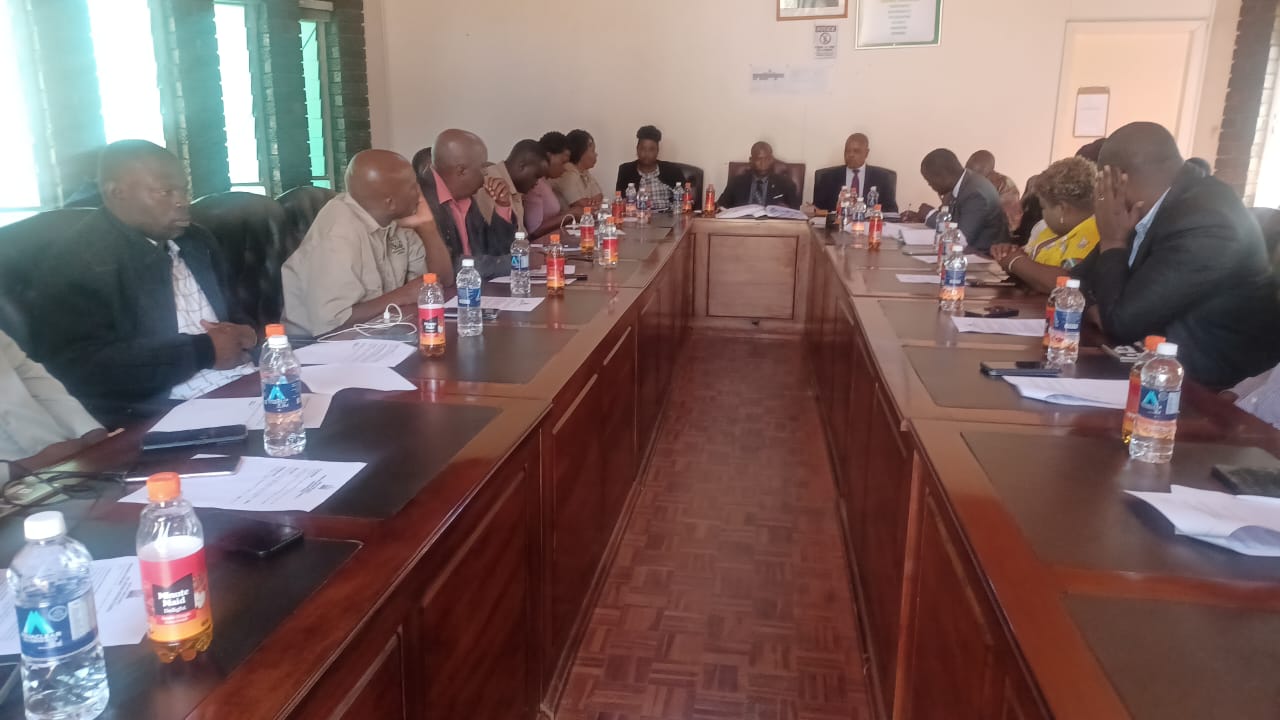
Norton Town Council renews integrity pledges
Diana Nherera Norton Town Council councillors and management on Thursday renewed their integrity pledges as part of the local authority’s commitment to promoting ethical conduct and combating corruption. Speaking…