Online Reporter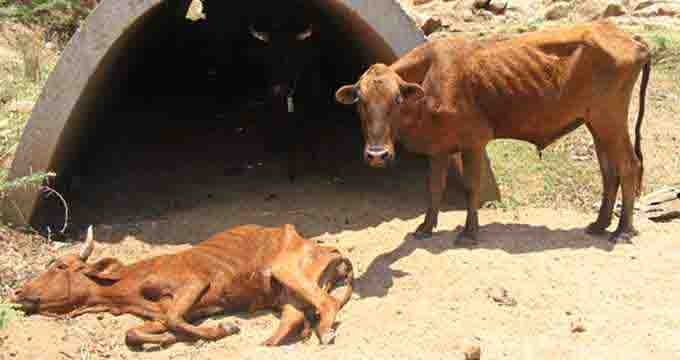
Samuel Kadungure
News Editor
A SEVERE outbreak of Theileriosis, also known as January Disease, is ravaging communal cattle farming regions across Manicaland, putting the provincial herd at risk, jeopardising food security and livelihoods of rural communities reliant on cattle farming.
The tick-borne disease has already claimed numerous cattle since its outbreak in January 2026, with numbers continuing to surge due to inadequate dipping practices, as investigations show that some of the affected communities last dipped their cattle in December 2025.
At least 100 cases are being reported per week in the province as cattle in some areas have gone for at least a month without dipping, ultimately succumbing in large numbers to tick-borne diseases.
The disease upsurge is largely blamed on an acute shortage of dipping chemicals, which resulted in a serious disruption of the communal dipping programme, which should see cattle dipping weekly.
The situation has also remained desperate as chemical suppliers are facing challenges accessing forex to import active ingredients from China for the manufacturing of the needed acaricides.
Suppliers need to access foreign currency around May each year to import active ingredients, the importation of which takes at least three months, in order to manufacture and distribute acaricides before the onset of the rainy season.
Investigations by The Manica Post in Mutare, Makoni, and Chimanimani have revealed that a number of dip tanks have been placed under indefinite quarantine, with the movement of cattle in and out of the areas restricted.
Although the incidence of four tick-borne diseases has increased over recent years, theileriosis has proved to be the biggest problem, causing widespread damage even outside the rainy season when it typically occurs.
Manicaland Provincial Veterinary Director, Dr Takunda Chikaka admitted on Wednesday that the rainy season has brought challenges as the tick population has gone up with incessant rains creating ideal conditions for tick proliferation.
“All the seven districts have reported cases of January Disease since the beginning of the year, and our field staff has been carrying out awareness campaigns in terms of prevention, treatment and control. The message has largely centred on control of the tick vector through dipping and tick grease application. Farmers are being taught the drugs of choice for management of clinical cases. The Department of Veterinary Field Services is also in the process of carrying out January Disease vaccination, and this week hotspots in Makoni are being targeted. The province is anticipating delivery of dipping chemical within two weeks to augment ongoing disease control efforts,” said Dr Chikaka.
Dr Chikaka refused to shed light on livestock deaths recorded in Manicaland since beginning of the rainy season, saying such information was classified.
However, there have been increased reports of cattle deaths in the province, prompting the DVS to impose a quarantine order in Chimanimani District in an effort to combat the spread of the disease, while in Makoni, cattle deaths are being reported in Chinyika West, where vaccinations are currently being carried out.
In Chimanimani, five dip tanks – Mutambara, Svinurai, Zandonyi, Nyambeya 1 and 2 – with a cattle population of 3 400 have been exposed to the suspected outbreak and placed under quarantine.
“The most prevalent tick-borne disease is January disease, and it has been reported in all districts of Manicaland. January disease (Theileriosis) is a high case fatality disease which can quickly decimate whole kraals or herds. It is characterised by fever, dullness, tearing, corneal opacity, difficulty breathing, swollen lymph nodes, reduced appetite, sometimes blood in faeces, and a high death rate amongst affected cattle.
“Farmers are advised to dip their cattle weekly, and where January Disease has occurred, a 5-5-4 dipping regime is recommended, where farmers dip cattle after five days, then after another five days, and then after four days, that is, three times in two weeks, in order to break the life cycles of infected ticks. Uncontrolled cattle movements are prohibited to reduce the spread of infected ticks and the introduction of infected cattle to cleaner areas. A JD vaccine is available for conferring lifelong immunity to cattle and comes together with redwater and gall sickness vaccine. Farmers can use buparvaquone-containing drugs, such as Butachem, Butacure, Butalex, and Parvexone, to specifically target the parasite in the animals. Supportive therapy to aid recovery includes administering multi-vitamins and painkillers, such as Ketosol, concurrently with curative treatment,” said Dr Chikaka.
In Mutare Rural, a farmer, Mr Shupikai Mvurumutiya, reported that cattle are falling sick and dying, having last been dipped in December 2025.
“It has been a month since our cattle were last dipped, and we are appealing to the Department of Veterinary Services to assist us. Our cattle are dying from the disease, and we are worried about our livelihoods,” “ said Mr Mvurumutiya of Village R in Odzi, urging authorities to intervene promptly to protect their cattle population.
A Headlands-based farmer, Mr Raymond Sakutukwa said cattle had been dying at a suspicious rate in the area, particularly in small-scale resettlement areas, and called upon authorities to investigate and implement measures to combat the disease before it spread.
He said lack of dipping services has led to a surge in tick-borne diseases, with many cattle showing symptoms of theileriosis.
“Since the onset of the rainy season, we have been experiencing increased deaths of cattle. The most affected area is Chinyika West, where there are smallholder farmers. If this is not urgently addressed, it may spread and affect a number of farmers and households. Farmers, in addition to using public dip tanks, should also treat their cattle at home as a supplement,” he said.
According to reports, tick-borne diseases, such as January Disease, have accounted for more than 65 percent of cattle deaths in Zimbabwe since 2016.
In a farmer advisory alert, the Ministry of Lands, Agriculture, Fisheries, Water and Rural Development noted that prevention is critical and tick control remains the primary solution.
“Weekly dipping is mandatory. All cattle must be dipped weekly during the rainy season, in line with Government policy, to control the brown ear tick. Farmers should pay dipping levies and ensure correct acaricide dilution, as per the manufacturer’s instructions. Spray races are highly recommended for the best results,” said the ministry, further stressing mandatory reporting and compliance, calling on farmers to report any suspected cases of, or sudden deaths, to the DVS within 24 hours.