admin
admin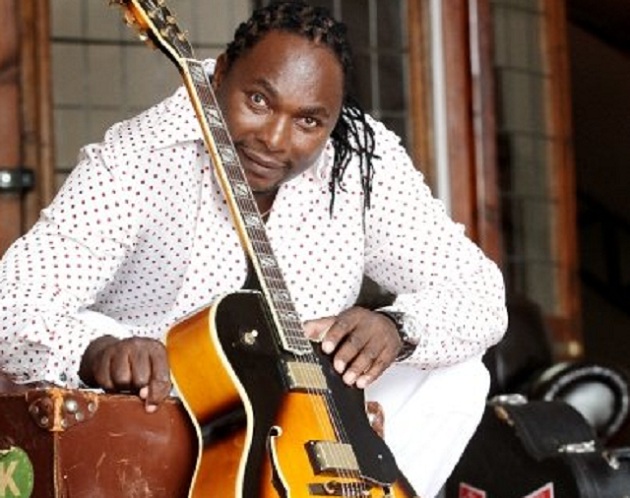

Peter Matika, Senior Leisure Reporter
SOUTH Africa-based Zimbabwean guitarist Maxwell Vidima is probably one of the greatest to emerge from the country.
His reputation precedes that of many, while his popularity in the industry both locally and internationally spans about two decades.
The guitarist, singer-songwriter’s 2004 album Sagiya was probably his best work since his first album — Mabambo.
The album, Sagiya, is a fusion of jazz, blending contemporary music, folklore and current affairs, telling a true African story.
It bears testimony to the perception that he is one of the greatest guitarists to emerge from Zimbabwe.
Vidima has a talent that is comparable to none, the way he strums the guitar will by all means turn any musician’s face green with envy, leaving them salivating in glee.
Born 46 years ago in Zimbabwe Vidima is ranked among the greatest guitarists of all time, with notable songs such as Babaye Mombe, Aphiri, Sagiya.
Recently in the country, since his last visit in 2012, Vidima said he wanted to nurture and promote local talent.
Sunday Leisure senior reporter Peter Matika (PM) had an opportunity to speak to the guitarist, who explained his rather epic journey in the music industry.
PM: It’s a great opportunity to interview an iconic music legend as you; what brings you to the country?
MV: It’s really been a while since I was in Zimbabwe. I am actually here to promote not myself or music but to nurture and promote youths in the music industry. There is a project that I am undertaking with an organisation in South Africa to promote youngsters. So far I have identified two youth bands and I will be hosting two shows in Harare and Bulawayo. The first one being on the 19th and the second on the 21st of December this year, they will be held in both cities.
PM: That is quite a rare opportunity for youths to have a music great seeking to promote them. Anyway what have you been up to in South Africa?
MV: A lot has been happening. Musically I have been pushing and promoting my brand, while at the same time I have been engrossed in arts and culture projects that is what has been keeping me busy. I was based in Cape Town but I am now in Joburg.
PM: Sounds hectic, for those that don’t know you, who is Max Vidima?
MV: (Laughs) Vidima is a guitarist who has had a long journey. He rose to fame in the early 2000s and is based in neighbouring South Africa. He has had the opportunity to travel around the world, meet world-renowned artistes and even play with international bands. I grew an interest in music at the age of nine. My dad had a hotel in Kwekwe and various bands used to play there. In particular I liked a group that was called Wells Fargo. In the following years I joined a youth band — Imbizo Youth Band. My dad wasn’t pleased with the idea. I remember him smashing my first acoustic guitar on the wall. He really didn’t want me to play music.
PM: Tough love, he probably wanted the best for you.
MV: Probably, anyway a few years later I joined and worked for a company called Union Carbide. I did fitting and turning, that is my profession but I left that to pursue my dreams. In the years that followed I met up and shared the stage with music greats such as the late Andy Brown. I then found it ideal to learn music and then enrolled with UCT to study music.
PM: You really had a passion and zeal for music. How have your albums performed?
MV: My first album is Mabambo the second being Sagiya and the third Friends and Strangers. I am currently working on my fourth. My second album is the best, as said by critics and fans. The album is so popular that some of my songs are used and have been used to soundtrack scenes in movies and some TV productions. I made a lot of money from that album and could go on holiday around the world.
PM: You must be chuffed with yourself. What else do you do besides music?
MV: I am mostly into music and do a few projects here and there to sustain my family and self. I also do most guitar work for Oskido and his Kalawa stable.
PM: Kalawa is one of the fastest growing house music stables in Africa. I am sure they don’t sign anything mediocre and that is why they have you on board.
MV: It’s quite an experience; I appreciate working with various artistes all over the world.
PM: It was quite a pleasure to chat with you for a few minutes.
Those that might know Vidima, they would remember him for his signature style — dreadlocks, which he has since chopped off.
Vidima holds a Masters Degree in Musicology, has written a book about African guitar styles, runs an impressive international touring schedule.
He was born in Zimbabwe in a significant era in the world. It was June 1969, just a month before the moon landing, and at the height of the liberation struggle in Zimbabwe. His birth bridged two worlds: that of his Zulu mother from Willowfontein in KwaZulu-Natal, and his Shona father from Gweru in Zimbabwe’s Midlands Province.
As he noted, his musical inclinations began when his father started a hotel business in Kwekwe, incorporating the now legendary Midnight Club.
“Everybody passed through here man. All the musicians in Zimbabwe played in this place, if you ask any of them about the Midnight Club they’ll smile and remember. Oliver Mtukudzi, Thomas Mapfumo, Louis Mhlanga, David Manda, George Phiri, as a teenager I saw everybody. These were my big influences,” he said.
His exposure to such a prestigious heritage of musicians was fundamental in forming his musical inclinations. Vidima bought a guitar, joined the local marimba youth band and began the process of teaching himself, while glued to the Midnight Club’s stage and learning whatever he could by taking in whoever passed through.
In the late 80s and early 90s the hotel scene in Joburg was where all the music action was happening. Hillbrow in particular was a carnival of aspiring musicians and grand masters alike. In 92, after a-year-and-half with Andy Brown, Vidima moved to Joburg to work in the hotel scene.
“We earned good money there man,” he reminisced.
“We would play the whole night and still be going at 10am on a Sunday morning. Everybody had gigs, everybody was on top form.” It was the era of the emerging guitarists: Jimmy Dludlu’s was in ascendancy, Selaelo Selota was still a cleaner at Kippies, Mac McKenzie’s Genuines were big news.
Vidima played bass, even though guitar was his first instrument. “I was playing the bass and learning about the guitar from the people I played with. It was a brilliant time, electric and exciting,” he said.


 Online Reporter