Chronicle Editor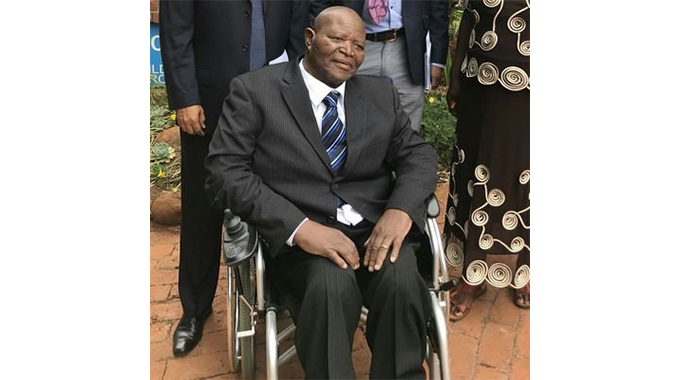
Limukani Ncube, Obituary
STRANGE as it may be. You get a feeling that Bulawayo has lost a big part of its soul. Hours after people of all walks of life had gathered to reminisce on the illustrious life of a proud Matabele son, cricketer, and former national team player and coach Heath Streak, another towering figure, Cde Joshua Teke Malinga was called to rest.
On Friday night, another library carrying the history, culture, struggles, heritage, and character of this royal city was burnt down. Just like the city has in recent years lost both loud and silent voices that stood like landmarks in the vast Matabeleland region in the mould of national heroes Cdes Dumiso Dabengwa, Professor Callistus Ndlovu, Dr Sikhanyiso Duke Ndlovu, Naison Kutshwekhaya Ndlovu, Jane Ngwenya and many more like businessman Noel Eric York, known to many as Mbokodo, first black Bulawayo City Council Town Clerk Dr Mike Ndubiwa, academic and founding National University of Science and Technology Vice Chancellor Professor Phineas Makhurane, sports personality Ndumiso Gumede and artiste Cont Mhlanga, you surely get a sense of a city losing its character to death.

Cde Malinga was not just an activist championing the cause of people with disabilities. He was a serious player in local and national politics. Never afraid or shy to speak his mind and take ownership of views and leadership, the departed son of the soil was a treasure of sorts. His life story from suffering from polio only aged two, which affected his legs for life, being relegated to the backstage because of his disability, and later getting covered by the grace of God to get a decent education and to lead on disability issues and political fronts, is just a chapter off some fiction novel.
We called each other Homeboy. We loved talking about the beautiful countryside of Filabusi, Insiza District in Matabeleland South Province, and the rich history of uGodlwayo Omnyama. Although he was born in Matshetsheni, Mzimuni area in Gwanda in 1944, his family moved to Filabusi when he was four years old.
He granted me many interviews as he wanted a book written about his life journey. His grasp of local, regional, and international issues was top-notch. However, I found the beginning of his life story intriguing. He owned up to being rebellious from the word go, which explained why some in the political arena found him to be a handful and controversial.
One thing that stood out in conversations with him was his longing for a better life for people with disabilities. He believed they had to be given equal opportunities like anybody in life, and that they were not “charity cases as they had the brains” and some were even more intelligent than “you”. Cde Malinga believed he had done a lot fighting for the cause of people with disabilities, but more heights still had to be scaled, even if he would have moved to the world unknown.
His view was that people with disabilities are part of the human chain, and once ignored, society would not be complete. This was to be captured in the first lines of his book.
“I wish I could say like the Biblical Paul that I have run my race and even say like Germany’s founding Chancellor Otto von Bismarck that there is nothing left to do in my lifetime. But I will say, like the poet Robert Frost, that there are miles and miles of the road that lies ahead — miles and miles before we can all go to sleep. There is no saying when the destination will be reached although I am certain it will not be during my own time.
“Yet there is so much to be thankful for in the steps that have been taken — by me as an individual — by my local community, my African race, my country, the international community, and most importantly by disabled people everywhere. Every village, district, province, nation as well as the global community can only be as successful as the sum total of its parts. The constituent parts of societies will always and at all levels — include men, women, children, ethnicities, races, the so-called able-bodied members as well as those that are defined as disabled. These form part of the human chain or steps and each of these have a role to play to ensure development and progress. If any one of these steps is removed, then it is impossible for society to forge ahead.”
While society back then looked down upon people with disabilities, it was strong characters like Cde Malinga who changed the status quo. He started to read and write at the age of 12 after being enrolled at Jairos Jiri Centre in Bulawayo. His first trade was being a cobler. He was to further make history by being the first disabled person at Bulawayo Polytechnic.
“While in Filabusi, my parents did not think I could go to school or work. So, they just kept me until I was 12. In fact, nobody wanted to train or educate me. They all thought I was a liability, but that was all to change when I got to the Jairos Jiri Centre. While at Jairos Jiri, I took a keen interest in education. I believed in myself and I knew I had the brains to compete with anyone at any given forum. I never wanted my disability to hold me back. The Jairos Jiri Centre and the Bulawayo City Council then sponsored my secondary education at Mpopoma High School. I was at Mpopoma from 1962 to 1965.”
After completing a course in accounting, he was to face racism head-on, as his fellow white classmates easily got swallowed handsomely by the industry, while he faced discrimination.
“I was the only black in my class at the Bulawayo Technical College. The white students got jobs before they completed their studies. It took me a few months to get a job at the Jairos Jiri Institution because I could not be employed in the commercial industry. I had a number of interviews and I failed because I was black and disabled until Mr Jairos Jiri gave me a job as an accounts clerk in the training workshop. I worked for Jairos Jiri and worked my way up until I became part of management and moved on to be National Secretary (Chief Executive Officer) in 1995 based at the head office in Bulawayo at that time. The organisation sent me to the United Kingdom, Ghana, Nigeria, Malawi and South Africa to study how disabled people are treated in those countries,” he said in an interview at his Richmond house in Bulawayo.
A witty character with a lot of stories to tell, Cde Malinga enjoyed the bright lights of Bulawayo before and after independence. He knew all the dark and bright corners of the city. He knew the struggles and triumphs of the city and its people.
He was one of the pioneer businessmen, starting off with a fuel station and supermarket in Pumula, before venturing into other sectors. He was at the peak of his youth when shebeens in Bulawayo were the in-thing, yet he was focused on getting settled and acquiring properties for a soft landing later in life. The day he stopped drinking alcohol, in the early 1980s, was when he had come back from a political meeting where there were some utterances that did not sit well with him.

He said he wondered what he could have said or done in that meeting if he was drunk, and then took a conscious decision to quit the brown bottle and concentrate on uplifting communities “sober all the time”.
“I started serious drinking (alcohol) when I was 20-years-old. I owned a car when I was young; my first car was a duff, very small and cream in colour. Many times, I used to get drunk and drive while drunk to my home at Mhlophe Flats and New Luveve. My first home was a rented room at Nguboyenja, and then moved to Old Location, 10th Street otherwise popularly known as Makokoba where I shared a rented full house, then lastly rented a full house at Mhlophe Flats in Mzilikazi. I then bought a house in New Luveve where I stayed for a few years then finally bought another one in Richmond where I stay now,” he said.
Nonetheless, he was to leave an indelible mark on disability issues. He travelled the length and breadth of the world and sat on local and international bodies with distinction.
He became a councillor and Mayor, a vibrant one, for the City of Bulawayo. He rose from the bottom to the top in politics and was a member of the ruling party Zanu-PF various organs and was in 2018 appointed Special Advisor on disability issues to His Excellency, President Mnangagwa. Despite being confined to using crutches and wheelchair for the better part of his life, Cde Malinga, a family man, left the world for disabled people a lot better. He fought a good fight. He lived a life of no regrets and was proud of his achievements that spanned to the academic field where he attained a Masters Degree in recent years.
“I cannot say for sure how my life would have turned out had I not been deprived of the use of my legs just two years after I was born. This is not the kind of start to life anybody would want but mine is not a lamentation. Mine has been and continues to be a story about the triumph of hope over adversity,” he once said.
Rest in power JT. Hamba kahle Godlwayo!


 Online Reporter