Online Reporter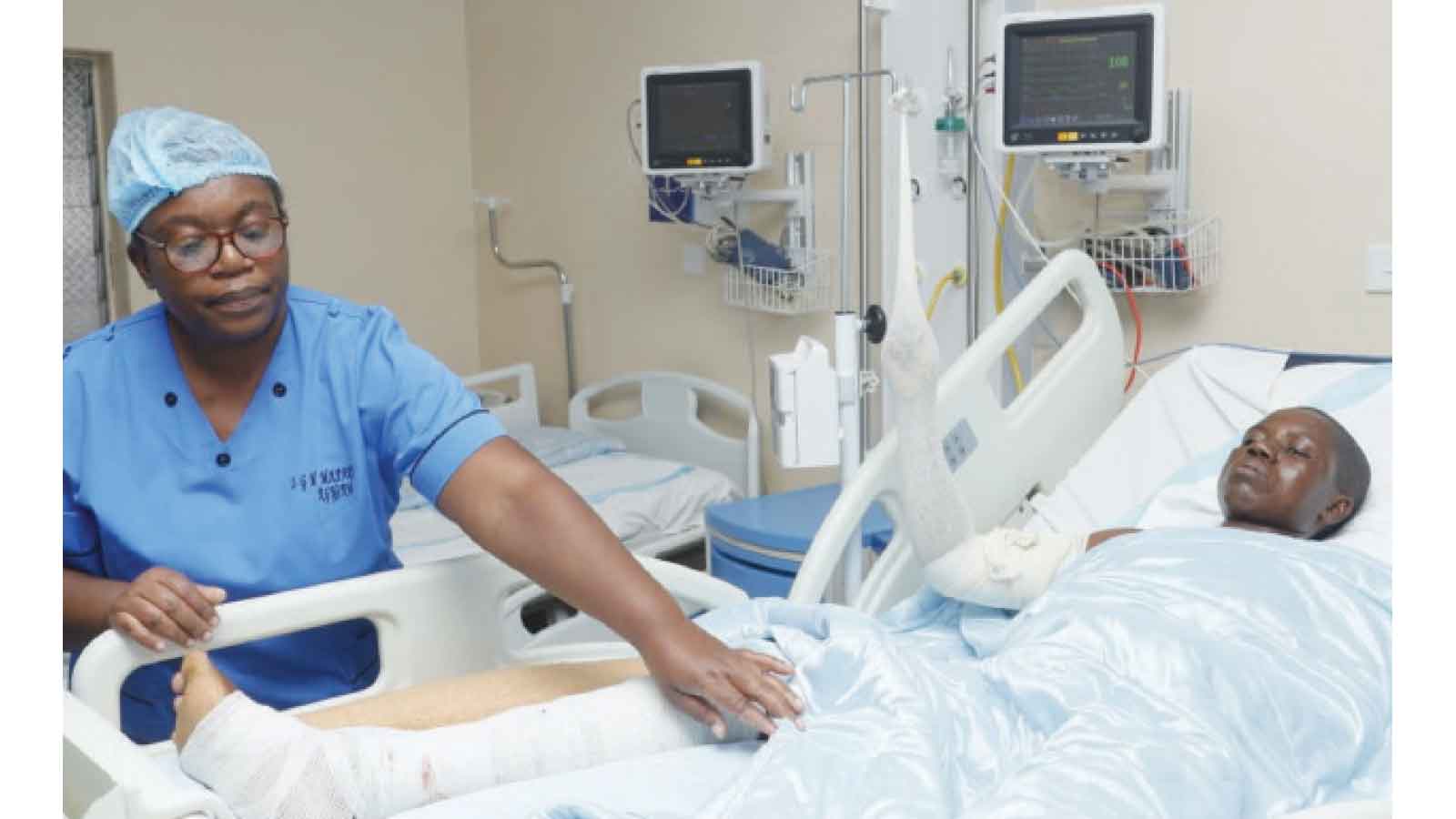
Rumbidzayi Zinyuke in Karanda
For many Zimbabweans, serious illness or traumatic injury brings more than physical pain. It also raises a frightening question on how they will afford treatment?
For thousands of vulnerable patients, the answer has been found at Karanda Mission Hospital in Mount Darwin, where the ability to pay does not always determine whether someone receives lifesaving care.
Every year, the mission hospital spends thousands of dollars treating patients free of charge, ensuring that some of the country’s vulnerable citizens are not turned away when they need medical attention most.
Among those whose lives have been transformed by that compassion is 43-year-old Monica Dare.
Her ordeal began in 2010 when she accompanied her sister-in-law to collect firewood in an area along the Zimbabwe-Mozambique border.
As they descended a mountain, she stepped on a landmine.
When she regained consciousness, her left leg was gone. Miraculously, the baby she had been carrying on her back survived without injury.
After receiving emergency treatment, she was referred to Karanda Mission Hospital. With no means of paying for specialised care, she feared her recovery would end before it had truly begun.
Instead, the hospital treated her free of charge. Although she lost her leg, Ms Dare refused to let the injury define her life. After her mother sold asbestos roofing sheets and a cow to buy her a prosthetic limb, she slowly rebuilt her future through piece jobs, supporting her three children, now aged 13, eight and six.
Just as life was beginning to stabilise, tragedy struck again.
Recently, while travelling on an ox-drawn scotch cart to apply manure in her garden, the animals bolted, overturning the cart and leaving her seriously injured. This time, she suffered two broken bones in the right leg and another in her right arm. She was first taken to a local clinic before being referred back to Karanda Mission Hospital.
Once again, she arrived without money for treatment and with no relatives able to assist financially.
And again, the hospital admitted her without hesitation.
“I don’t know what would have happened to me because I simply could not afford the treatment. This hospital places importance on God and I also believe it was God who saved me,” she said.
Although grateful to be alive, Ms Dare worries about what lies ahead.
“After my first accident, I managed to start doing piece jobs so that my children could have food and clothes. But after this latest accident, I don’t know if I will continue because I am the one who has to make sure my children are looked after,” she said.
Her experience reflects that of many vulnerable patients who arrive at Karanda with little hope and even fewer resources.
Assistant Medical Director Dr Takudzwa Sasa said the hospital was established to serve disadvantaged communities and continues to uphold that mission by ensuring poverty is not a barrier to healthcare.
Although the 160-bed hospital primarily serves communities in Mount Darwin and surrounding districts, it has become a referral centre for complex cases from across Zimbabwe and neighbouring countries.
“Most of the surgical patients we treat actually come from outside our immediate catchment area. We receive patients from all parts of Zimbabwe and sometimes from Mozambique and Zambia because people know the services we provide,” he said.
The hospital carries out between 3 000 and 4 000 surgical procedures each year, supported by a resident general surgeon, a resident gynaecologist and visiting specialists, including orthopaedic surgeons.
According to Dr Sasa, the heavy surgical workload has also strengthened the skills of doctors, nurses and student nurses through continuous exposure to complex cases and evolving medical practice.
Yet beyond its clinical expertise, he said, Karanda’s greatest strength is its commitment to caring for those who have nowhere else to turn.
In 2025 alone, the hospital spent approximately US$155 000 providing free treatment to indigent patients. During the first quarter of 2026, a further US$26 000 had already been spent on assisting vulnerable patients.
Overall, nearly a quarter of the hospital’s potential revenue is directed towards treating people who cannot afford to pay.
“Our philosophy is that we help first. When someone comes needing urgent treatment, we do not begin by asking whether they can pay. We first provide the care because that is why we are here,” said Dr Sasa.
Karanda Mission Hospital also provides free treatment for victims of accidental landmine explosions along the Zimbabwe-Mozambique border, where explosive remnants of past conflicts continue to threaten nearby communities.
Working in partnership with The HALO Trust, the hospital provides specialised treatment and rehabilitation for survivors.
“These cases are particularly close to our hearts. We provide everything we can, physical treatment, emotional support and spiritual care, because these patients have already suffered unimaginable trauma,” he said.
Dr Sasa said the hospital’s reputation has been built not only on quality medical services but also on the Christian values that guide every aspect of patient care.
For patients like Ms Dare, Karanda Mission Hospital’s greatest investment cannot be measured in dollars.
It is measured in second chances, restoring hope to families who believed they had run out of options, and proving that compassion can be as lifesaving as medicine itself.