admin
adminon the United States inflation rate.
This is because Zimbabwe’s multi-currency system is predominantly based on use of the US dollar.
This was said by University of Zimbabwe Professor of Economics Tony Hawkins at a productivity conference in the capital recently.
“There seems to be general agreement that Zimbabwe should stick with the US dollar (multi-currency) regime.
“The snag is that this will not be viable if we inflate at 6 percent or more while US inflation is less than 1 percent,” he said.
Latest inflation figures show that the country’s annual inflation rate for April stood at 2,7 percent, unchanged from the prior month due to a relative stabilisation of commodity prices during the period.
Economic analysts have predicted that inflation this year will be driven by rising fuel prices (in US dollars), rising food prices (in US dollars), and wage increases partly caused by the resulting knock-on effects.
Specifically for Zimbabwe, inflation has been caused by imports from countries with temporarily strong currencies, particularly the South African rand.
Dollarisation of the local economy means the Government can no longer use monetary or exchange rate policies to offset inflation or boost exports and the economy via devaluation.
According to the professor, the only solution to deflate the economy is by squeezing costs, which means, simultaneously, lower wages and fewer jobs.
Prof Hawkins added that the US dollar is not a stable currency and has shown fluctuating tendencies over the years.
Although there is considerable uncertainty, consensus by observers is that the US dollar will move lower, with some analysts predicting a 20 percent decline over the next two years.
“A weaker dollar is welcome for us because it increases export competitiveness, boosts commodity prices and makes import competition more expensive.
“The downside is that it fuels inflation,” said Prof Hawkins.
Prof Hawkins also said the local business operating environment faces a new challenge that has emerged out of dollarisation and the global financial crisis that emerged from 2008.
He added that business in the country is facing a new situation – the “New Normal”, which now requires businesses to implement new strategies.
“In Zimbabwe the ‘New Normal’ is chiefly reflected in the impact of dollarisation on business and Government.
“Firms have been forced to adjust their business models in line with the new circumstances imposed by dollarisation,” he said.
The “New Normal” is a term coined to capture the main elements of the post-global recession economy.
Two main features of this global “New Normal” stand out, that is, a period of sluggish growth – much slower than in the decade until the 2008 world recession, and increased global reliance for growth on Asia, especially China and of emerging markets generally.
A number of characteristics stand out in Zimbabwe’s new operating environment, notably the country is a high cost location, new technologies now mean improved productivity but fewer jobs, local firms are increasingly retrenching workers because they are over manned, and it is often cheaper to import than to manufacture locally.
This has placed major constraints on local companies’ productivity levels. The economic dispensation, Prof Hawkins said, has resulted in the need for local companies to enhance productivity, especially insofar as cost-plus pricing is no longer a viable model for business in the multi-currency era.
“For years Zimbabwe management has paid workers on the basis of deemed needs rather than productivity.
“No one cared about productivity – what was actually being produced. Because wage costs were negligible and paper profits enormous, management did not worry about productivity.
“Firms must now enhance competitiveness by boosting productivity and tying wage increases to productivity not to perceived worker needs,” he said.


Online Reporter
- Herald
- July 22, 2026
- 133 views
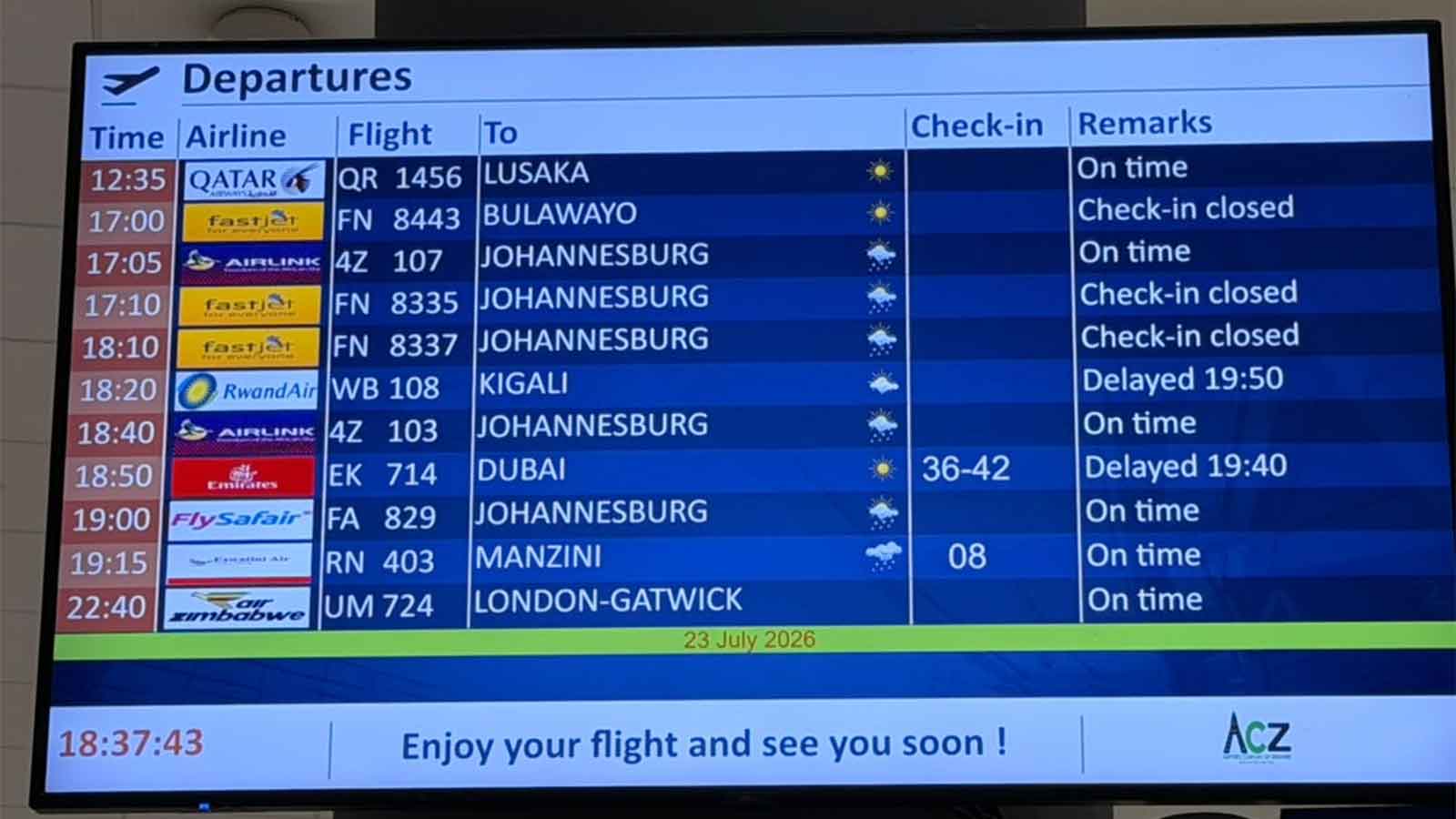
Air Zimbabwe’s Flight UM724 ready to depart for London
Freeman Razemba Senior Reporter The Air Zimbabwe’s Airbus A330-300 aircraft which is plying the Harare–London route is now ready to leave Robert Gabriel Mugabe International Airport in Harare for Gatwick…