dyton mupawaenda
The Second Republic has ushered in the devolution concept as a strategy to promote national development. It is about to go a gear up under the National Development Strategy 2 set for launch early next year. Herald Editor Victoria Ruzvidzo had a sit-down with the Permanent Secretary for Presidential Affairs and Devolution Engineer Tafadzwa Muguti on this discourse. Below are excepts of the interview.
***
VR: Good afternoon PS. You have been on a tour of provinces in the last few weeks as the Permanent Secretary for Presidential Affairs and Devolution. What is this about?
TM: So, where we are, we are saying that in order for us to have a true picture of what the economy is doing and how it’s performing, we need to tap into the provinces. I firmly believe, as the Secretary for Presidential Affairs and Devolution, that what we are analysing right now is the tip of the iceberg of the potential of this economy. There are other formalised businesses that we have not taken stock of, of what they are producing and adding to the economy. So, I know many businesses in the IT side, people who have lodges, people who have many businesses that are not being considered. And the only way to close that gap is when we have a whole-of-Government approach, where we are simply saying, can every province take stock of the businesses under their roof? That’s what we’re saying. Whether its in the hospitality sector, whether its mining sector, whether its transport, whether its logistics, how do we take stock? When we have taken stock of those issues, we can then be able to say, wow, these are the businesses that we actually have. These are the businesses that are driving the country forward. And I can bet you that 30-35 percent (formal business) will balloon to 50 percent.
VR: Under the devolution thrust, how does the Constitution support local governance and decision-making?
TM: The Constitution speaks about devolution. The Constitution says, let’s give powers, decision-making powers to the people. And that doesn’t mean the Minister of State. It means VIDCO (Village Development Committee). Because the Minister of State will speak on behalf of the people. And central Government then listens. And programmes and projects are tailored by the respective line ministry to come and then give the province to say, there is your answer to what your people are asking for. But right now, our approach needs to be redefined. I think right now it’s more top-down. So, for us, what we’re looking at is, we’re working on NDS2 right now. When NDS2, National Development Strategy 2, comes to life from 2026 to 2030, we are simply saying in NDS2, let every province come up with a provincial economic development plan which mirrors the priority areas of NDS2. If we say the economy is going to grow by 5 percent, then we say as a province, what is your contribution of that 5 percent? So if the Honourable Minister of Finance says Zimbabwe’s economy has enjoyed a growth of 3 percent or is projected to grow at 5 percent, what are we basing it on? We’re basing it on the programmes and projects that we are going to roll out. We are basing it on how the economy or how the private sector or business is going to react to our policies as Government. So essentially that’s where we are. We will continue to evolve with that discussion.
VR: So in this regard what has been done or is being done to support provincial capacity in economic planning?
TM: His Excellency has been thinking far ahead. I am happy to say that as of today, we as the Office of the President, of the Community and Public Service Commission and Minister of Finance’s tripartite, we have deployed 590 people across 10 provinces. You now have a directorate in the province. In the Minister of State’s office, there is now a department for economic affairs and investment. In there, there are economists. Almost six or seven economists make that department. We now have a department for infrastructure planning and development. In there, there’s a deputy director for environment. In there, there is a deputy director, a planner and an engineer. We also now have a provincial department for coordination. So, the old work of the district administrator, is now done by the provincial coordinator. So that is the person who coordinates the DDCs. That’s the person who coordinates all other Government arms.
Then we now have what we are forming as a provincial treasury, a department with a director of finance, chief accountants and internal auditors that we have placed in there. And we believe the capacity is there. But planning and implementing are two different things. You see, in Government, the output of local Government is the input of provincial Government.
VR: From your perspective, are people aware of their roles in achieving the economic goals that are intended, say for Vision 2030?
TM: No, definitely. His Excellency, once again, full of wisdom, he says, Nyika inovakwa nevene vayo and people then wonder. His Excellency has moved from Zimbabwe is open for business to Nyika inovakwa nevene vayo and what they are not understanding is the President saying, its you who is going to make it happen for us to get to 2030. For us to be an upper middle-income society. Its you who has to then say, gone are the days when you were saying, Ah, its for Government. Now we are at a stage of saying, what can you do for your country? When we say Zimbabwe has a $40 billion GDP. Are you a consumer? Or you also contributed to the production? So that’s where we are.
VR: How do you view the shared responsibility between the Government and citizens regarding economic performance?
TM: We are failing together. The Government is not run by robots. Its run by people who also earn a salary. Who also have a role to play in dissecting what we need to be doing. So for us, as we are doing this, I think what is critical is for you to clearly appreciate also that there is a role to be played. There is a function to be played by both Government and the people of Zimbabwe. Nyika inovakwa nevene vayo. By the way, Government is not in the business of business. So when people say, Government must give us jobs, no. Government creates a conducive business environment for businesses to thrive. Then businesses now employ people. That’s why the President has now directed to say, review the tax thresholds. Review how many levies and licenses you are charging people to do business. That’s why the President is always talking about ease of doing business. Because he is simply saying, let us make it easier for businesses to do business.
VR: In the devolution process are there any tax or regulatory challenges being faced and how are they being addressed?
TM: What you have to understand is that because we have not been approaching the economic development agenda of the country from a legislative understanding, we have made some serious mistakes. And I totally blame the legislators. The legislators, there are three interfaces that a citizen can interface on policy. The first is what we call the resident. The resident interfaces with what happens in your ward. Right? You interface with your councillor. Perhaps there’s a pothole which is damaging people’s tyres. Perhaps the local nightclub is closing late. Perhaps the local school is not producing good results. The first legislative person you interface with is the councillor. That is the person you then say, ah, councillor, you are letting us down. So, at some point, if local authorities are charging hefty taxes for you to just have a business permit, who complains? It is not central Government. It is you who runs the business in that ward. Councillor, when you go to the full council meeting please go say these things. And, by the way, full council meetings are open to the general public in the gallery.
So, you can hear, what the councillor will be contributing. The second interface is the provincial. The last interface, which is very important, is the MP. Right? And the MP, you talk to him about laws that need to be amended. Children are drinking alcohol at 18, why can’t you push the legal age to 21. And in the second dispensation, we have had more legislators asking for freebies than them going through legislation.
So, each year, Parliament needs to say, which bills are we looking at? If Government says we want to increase production in mining, Parliament should then sit down and say, are the laws there in mining actually an austerity towards us being able to achieve this? Or these laws are not enabling us? What can we do to make it easier for investors to come? But instead, our Zimbabwean legislators are focusing on the wrong thing.
VR: So how do we wiggle ourselves out of this?
TM: We need to understand that we got to the stage of 50-something taxes because we are still using some laws from 1965. So, we need to amend our laws. Just the other day, I saw a law, a tax revenue certificate from 1968. And I didn’t know that law. And that’s a law that we need to sit down and say, does this law still apply? Can it be amended? So, we spend most of our times challenging the Speaker of Parliament, pushing to get free stands but MPs do not go to Parliament to get freebies.
They get to Parliament to be the voice of the people. So, for us, we’ve got a lot of work to do to educate our MPs on the role they have in economic development.
The MP is in charge of the legislative apparatus which allows for development to occur. So, the other provincial index that we want to come up with is what we call the Provincial Poverty Index. It is something that my office has come up with, the Provincial Poverty Index. And when we started presenting this issue, there was a high debate within the United Nations community and other surrounding countries to say, how do you come up with the Provincial Poverty Index? And my answer to them has always been very simple. You cannot grow a provincial GDP and also grow in poverty. Where jobs are being created, where there’s revenue being realised, surely we are employing people, that means they are coming out of poverty.
VR: What plans are in place to incentivise provinces and ensure they meet set economic targets?
TM: There is a phenomenon called fiscal equalisation. When we talk about fiscal equalisation, we are talking about what is in it for the locals. Nigeria, for example, they say in a national project, X percentage is going to go to government as a partner to this platinum or gold mine. But within that X percentage, X percentage belongs to the province.
So we could say that 40 percent of Kamativi belongs to Government, which is fine. But within the 40 percent, 10 percent could be directly held by the province. So what it means is that when there is a dividend declaration, they actually indirectly or directly own equity in their projects. In other countries, devolution has excelled to the extent that, for instance, we should have Manicaland Development Corporation, which holds equity in different organisations, which actually is the portfolio investment company for the province. And in this case, all these companies could be owned by the sovereign wealth fund.
But the idea is that locally, we will never ever again in this country have a situation where a province realised diamonds and not a single toilet was built from those diamonds. We will never go there again. With Marange, the Marange story should teach us as Zimbabweans to perfect our devolution model. To date, Marange remains underdeveloped. Seriously underdeveloped. And yet billions came out of Marange. Those billions developed other foreign countries and not a single village was developed out of Marange. So for us, the Marange case study is a devolution testimony of our Government. If we follow the right channels of devolution, our people will benefit.
So as Zimbabwean Government, we are studying and researching the width and breadth of this earth to see what is the best model we can bring to our people. So there are three types of devolution. Or rather, three types of how a government can give power to the people. The first thing is called decentralisation. You are taking birth certificates from Makombe (Building in Harare). Now you are accessing them at Market Square. That is decentralising. It is not devolution.
The other one is decongestion. Say we now have too many nurses at Parirenyatwa, we send some to Mutoko and some to Bulawayo. That is decongestion of the centre.
Devolution is when we are giving an element of responsibility to those below us. And the province will also give an element of responsibility to the ones below them. And the local government will also give responsibility to the WADCOs (Ward Development Committees) and the WADCOS will give responsibilities to the VIDCOS. These are all part of the local government here. So that’s devolution.
When we know this project we are implementing was not decided by someone sitting on a desk in the capital city but it was decided by the villagers to say we need a road which passes through here because that is the shortest distance to the clinic. When you get to that stage, you have succeeded. When you see that, you have succeeded.
VR: What are you doing to combat corruption in some of these processes?
TM: On corruption, I will continue to say this. And we will continue to mention it. The days of fear-mongering are gone. And I love one particular thing that His Excellency brought in the Second Republic. His Excellency gave us an opportunity to speak. Gone are the days when young officials like myself are going to be intimidated into silence. If my job is to oversee development and someone is being corrupt, I’ll call it out. And when I call it out, we have the necessary instruments and the right structures of Government to then go and deal with it. So we are no longer going to entertain the fact of corruption.
Everyone knows that in a government or in a nation there are three tiers of governance. There is the executive, the judiciary and the legislator. Do not give the executive the responsibilities of the failures of the legislature. Neither do you give the judiciary the responsibility of the legislature and executive. Let us address the elephant in the room. If there is corruption happening at the courts, if there is corruption happening or certain things are wrong, let us address this and say, how do we tighten the screws within the judiciary? We do not go to the President and blame him for a corrupt magistrate or blame him for a corrupt prosecutor who is writing a lesser docket. We cannot do that. Lets call a spade a spade.
In Zimbabwe we have no problems in the executive. Our problem is sitting in the judiciary and the judiciary is working hard. They are decentralising courts. You now have courts in every district because some of the issues were going unabated. So let us focus on what positive steps we are taking. Remember, we are a young democracy. 40 years is not old enough. 43 years is not old enough. 44 years is not old enough. Even 50 years is not old enough. We are a young democracy. So if we manage ourselves in that nature, we can be able to go far. And that will help us.
VR: In the last few weeks you’ve been visiting provinces assessing projects and programmes. What are your findings? Are you happy with the progress? What are the challenges? What are the successes?
TM: There are serious challenges. We continue to see ministers of state’s offices being left out of development agendas. The habit of parachuting into jurisdictions has to end. A good example is we are right here in Bravura (Kamativi). A $300 or $400-million-dollar project. It is here for the last two years and the minister of state did not know about it. But central government knows.
That is a disconnect that we do not want. The minister of state is the champion of provincial economic development. He is the enabler of that environment as we spoke about government responsibility. It is not the responsibility of central government. It is the responsibility of provincial government and local government to create a conducive environment for business to operate. So I’m not happy in the fact that the challenges we are seeing, we addressed two years’ challenges in a space of an hour by virtue of the minister of state now directing all the tiers of government under him to address the investors’ challenges.
How many more challenges are investors facing that provincial ministers are not aware of? But some officer sitting in central government is holding the file as if he lives in the community. Devolution should be practiced to its fullest and us who are in central government at the top should respect the vision of His Excellency. We are not joking.
The President is the chairperson of the Cabinet Committee on devolution and devolution does not mean that ministries are sending people to work in provinces. No. Devolution means that they are allowing the provinces to make their own decisions.
They are allowing the provinces to make their own plans and they are enabling laws, acts and other policies and programmes to support the provinces in achieving their provincial targets. That is where we are. If we perfect that as Zimbabweans, if we let our egos aside, if we are not territorial, if we do not have turf wars, if we do not allow the young generation in Government to thrive, seeing them as impediments, seeing them as hurdles, seeing them as enemies of progress, we are not going anywhere.
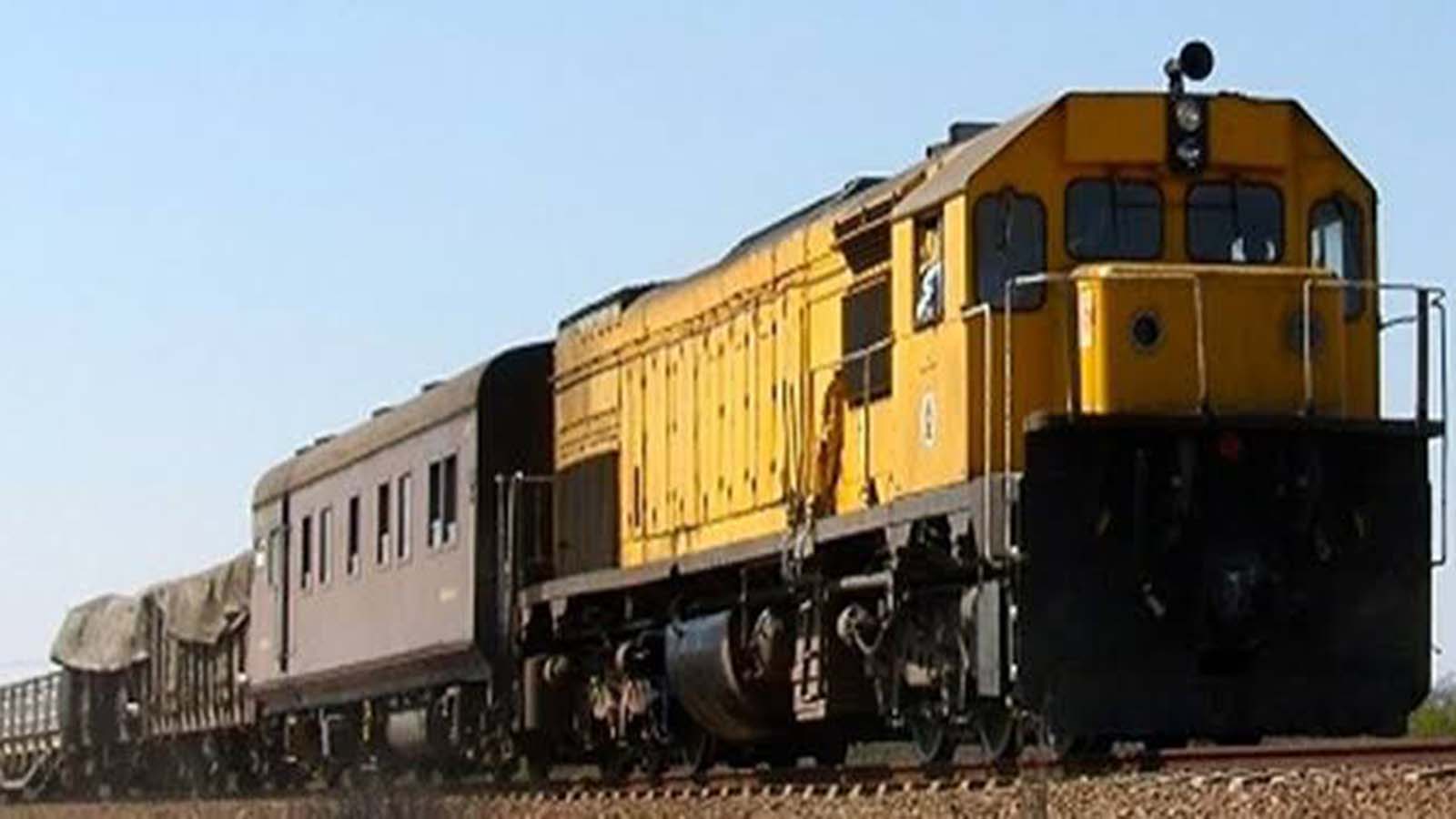
Because the paradigm shift that we are now in is Zimbabwe is now a moving train. No habit, no unethical conduct will stop this train. To us its just a whistle. A train does not stop for a whistle. We continue to move and we will achieve vision 2030. That’s my promise.
Thank you Victoria for this opportunity.


 Online Reporter