admin
admin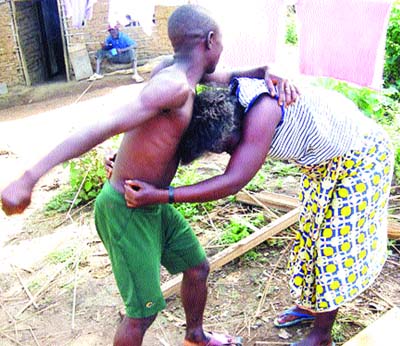
He expressed much sadness about the negative trend, and appealed to every Zimbabwean to treat marriage with the solemn respect it deserves whether it is monogamous or polygamous.
While the divorced partners may feel a great deal of mental agony by the breaking up of their matrimonial bond, their children feel for worse anguish by far than their parents.
It is not easy, if not well nigh impossible, to describe how deeply hurt children feel to see their parents part ways, for ever.
In one case experienced by the author of this article, a daughter of a couple that was in the process of divorcing in Lusaka, Zambia, in 1975 went to the woman who was having an affair with her father and was thus the cause of the divorce and said: “Your love affair with my father is causing my mother and us the children a great deal of misery. Can’t
you please for our sake stop seeing my father?” She fainted in front of her father’s lover.
In another case, this time in Bulawayo in 1988, three young children (an eight-year-old boy and his two younger sisters) were taken to a social welfare officer a couple of days before their parents legally split up for ever.
The welfare officer asked each one of them to say whether they would like to live with dad or with mum. Each one of the siblings asked the helpless welfare officer: “Can’t you please tell them that we want to live with both of them?”
Those dramatic stories apart, divorces occur at an alarming rate in Zimbabwe.
What are its causes? There are about 16 causes of that most unfortunate anti-social human failure: violence, drunkenness, adultery, financial recklessness, and personality incompatibility, economic inability to maintain the family, barrenness, desertion, illness, witchcraft, laziness, family interference, social neglect, social complexes, disappointment and dishonesty.
Violence is a result of either provocation or sheer bullyism. It occurs also in cases of irrational behaviour caused by the consumption of mind-changing drugs such as dagga (mbanje) and alcoholic beverages or belief in witchcraft and related practices.
In marriage, it is usually (but certainly not always) the male partner that attacks the female, it being understood in most of Zimbabwean cultures that the man is the senior in the marital establishment.
Violence is a common feature in a marriage in which one of the partners is naturally sadistic. The delight that a marital partner takes in inflicting pain on the other is usually incurable and may lead to divorce especially these days when people are relatively more informed about their rights.
Drunkenness is the bane of many an otherwise happy marriage. Not only does it negatively affect basic communication within the family, the children being unable to understand the thinking of their always befuddled parent, it also creates a bottomless hole in the family budget.
The rate of divorce is undoubtedly much higher in communities where drunkenness is predominant than in those where sobriety is a socio-cultural norm.
Adultery is one of the several human failures that ruin a large number of marriages, particularly in a Christian environment, that is to say a monogamous situation. In a polygamous set-up, there is adultery only if those involved are both married.
Husbands are usually the culprits in cases of adultery, examples of the legendary beastly origins of the human race. The majority of married women certainly try to be faithful to their husbands. A reckless minority commits adultery but in the most discreet way except victims of drunkenness whose immoral social behaviour is beyond the term, embarrassing.
Incompatible personalities cannot share a bed for a lifetime. A split is inevitable sooner than later. Incompatibi-lity may take the form of irreconcilable social habits such as one spouse being a devout church-going Christian worship-per, and the other an irredeemable boozist who spends every weekend in nightclubs, and other days at boozers.
Such people are in practical terms like oil and water. They are neither mixable in social and cultural terms, nor can they happily live together as husband and wife.
Financial recklessness implies the irresistible tendency to spend whatever money there is in the house. Some people feel extremely insecure to be without a reasonable amount of cash in the house at any given time.
What if some sudden illness occurs and an ambulance is needed? What if a close relative dies and some financial assistance is required? What if they themselves fall ill suddenly and medication is to be bought? They ask these and other related questions.
Impulsive spenders say they buy whatever because if they do not while the good is available, they may never find it again; or that if they postponed the purchase, the goods’ price may become unaffordable sooner or later.
There are more impulsive spenders among women than among men, an unfortunate gender trait that results in divorce if the impulsive spender insists on keeping control of the family’s purse.
The scenario has a reverse side if the family income-earner is so tight-fisted that the family budget manager is always scrapping the bottom of the barrel, to state it figuratively.
In virtually all normal homes, wives manage the family budgets while the husbands provide the wherewithal as income-earners.
Should the income-earner be reckless, the wife as budget manager will not have anything to manage, and that leads to acrimony whose result is, in many cases divorce.
Desertion may be permanent or temporary. A wife may abandon her husband and children for a couple weeks or months, while she is having a time with a long distance truck-driver, or a ding-dong time with a touring music band member, only to return crestfallen after the philandering driver or band member has found someone else much more exciting.
It may be permanent as is the case with some men in Zimbabwe who abandon their marital homes for what are popularly called “small houses.” By the way, some women now refer to these marriage wrecking houses as “smell houses.”
In both cases, it is desertion coupled with adultery, leading to misery, anguish, anxiety and indescribable embarrass-ment for the children, spouse and next of kin of the desertee.
In Zimbabwe, this type of behaviour is common in predominantly mining environments, in rural areas where there are myriads of so-called apostolic churches, in fact, dubious sects whose functionally illiterate leaders are mere active as rapists and cheats than as evangelists.
Desertion may be in the form of unduly long periods of absence from one’s marital home, a very common social phenomenon in the Bulilima, Mangwe, Matobo, Gwanda, Insiza, Nyamandlovu, Bulawayo, Bubi, Lupane, Nkayi and Beitbridge districts where we find families whose male parents spend several, if not many years in either South Africa
or Botswana as migrant workers.
Marriages and homes collapse as a result of this long absence. Some people may agree that the lengthy absence should not be described as desertion because it is neither intentional nor malicious.
The writer of this article feels that a normal man would feel deeply concerned about his family’s welfare after a month’s absence from it. If he is not in prison but is gainfully employed, he should communicate with his wife and send his family financial and or other material means for its sustenance.
Failure to do so may be interpreted by the spouse at home to be desertion with malice aforethought, that is to say with a willful intention to show cruelty and consequently cause misery, alarm, concern, dejection and despondency to the entire family,
Illness, particularly caused by chronic diseases such as emphysema and bronchitis, usually leads to despair and disillusion on the part of the healthy marital partner. That may result in a divorce.
The prevailing HIV and Aids pandemic has worsened this factor as some women, especially, will not stand a husband they suspect to be HIV positive because of infidelity, that is as a result of extra-marital sexual behaviour.
The same applies to men who feel that their wives have been infected by HIV as a result of extra-marital sexual jaunts. Divorces in such cases are bound to follow very acrimonious processes because of inevitable finger-pointing.
Laziness is not as common a cause of divorce as adultery. That is because in general Bantu customary practice, a man does not divorce because the woman is lazy. If she is, she is advised to procure a helping hand from her kith and kin.
That may be in the form of her brother’s or aunt’s daughter or some other close relative.
The traditional Bantu attitude seems to be that laziness and the tendency for one to be untidy are an incorrigible human weakness. Those who live with lazy and untidy people may and can only urge, motivate and persuade them to stir themselves from their world of inertia into that of physical activity.
Most untidy people have a porcine mentality about and attitude to themselves and their surroundings. They become a problem only if they react violently criticism of their weakness. However, most untidy people very readily admit that they are untidy and promise to do something about it, but seldom do.
Again, in Bantu tradition and custom, a man does not divorce an untidy wife. As for the wife with an indolent husband, elders will invariably always advise her to work harder to compensate for him for her children’s sake.
However, these days some women do not hesitate to jettison lazy husbands, treating them as if they were excess baggage.
Some marriages founder on the rocks of Reno (to use an American idiom) because one of the partners maybe feeling socially and culturally inadequate at her or his marital home. This occurs in four socio-cultural environments, educational, tribal, racial and cultural.
In our African experience, we saw in the past 60 years when many African states become independent how some African leaders divorced their wives because those women were either illiterate or were not socially sophisticated enough to fit into the new environment in which their husbands would prominently feature.
That social environment was characterised by, among several things, cocktail parties and an exchange of visits by members of diplomatic missions. The old wives, most of whom had borne the brunt of the liberation struggle, were untutored in the modern western world’s social etiquette, and knew only their mother tongues, an embarrassing deficiency to their husbands.
Many divorces occurred as the male national leaders assumed positions of greater stature that demanded spouses of adequate social refinement and an above average understanding of national and international events and political trends.
This factor obtains even today as some young people marry below or above their social standing.
Inter-tribal and inter-racial marriages may also founder if the parties involved are not culturally transformed. Similarly, divorces occur in some inter-religious and even in some inter-denominational marriages. Radical cultural practices and differences can destroy a marriage.
- Saul Gwakuba Ndlovu is a retired Bulawayo-based journalist. He can be contacted on cell 0734328136 and on email [email protected]
The second and last part of this opinion will be published tomorrow.



 Online Reporter