Chronicle Editor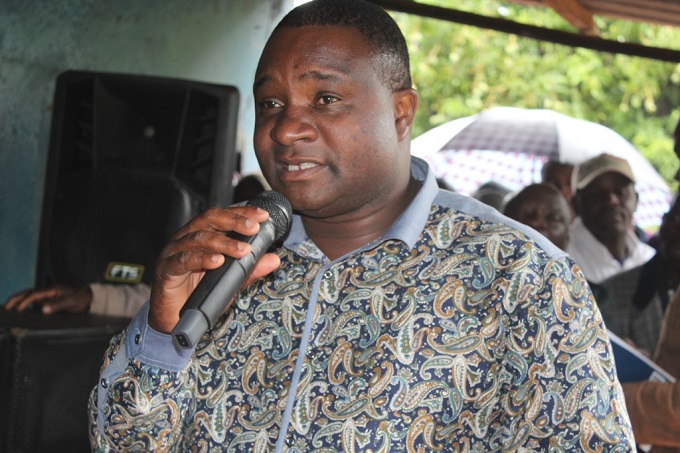
Elizabeth Andreya
Although the Zimbabwean Government has identified numerous areas of intervention as far as education is concerned, the role that infrastructure plays in the growth and development of schoolchildren must never be overlooked.
Lack of proper educational infrastructure is an anomaly that is reducing the quality of education in Zimbabwe and most importantly the motivation for pupils to excel and see the positivity of remaining in school and avoiding dropping out.
Many rural schools in Zimbabwe are falling short on standard educational infrastructure for learning, which include classrooms and teacher accommodation.
Chivi South Constituency is one of the areas with schools facing infrastructure challenges. One of them, Madzivire Primary School has only 20 classrooms for an enrolment of more than 1 800 pupils. This means the school has shortage of classrooms, toilets, and water and sanitation services.
Recently, Chivi South Member of Parliament, Dr Killer Zivhu assisted in building learning blocks and teachers’ accommodation at more than 86 schools in the constituency, of which 38 of the programmes have been completed.
Madzivire Primary School is one of the schools which benefited from this programme.
Zivhu helped the school in constructing two computer labs, fully furnished.
Speaking during a tour of the facility, the headmaster of the school, Mr Martin Gwengo said rural schools are being marginalised in developmental programmes.
Gwengo said although there was a computer lab, the school has no computers. He added that they were promised computers a long time ago, but they have not yet received them. It is a big challenge for schools in rural areas to achieve good grades at national examinations because they have no adequate infrastructure, and enough resources.
Lack of infrastructure is a worrying scenario that has made the schooling environment, particularly in rural Zimbabwe fall short in producing pupils with the capacity to curb poverty, and progress academically. Most of the schools in the rural areas do not have electricity, laboratories and facilities needed for new learning areas like computer science, the re-packaged science subjects as well as the performing and visual arts in the new curriculum.
Already they are battling shortages of specialised teachers, and textbooks for these new subjects.
Government and other social groups should prioritise the empowering of the rural teacher and learner, so that goals set in the new curriculum are met. There is need for the improvement of rural schools, and parents can also complement Government efforts by contributing towards the development of schools in their communities in their own small way. Rural teachers are also relatively disadvantaged as they shuttle between their schools and universities. Restricted access to facilities for personal and professional development remains a millstone for rural teachers.
Another school in Chivi South, Mutote Primary School also emphasised on the shortage of teachers, as there are only 16 teachers for an enrolment of more than 800 pupils.
This partly explains why the pass rates in such schools are deplorable. Teachers should be incentivised sufficiently for them to be attracted to rural schools, so as to bridge the gap between urban and rural areas in terms of education standards.
There is strong evidence that high-quality facilities, and better instructions improve learner outcomes, and reduce dropout rates, among other benefits. Learning conditions in rural areas make schooling difficult and passing a tall order. The other challenge is that there are fewer secondary schools in rural areas as compared to urban ones.
It is not uncommon for pupils to walk more than 15km to and from school, which affects their output. NGOs and other charity organisations should also join hands with the Government and help in the development of infrastructure in schools, provide enough resources to allow proper learning and also build more secondary schools in rural areas.
Article 75 of the Constitution of Zimbabwe focuses on the right to education where it states: “Every citizen and permanent resident of Zimbabwe has a right to a basic State-funded education, including adult basic education; and further education, which the State, through reasonable legislative and other measures, must make progressively available and accessible.”
Therefore, quality education should be available in all parts of the country with proper and healthy infrastructure suitable for learners.


 Online Reporter