Online Reporter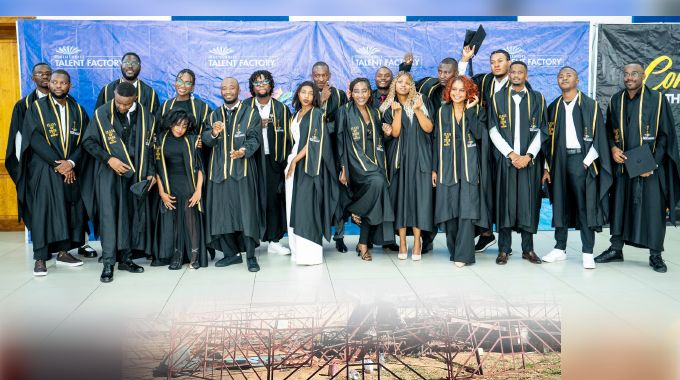
Mbulelo Mpofu, [email protected]
RECENTLY, the Zambian-Italian Cultural Centre took on a rare kind of electricity, the sort that hums when a chapter is closing and another is just beginning. It was here that the MultiChoice Talent Factory (MTF) Southern Africa
Academy formally sent off its Class of 2025/2026, celebrating 20 young filmmakers who have spent a demanding year learning not only how to make films, but how to endure, adapt and believe in their own voices as future shapers of African cinema.
Within that circle of graduates stood two Zimbabweans who quietly but confidently made their mark: Tatenda Kombora from Bulawayo and Harare-born Anthony Simbarashe Chiturike. Their successful completion of the programme — and Chiturike’s additional individual recognition — offered more than personal milestones. It was a reminder that Zimbabwe’s influence within the regional film and television space is growing stronger, more visible and harder to ignore.
The graduation marked the end of a rigorous, year-long experience designed to stretch both skill and character. Built in partnership with the University of Zambia, the programme struck a careful balance between theory and practice.
Students moved from lecture rooms to sets, learning the nuts and bolts of cinematography and editing while also grappling with the creative demands of writing, producing and directing. By the end of it, filmmaking was no longer an abstract dream, but a lived, often exhausting reality.
Speaking at the ceremony, newly-appointed MultiChoice Zambia CEO Averess Ndhlovu-Chella reminded the graduates that the academy’s purpose reaches far beyond qualifications.
“Today’s graduation is about so much more than classes and theory; it is a testament to the power of a shared vision and the sustainability of Southern Africa’s creative industries. These graduates emerge industry-ready, well-prepared to drive the region’s creative ecosystem and tell our stories on a global scale,” she said.

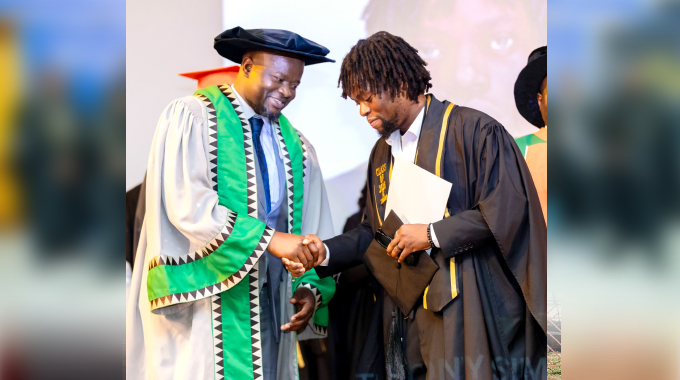
While the entire class was applauded for its resilience, a number of students were singled out for exceptional contribution. Among them was Zimbabwe’s Anthony Simbarashe Chiturike, who received the award for “Best Student — Outstanding Work Ethic”, an honour that neatly captured both his approach to the programme and his personal values as a creative.
For Chiturike, who entered the academy as a published author looking to strengthen his storytelling, the recognition spoke to effort that often goes unseen. It acknowledged the discipline behind the scenes — the long hours, the pressure, the repeated choice to stay consistent even when motivation falters.
“That recognition means a lot to me because it validates the unseen work and the discipline it takes to keep showing up. Personally, it reminds me that consistency matters more than talent alone. Professionally, it sets a standard for me; it tells me that in this industry, your work ethic can speak just as loudly as your creativity,” Chiturike shared in a post-graduation reflection.
His year at MTF also marked a clear turning point in how he understands storytelling. While his first love had always been writing and screenplays, the programme encouraged him to lean into the technical language of film — the mechanics of lighting, sound and camera work. That shift, he says, fundamentally changed how he approaches a story.
“It changed the way I see stories completely. Before, I focused mainly on what was written, but now I think visually and sonically. I understand how lighting can shape emotion, how camera movement can tell its own story, and how sound can elevate a moment. I don’t just write scenes anymore; I design experiences,” he said.
Much of that growth was accelerated by the move from online learning into the physical, high-energy environment of Lusaka. Chiturike describes the hands-on training as “refreshing and rewarding”, noting that being present on the ground forced him to communicate more clearly, adapt more quickly and see teamwork not as an obligation, but as a creative strength.
Practical exposure formed the backbone of the MTF experience. From spending two weeks on the set of the television production Mpali to crafting one-hour original films, Chiturike encountered the industry in its raw, unpolished form.
The most important lesson he took from those moments was simple, yet profound: filmmaking only works when people work together.
“One of the most valuable things a mentor shared with me is that no idea succeeds in isolation. Execution depends on collaboration, communication, and trust,” he noted.
That spirit of collaboration was also emphasised by Tatenda Kombora, who spoke of the richness of working alongside peers from different linguistic and cultural backgrounds, switching between Shona, Nyanja and Portuguese with ease. For her, the experience reinforced the idea that film cuts across language in a way few art forms can.
Kombora also directed her own zero-budget short film during the programme, firmly embracing the belief that creativity often flourishes most when resources are limited.
Chiturike remains confident that Zimbabwean filmmakers have what it takes to compete on the world stage, describing them as potential “world-beaters”. He believes the MTF experience sharpened his technical skills in ways that now allow authentic African stories to be told with global polish.
“We don’t have to imitate anyone; authenticity is our strength. By combining strong storytelling with technical excellence, I believe we can create films that resonate globally while still being deeply rooted in our culture,” he asserted.
Now stepping out of the classroom and into the industry, Chiturike says his biggest lesson — and his advice to future applicants — comes down to discipline. Passion may open doors, he believes, but it is discipline that keeps them open and allows growth to happen.
As the 20 graduates take their first steps as professionals, they join a growing network of MTF alumni already reshaping African narratives for global audiences. With creatives like Anthony Chiturike and Tatenda Kombora emerging with confidence, skill and clarity of purpose, the future of Zimbabwean storytelling feels firmly — and excitingly — in capable hands. —Follow on X @MbuleloMpofu