Online Reporter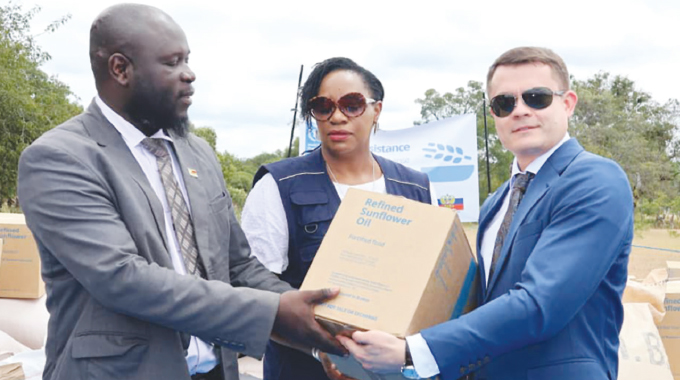
Prosper Ndlovu/Theseus Shambare, Zimpapers Writers
ZIMBABWE’S long-standing relationship with Russia — forged during the liberation struggle — is entering a new strategic phase, with Moscow stepping up fertiliser support, food assistance and investment as the country consolidates partnerships to safeguard national food security.
The relationship, rooted in pre-independence solidarity, is now evolving into a critical economic alliance, with agriculture, fertiliser security and value chain investment emerging as central pillars.
Zimbabwe requires approximately 1,4 million tonnes of fertiliser annually, including ammonium nitrate and single superphosphates, placing supply security at the heart of national agricultural productivity.
This comes against a shifting global aid and trade landscape, where the United States — historically a key development partner — has scaled back support, including a freeze on new foreign aid spending under President Donald Trump.
The move, which also saw Washington withdraw funding from the World Health Organization, has triggered anxiety among sections of the public over the continuity of donor-supported programmes.
However, Government has maintained that national food security interventions would not be disrupted, citing ongoing efforts to strengthen domestic resilience and secure long-term international partnerships.
At the same time, Zimbabwe has not been spared from global trade disruptions driven by geopolitical tensions, including the Russia-Ukraine conflict and the ongoing US-Israel confrontation with Iran, which have pushed up the cost of fuel, fertiliser and key agricultural inputs.
Zimbabwe imports critical fertiliser raw materials from multiple partners, including urea and ammonium nitrate from Russia, potash and NPK blends from Belarus, while additional inputs such as urea, liquefied natural gas feedstock and sulphur are sourced from Oman, the United Arab Emirates and Qatar.
Saudi Arabia supplies urea and sulphuric acid. Against this backdrop, strengthening ties with Moscow is emerging as both a strategic necessity and a long-term solution to supply chain vulnerabilities.
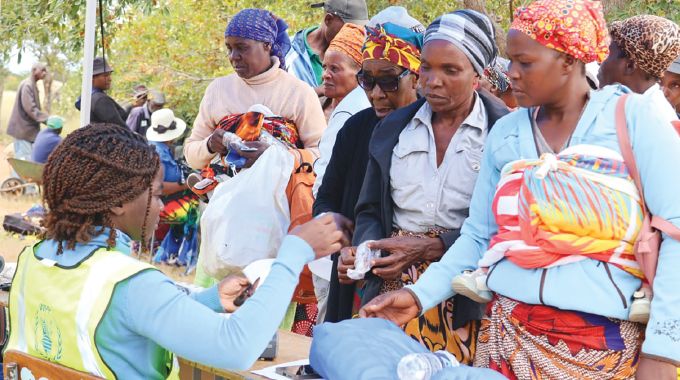
Russia, working through the World Food Programme (WFP), has delivered humanitarian aid to vulnerable communities, including 352 tonnes of yellow split peas and 117 tonnes of vitamin-fortified vegetable oil, valued at approximately US$1,5 million.
Speaking during a food distribution programme at Malalume area in Bulilima District on Thursday, Russian Deputy Ambassador to Zimbabwe, Mr Sergey Kuzin, said the support reflects both immediate humanitarian commitment and a broader strategic partnership anchored on long-term co-operation.
“This donation is part of Russia’s contribution to the World Food Programme (WFP) and is meant to assist the most vulnerable communities to overcome challenges due to climate change,” he said.
Deputy Amb Kuzin underscored the depth and continuity of relations between the two countries, noting that Zimbabwe “remains — and will remain — in the forefront due to the deeply rooted relations of friendship and solidarity between Moscow and Harare.”
Beyond humanitarian assistance, Dep Amb Kuzin signaled a deliberate shift towards expanded trade, fertiliser supply and private sector-driven co-operation.
“In the bilateral context, Russia’s government and companies are very much interested in deepening trade and investment with Zimbabwe . . . We look forward to increasing bilateral trade with Zimbabwe, primarily in agricultural products and fertilisers,” he said.
“We can assist not only through donations but through partnership as well, including business. Russia maintains its role as a solid, responsible supplier of agricultural products.”
The growing co-operation is also being shaped at policy level.
In November 2025, Russia convened an international conference on ensuring food sovereignty in African countries in Addis Ababa, Ethiopia, bringing together African partners, experts and institutions to strengthen agricultural co-operation, promote investment and identify practical solutions to food security challenges.
The Government has welcomed the support, describing it as a critical buffer during the lean season and a complement to long-term resilience-building efforts under Vision 2030.
Public Service, Labour and Social Welfare Deputy Minister Mercy Dinha, represented by Acting Chief director Social Development and Labour Administration, Mr Tawanda Zimhunga, said the partnership between Zimbabwe, Russia and WFP reflects the importance of global solidarity.
“The Government of Zimbabwe has been working tirelessly to ensure that food assistance reaches all vulnerable households in a timely and efficient manner. Support from the Russian Federation and the World Food Programme is deeply appreciated,” she said.
The Deputy Minister said the intervention complements broader resilience-building efforts aligned with Vision 2030. The latest intervention follows a similar programme in December 2024, when Russia delivered over 700 tonnes of pulses and cooking oil to communities in Chivi District, Masvingo, signaling a sustained and structured support framework.
WFP head of external relations, Ms Ifeoma Garba, representing Country Director, Ms Barbara Clemens, said the intervention demonstrates the power of coordinated global partnerships.
“This assistance has been made possible through strong partnerships, helping households cope at a time when food is most scarce,” she said.
“By combining efforts, each beneficiary receives a balanced food basket that improves nutrition and supports household resilience.”
Ms Garba said the programme highlights the importance of collective action in addressing food insecurity, which continues to affect livelihoods, health and community stability.