Vusumuzi Dube
Judith Phiri , Business Reporter
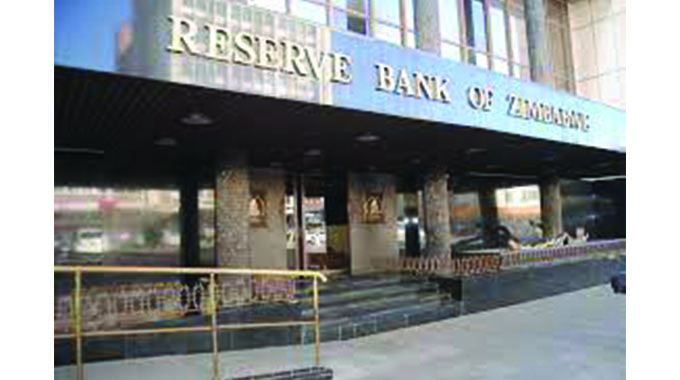
THE Reserve Bank of Zimbabwe (RBZ) has conferred with Liquid Asset Status, which has resulted in the Warehouse Receipt Instruments issued under the Zimbabwe Mercantile Exchange (ZMX) Warehouse Receipt System now being convertible into cash.
The ZMX Warehouse Receipt is a legal document that provides proof of ownership of a commodity stored in a certified and approved warehouse, providing evidence of quantity, grade and quality of the stored commodity.
Launched in 2021, ZMX is an agricultural commodities trading platform with automated electronic warehousing and receipting capabilities.
It is operated by the Financial Securities Exchange and was founded as a joint venture between the Financial Securities Exchange (FINSEC) and the TSL Limited representing the private sector and the Government of Zimbabwe.
In a statement announcing the conferment, ZMX said: “This means that as a tradable and negotiable instrument, the Warehouse Receipt Instrument is now considered an asset that can be easily converted into cash.
A Warehouse Receipt is recognised as a security in accordance with the Securities Act. Warehouse Receipts are used worldwide for commodity trading and financing as well as collateral for loans. The ZMX Warehouse Receipt System is now fully operational.”
Farmers, contractors and buyers of agricultural commodities are encouraged to make use of the innovation to access safe and secure commodities storage as well as alternative, cost effective financing from participating institutions.

In a previous interview, ZMX chief executive officer (CEO), Mr Collen Tapfumaneyi said the trading was available for 12 commodities, inclusive of maize, red sorghum, white sorghum, millets, soya beans, wheat, barley, sunflower, groundnuts, sugar beans, cow peas and roundnuts (bambara nuts).
“As a licensed commodities exchange, we are operating the warehouse receipt system where farmers deposit their commodities and get a warehouse receipt that they can use to either sell their commodity or access credit finance from banks and other financing institutions.
We also operate what we call a spot market trading platform that enables farmers and buyers to trade commodities. We are currently allowed to trade 49 commodities.
This being the start of the 2023 marketing season, ZMX is now ready to start registering farmers and buyers to trade their commodities as they harvest,” he said.

Mr Tapfumaneyi said they also have an option of forward market, where farmers and potential buyers agree ahead of time in terms of when they will be selling each other a commodity.
“Forward contracts are commonly used in commodity trading as a tool for managing price risks.
The advantage is that the farmer is able to get an off-taker or a buyer ahead of the marketing season while a buyer is able to secure the commodity and the price,” he added.
The Government has said the broad functions of ZMX were instrumental in getting rid of challenges such as limited market access for small-scale producers, price volatility, price discovery challenges, post-harvest losses and agricultural funding challenges because of lack of collateral security and other market-related issues.



 Online Reporter