Online Reporter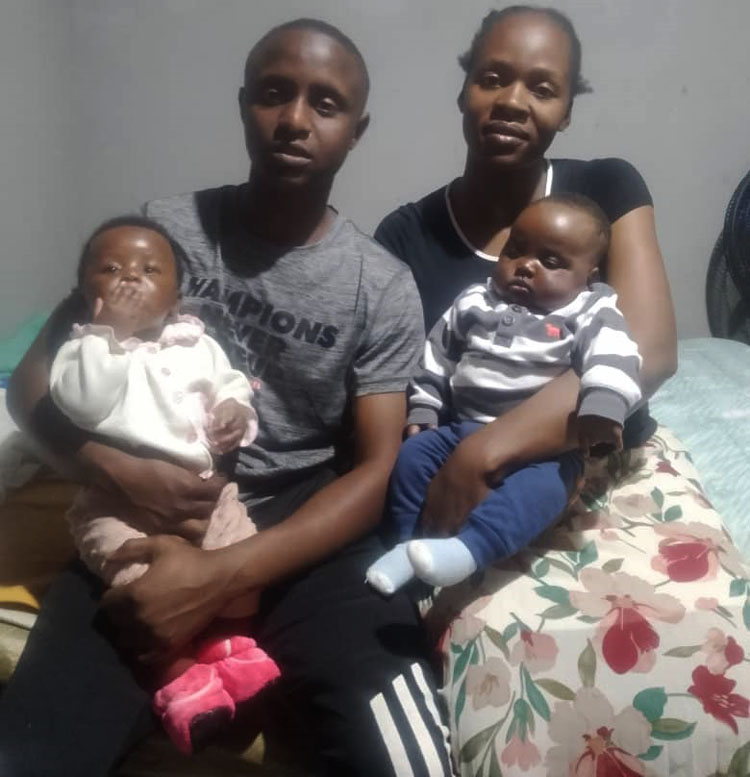
Tendai Gukutikwa
Post Reporter
EVERY morning, 25-year-old Mr Elisha Mushanawani watches his five-month-old twins lying side by side.
To a stranger, they look almost identical. To their father, they represent two completely different journeys.
One twin, Makunda, is growing as every parent hopes a baby should. The other, little Akunda, is fighting for every day of his life.
The tiny boy has already undergone major surgery before learning to crawl. Instead of spending his infancy sleeping peacefully in his parents’ arms, he has spent countless days in hospital wards undergoing blood tests, scans and medical procedures that most adults would dread.
Doctors have delivered the news every parent fears – without an urgent liver transplant, his life is in grave danger.
The operation can be done in India, but it costs approximately US$50 000 – an amount far beyond what the young family could raise on their own.
For Mr Mushanawani and his wife, Rachel, every sunrise is accompanied by one prayer – their son lives long enough for help to arrive.
“We had so many dreams for our twins. They are our first children. We imagined watching them grow together, excel at school and become successful people. We always joked that they would both become doctors because we wanted them to save lives one day,” said Mr Mushanawani.
Then he smiled briefly before his eyes filled with tears.
“However, I also had another dream for Akunda. I always call him my little soldier. I wanted him to grow up, join the army and become a military doctor. Even now, despite everything he is going through, I still call him my soldier because he has never stopped fighting,” he said.
Their joy first turned to concern when Akunda was only seven-days-old. His tiny eyes began turning an unusual yellow-green colour. The family sought medical attention, believing it was ordinary new-born jaundice.
“Nurses advised us to expose him to more sunlight. We followed every instruction because we trusted that everything would improve, but nothing changed,” recalled Mr Mushanawani.
Days later, another problem emerged. Baby Akunda developed a hernia and more hospital visits followed. Doctors wanted to perform liver function tests, but there was another obstacle.
“They told us he did not have enough blood for the tests. We had no choice, but to go back home and wait until he was older,” said Mr Mushanawani.
When Akunda reached two months, the family returned to hospital and the results changed their lives forever.
Doctors discovered that his liver was failing.
The infant was admitted at Mt St Mary’s Hospital in Hwedza after developing pneumonia, before being transferred to Sally Mugabe Central Hospital for specialised investigations.
It is there that specialists diagnosed him with biliary atresia – a rare condition in which bile ducts become blocked or fail to develop properly, causing severe liver damage if left untreated.
At three months, Akunda underwent a Kasai procedure, a surgery designed to restore bile flow and buy precious time before a liver transplant becomes necessary. His parents desperately hoped it had worked, but hope slowly gave way to heartbreak.
“When we returned for review after the operation, there was no improvement. The doctors explained that the surgery had been done too late and had not worked the way they had hoped,” said Mr Mushanawani, adding that subsequent reviews brought more devastating news.
The operation had failed and his liver continued deteriorating. Doctors told the family that only a liver transplant could save their son’s life.
“They said we should have the transplant done as soon as possible, preferably before the end of this year or else our precious baby boy will die. They told us this is now a matter of urgency,” said Mr Mushanawani, adding that the diagnosis has transformed the entire family’s existence.
Mr Mushanawani had recently begun training with the Zimbabwe Republic Police.
Today, that dream is on hold.
“I had been recruited by the police and was on training, however, I had to leave and come back home so that I could take care of my child. My colleagues are now on attachment, but I could not continue. My family needs me here,” he said.
Instead of building his future, he spends his days helping his wife care for the twins.
“I look after one baby while my wife cares for the other because Akunda requires constant attention,” he said.
The burden extends beyond the parents. Akunda’s twin sister, Makunda, has also been affected.
Because Akunda requires frequent breastfeeding to support his fragile health, much of his mother’s time is devoted to him. Makunda is increasingly relying on infant formula.
“My heart breaks for both of them. They are twins. They should be growing together, receiving the same love and attention, but because of Akunda’s illness, everything revolves around keeping him alive,” admitted Mr Mushanawani.
For Mrs Rachel Mushanawani, motherhood has become a daily balancing act between hope and helplessness.
Instead of enjoying the early months of raising her twins, she finds herself constantly monitoring medicines, feeding schedules and hospital appointments.
“As a mother, you dream about dressing your babies alike, watching them laugh together and celebrating every milestone. I never imagined that our lives would become hospital visits, medicines and endless worry,” she said, adding that every smile from Akunda brings both happiness and heartbreak.
“He smiles often, and when he does, it melts my heart. But as his mother, I can see that smile is hiding pain. I wish I could take that pain away from him,” she said.
The financial burden has become overwhelming.
Medical reviews, laboratory tests, medication, transport and hospital admissions have already drained the family’s limited resources.
Despite desperate efforts, they have raised only about US$500 – a fraction of the amount needed. The cost of treatment in India remains painfully out of reach.
“We never imagined asking strangers for help, but today we have no choice. Every dollar donated gives our son another chance at life. Every prayer gives us strength to keep believing,” said Mrs Mushanawani.
Mr Mushanawani said one of the hardest moments came after the failed surgery.
Watching his son grow weaker left him questioning everything.
“There were moments when I cried before God asking why this had happened. Some people discouraged us with negative words, but as parents we cannot give up. He is our child. We will continue fighting for him,” he admitted.
Despite the pain, Akunda continues to show he is a fighter.
His father still calls him his little soldier.
Asked what he fears most, the young father struggled to find words.
“My greatest fear is losing my son. If I lose him, a part of me will be gone forever,” he said after a long pause. Yet he refuses to surrender hope.
Instead, he believes the compassion of ordinary Zimbabweans could write a different ending to his son’s story.
“I believe there are people with kind hearts who can help us save Akunda. We are not asking for luxury. We are asking for life. If everyone gives a little, together we can save our son. My dream is still alive. I still see my little soldier growing up. I still see him wearing a doctor’s coat one day and helping other people. We simply need him to be given that chance,” said Mr Mushanawani.
For his family, the coming months are no longer measured by calendar dates. They are measured by hope – that enough money will be raised, that a donor’s kindness will take them to India, and that next year, instead of mourning one child, they will celebrate two healthy twins blowing out their first birthday candles together.
For those wishing to help, donations towards Akunda’s life-saving liver transplant can be made via EcoCash on 0782 979 164, registered in Mr Elisha Mushanawani’s name. Well-wishers can also donate using the GoFund me link that has been created for baby Akunda – https://gofund.me/9390fdabf
ENDS