admin
adminSamuel Kadungure Senior Reporter
He is a patriotic Zimbabwean whose service to the nation, the revolutionary party Zanu-PF has spanned over 40 years in which he has been a political activist, Zanla combatant, and an active member of Zanu-PF political structures.
Professionally, he has a host of qualifications, the most notable of these being a Bachelor of Science Honours degree in Economics and Business Management as well as a MBA for which he wrote a thesis entitled: Zimbabwe: Conversion from a non-market to market economy. His work experience, he believes, has helped to shape him into the highly competent administrator, manager, businessman and war veteran that he is today.
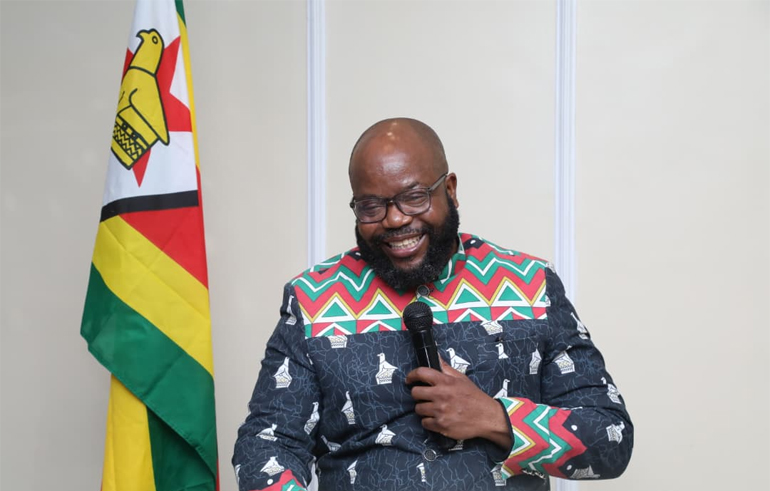
He is Cde Nation Chiororo Madongorere — the war veterans’ chairperson in Manicaland, who joined the battlefront in 1976, when he was 18.
His quest to join the war was motivated by the desire to end the brutality of the Rhodesian forces meted on blacks. It was a great individual initiative whose commitment was political given his frequent contacts with the nationalist party Zanu in Handusi Village, Masvosva in Makoni district, the resultant intense politicisation from his grandfather and personal experience of discrimination, brutality and exploitation, led him to the decision to join Zanla.
Cde Madongorere also grew up in a family that had an established link to nationalism, and often himself participated in Zanu youth wing in his area.
His activism started while doing Form Two at St Anne’s Goto in 1971 when he got arrested for organising violent protests in which fed-up black students beat up white teachers. The demo spread to other schools like Chemhanza High, Kwenda Mission and Mount St Mary’s.
“We beat up white teachers and we were arrested alongside ring leaders from other schools Cde Chiwenga (Mt St Mary’s), Perrance Shiri (Kwenda Mission) and Cde Gunda (Chemhanza High).
“I was eventually sacked from school in Form 3 and left for Kwe Kwe where I was invited for soccer trials with Lancashire Steel and impressed. I then joined the local politics as the organising secretary for youths in Midlands,” said Cde Madongorere, whose major task was to map exit points to Mozambique for new recruits.
He crossed in 1976 together with Cde Tobaiwa Mapfumo, from Buhera.
The two bordered a train from Kwekwe to Harare and then Mutare.
“I left Kwe Kwe in December 1975 after receiving my salary, which I used to buy a new pair of shoes and clothes for the journey. From Mutare we almost got arrested at a roadblock at Tanganda because it was during curfew and the settler regime was out to thwart attempts by the youths to cross into Mozambique.
“They wanted to know where exactly we were going and as well as our mission. Lucky we had travelling permits which were issued to us by my uncle who was the company secretary at Lancashire Steel and we lied that we were going to pay lobola for Mapfumo in Chipinge. They escorted us to the Maphosa family, which we had lied were the in-law to Maphosa, when in fact they were our contact,” said Cde Madongorere.
They stayed with that family for a month during which they confined themselves to indoor life, and on January 2, 1976 the duo received a signal to cross into Mozambique.
“We were up for the road by 3am and by 9am we had still not crossed into Mozambique. Coincidentally, as we were about to cross to the nearby Frelimo base, some patrol helicopters suddenly emerged around the base and we took cover in the thick forests, and when we eventually arrived at the Frelimo base there was suspicion that we had been deployed by the helicopters to spy on the Frelimo operations.
“They beat us, hoping induce confession. It was terrible, and it called for quick thinking to avoid further torture. After a while I approached the Frelimo commander, who was shabbily dressed and offered him my new clothes and shoes since I had two pairs of each. I was left bare footed because I wanted to gain his trust. He was very happy and spared us the rod. I also volunteered to cook, knowing that I was very good at that, and they enjoyed my meals, which further helped us to gain their trust,” he added.
“After staying there for five months, undergoing basic military training, the Frelimo guys took us to a base, about five kilometres from theirs, which had nearly 5 000 Zimbabwean refugees. After a few days there, I approached my friendly Frelimo commander and told him that his Zimbabwean commander was not effective since he was struggling with technical and numerical issues.
“I managed to convince him that I could perform the job better and he called for an emergency assembly, where he introduced me as the new commander while my predecessor was moved to the security department,” said Cde Madongorere.
He underwent intense physical military training — which includes marching drills, guerilla training, gun assembling and dissembling and political instruction, all of which he greeted with great excitement, as his new responsibilities demanded that.
Cde Madongorere, who was quick to grasp issues, then appointed his friend Cde Mapfumo as his deputy.
In February 1976 he was transferred to Espungabera base where he was instrumental in putting up proper military structures with guidance from Frelimo.
This is where he met the first contingent of Zanla forces led by its chief of personnel and late national hero Cde Josiah Tungamirai.
“He addressed us and afterwards invited questions from us. I was too inquisitive and he was impressed about the issues I raised. It was resolved that people be moved to Chibawawa refugee camp. We had to travel on foot because there was no transport. 400 people volunteered, and we travelled for five days.
“Only two people had guns, myself and the guy I had dethroned as the commander. We would walk from 6pm to 6am and spend the whole day resting in the forests. Several guys died and six others deserted because the journey demanded people with spine,” said Cde Madongorere.
At Chibawawa they were received by Cde George Rutanhire and Cde Englebert Rugeje, who later put them through their paces.
“I was a star because of my educational background and I was appointed the Gukurahundi battalion commander, which had 5 000 troops,” said Cde Madongorere.
Due to his quick mastery of military issues and concepts, Cde Madongorere was selected to go to Chitepo College for further training.
“Protocol demanded that before trainees are taken to Chitepo College, they first go through Chimoio Security Base for vetting. Our screening took too long and we eventually failed to proceed to Chitepo College, and were instead diverted for training at Takawira Base 2 which lasted for six months,” said Cde Madongorere.
On completion of the Takawira training, he was selected again for the security and intelligence responsibilities at Chaminuka Headquarters where he worked together with the likes of Cde Sobuza Gula-Ndebele, Cde Daniel Museve, Cde John Mawema and Cde Chinengundu.
“We specialised in tactics to fish out spies that would have been planted among us by the enemy. There were problems at Tembwe Base, and I was deployed there together with Cde Kachana and Cde Mike Shoshori (late) among others to straighten up things,” said Cde Madongorere.
The commander at Tembwe Base was Cde Makasha and Cde Madongorere and his counterparts grew very unpopular as they were responsible for screening of spies, enforcing discipline, arresting, detention, prosecution and maintenance of the armoury.
Later in 1977, Cde Madongorere was deployed to Guru Base, but the mission was abandoned after one of the vehicles in their entourage had an accident that killed 19 combatants.
“Our vehicle was in front and went over a landmine but its weight was light, so was the second vehicle, but the third, which had 20 people, was unfortunate. 19 died on the spot and the driver of the vehicle, Cde Mike Chinyama, was the only survivor. We aborted the mission to bury the comrades and report back what had happened to Tembwe Base.”
A few days later the Tembwe Base was attacked.
“We were preparing for a soccer match with Frelimo on that day and from nowhere Cde Makasha called for a parade, where he instructed us all to tie our shoes. When I was barely 15 metres from the parade, a bomb came. It was all mayhem. The second bomb came and hit the armoury and afterwards they started bombing randomly.
“I rushed to Parirenyatwa Base – which hosted the sick and met Cde Sydney Sekeramayi and together we agreed there was nothing, under the circumstances, we could do to save the patients, children and pregnant women as the bombings intensified.
“We had to rush out of the killing zone; the attack was from the east to west and we went the opposite direction. I was hit with shrapnel on the left leg, but had to soldier on.
“The enemy attacked using paratroopers and that was my first time to see them. As the attack intensified, our prisoners escaped, and the dangerous one we called J.D, on escaping, started directing the attack against us. He knew the area well and where most of the people were, and that is how many were injured. We were in disarray. They bombed for the whole day and returned for a mop-up the following day,” he said.
Cde Madongorere said after the attack, they made a make-shift camp — Muroro.
“It was a horrible sight. We took the survivors to hospital and bury the deceased in mass graves. Cde Sekeramayi was in charge of treatment,” he said.
Afterwards, Cde Madongorere was selected to undergo further military and intelligence training in Yugoslavia. The training hinged on military, security and intelligence issues as well as VIP protection during war.
This became the first Zanla professionally trained intelligence contingent whose other protagonists include Cde Chris Mutsvangwa, Cde Ndebele and Cde Shoshori.
After training they flew back to Maputo, where they were met by President Mugabe and Cde Madongorere was ordered to replace Cde Tafi, who had died after a parcel bomb explosion.
In Maputo Cde Madongorere was in charge of all mails, detection of poison and potential threat before their submission to the President.
He would also accompany President Mugabe home and during his foreign trips from 1978 to after independence as a chef aide.
“I was now doing that with the aid of equipment which had been sourced from Tanzania to avoid what had happened to Cde Tafi. I was in charge of all the communication, wraps and codes. I was also the bodyguard of the President together with Ignatius Muzenda (Mudzimba), Innocent Nherera and Martin Ndlovu (Kwainono),” he said.
Cde Madongorere was then redeployed to Chimoio to establish Mount Casino Base, but was recalled back to Maputo because his predecessor was incompetent.
He managed to decipher codes from a Zanla representative in Romania, where 5 000 troops were undergoing training and was tasked to meet and deploy them in Beira.
Cde Madongorere was also among the advance team for the Lancaster House talks, where his task was to sniff and find out possible threats to President Mugabe and his team.
He worked closely with the British intelligence services.
Other members of the advance party included Cde Eddison Zvobgo (publicity) and Cde Gibs Kachana.
“I left before signing of the Lancaster House agreement as I was tasked to escort Cde Josiah Magama Tongogara to Maputo to inform the Zanla forces in Mozambiqe to cross the border before the ceasefire deadline.
“After carrying out the task, and ready to come back to Zimbabwe, I was ordered to disembark from the Toyota Land Cruiser that was involved in the accident that killed Cde Tongogara. I was ready to go to Chimoio with Cde Tongogara, but Cde Cde Rex Nhongo asked me to stay behind saying he wanted me to be the chief liaison officer at the ceasefire headquarters. I was swapped with Cde Tobias Chaunoita,” he said.
“I immediately got into the plane to Zimbabwe and was the first to emerge out of it and sniff out potential threats. I identified the likes of Cde Lookout Masuku, Cde Vallerio Sibanda, among others, and was satisfied. I reported back to Cde Nhongo, who upon satisfaction, ordered me to disembark first and kiss the ground to announce our return from a foreign country to a new Zimbabwe. It was a sign to announce our arrival to the ancestors,” said Cde Madongorere.
After independence he was redeployed into the army, but his stay was only for three days, and Vice-President Emmerson Mnangagwa (then chairman of the joint high command) reassigned him to establish a VIP closed security unit.
He was immediately appointed its assistant director training.
Cde Madongorere chiselled his intelligence gathering skills with further training from America and then the British Scotland Yard and MI5.
- Those who participated during the liberation war with unique stories and experiences to share can contact the writer on 0773037326 or 0717343966 or 0735188009 or e-mail [email protected] <mailto:[email protected]>


 Online Reporter