admin
admin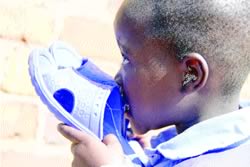
The day is Thursday June 28 and echoes of the hullabaloo of children playing in a nearby soccer pitch at Alpha Bricks Secondary School in Mount Hampden can be heard. Boys knock the paper ball around, undeterred by swirls of wafting red dust. Girls play boxes separately but both groups have red dust caked on their feet. It is their time.
The children cheer their mates who seem to be chasing the dust far away from them.
At the other end of the school yard — near the teachers’ houses — a group of 10 elderly women and one man patiently sit as if they are plotting to turn back the hands of time. Pushing back time to an era when they too could enjoy themselves like the small children playing in the soccer field.
But instead, these grannies are facing the mammoth task of ensuring that their grandchildren who are among those playing in the school ground have something to eat and refuel their energy supply.
They are all in deep thought and anyone could have imagined what story each wrinkle on their faces had to tell.
Just a few minutes later, they suddenly switch into the happy mood upon setting their eyes on a bottle green Honda CRV which has just pulled into the school parking.
Schoolchildren alike cheer as they see a short Chinese man disembark from the car.
“Our husband has come. Our husband has brought us goodies,” the grannies cheer as the school headmaster welcomes the Chinese national. We learn that the Chinese national is 56-year-old Mr Xia Yuanqing, who works at a nearby brick making company, S & M Bricks.
Mr Yuanqing has been helping these grannies with food and clothing, and has been also assisting orphans at the school.
On this day, Mr Yuanqing had come to make another donation of blankets, maize meal, sugar, cooking oil, tennis shoes, soap and dresses.
Each of the beneficiaries would get 10kg of maize meal, 2kg sugar, 750ml of cooking oil, a pair of tennis shoes, a bar of soap and a packet of kapenta and a blanket.
Girls will each get a denim dress. Though modest, the donation means a lot to this community which has not been spared by HIV and Aids.
His 10 “wives” acknowledge him and he returns the greeting in Shona.
He does not understand English and his face appears to be blank when spoken to using the Queen’s language. But as soon as he is spoken to in Shona, he suddenly brightens up and answers every question.
His face appears blank when one tells him days of the week using English. Instead those who know him tell him the following day is Muvhuro (Monday), Chipiri (Tuesday), etc.
When it comes to meal time, they tell him the food on menu also using Shona names like mupunga (rice), huku (chicken) and dovi (peanut butter) among others.
Using his salary of US$800, Mr Yuanqing has been helping the poor women most of whom lost all their children to Aids-related illnesses and were left with the burden of fending for their grandchildren.
He said he got to know about their situation when he arrived in the area in 2009 looking for someone who could help him learn Shona since he did not like speaking
in English and was not keen on learning it even with much persuasion. He arrived in Zimbabwe in 2008.
“The school headmaster, Mr Bernard Nyandoro Zimbeva, became friends with me while teaching me Shona during his spare time. Sometimes I would just pop into his office to say hello since our company is close to the school.
“This is when I noticed that some children did not have shoes at all times and their uniforms were torn. I asked Mr Zimbeva what the problem was and he said the children were from poor backgrounds and were being taken care of by their old grandparents,” said Mr Yuanqing.
Following this, Mr Yuanqing was escorted to the community to meet these old people and got a better understanding of their situation. It was easy to communicate with them as he could use Shona, amusing many and becoming their darling in the process.
“I love to help orphans and the elderly. Sometimes life can be difficult when they do not have food, clothes, medicines and blankets, so I always think about them at all times. I will continue donating clothes, medicines and food each month. This world belongs to children and they should enjoy life. Pamberi nedzidzo, pamberi
neZimbabwe,” he said.
During his visits to the school, Mr Yuanqing also came face-to-face with some of the challenges the school was facing and decided to help.
“There were not enough classrooms and the children were learning outside. The headmaster sought approval to receive donations from me. I started off by helping with bricks and cement to build a shed and also assisted with the construction of a staff room,” he said.
His donations have improved the livelihoods of many poor children in the area as most would drop out of school for various reasons. Teenage pregnancies were also high as the school dropouts were quick to lie on the marriage bed since they had no other option.
Those who could afford school fees could walk long distances to nearest better built schools.
Mr Yuanqing ’s wife and child are in China and he said he calls them regularly. His wife has never been to Zimbabwe but plans to visit him soon.
“I love Zimbabwe, not Japan, not South Africa because Zimbabweans are good people. Inini kufunga mukadzi kuchema, inini kufunga mukadzi kufona (I cry when I think of my wife, I phone her when I miss her),” he said.
Mr Zimbeva described Mr Yuanqing as a philanthropist who donated his time and resources to the school. He said in 2011, Mr Yuanqing invited his friend — a doctor — to come and assist the sick who could not afford to go to the clinic.
“We thought the relationship had ended there since he had built the staff room and brought the doctor but one day he came and told me that it hurt to see that some kids did not have shoes. He then donated shoes,” said Mr Zimbeva.
Following the first donation, Mr Yuanqing pledged to give whatever money he gets for the upkeep of orphans and the elderly.
“We were stunned when he told us he wanted to go around the compound to look for the ones in dire situations. Such treatment from him was unexpected,” he said.
Mbuya Dorothy Mabvuwo (68) said her husband does not work and she takes care of six orphaned grandchildren. The oldest is 12 and youngest three years old.
She earns a living from fetching water for brick moulders in exchange for a 5kg or 10kg packet of maize meal. The food is never enough and sometimes they go to bed on empty stomachs.
Gogo Edith Zvomuya (75) thanked Mr Yuanqing for helping them. She looks after three orphaned grandchildren. Her husband died years back and she has problems with her legs.
“I stagger to the brickfields where I fetch water for the brick makers and get some maize as payment. If I fetch too much water, my injured leg hurts so much that I do not go the next day. This puts my family in a difficult situation,” she said.
In a month, she requires 50kg of maize meal since it’s the only food they get to eat.
“I cook plain (no sugar) porridge for them in the morning, vegetables and sadza in the afternoon and the same meal at night. I am worried about what their life will be like if I wake up dead. I just want to thank Mr Yuanqing for marrying us all; I hope he continues helping us. He should not only support his wife at home but also his new wives here in Zimbabwe,” she said.
Esther Dhamuyao (79) expressed joy that Mr Yuanqing helped them with food. She said all her children and husband died years back and she was left to look after her six grandchildren.
“I want to thank our husband Mr Yuanqing who thought about us. I hope he will find a big house where he can stay with all his new wives because we will never leave him,” she said jokingly.
Mr Yuanqing sings and has composed a song in preparation of the United Nations World Tourism Organisation General Assembly to be held in Victoria Falls next year. He also sings in the Riverside Church, where he attends services every Sunday.


 Online Reporter