admin
admin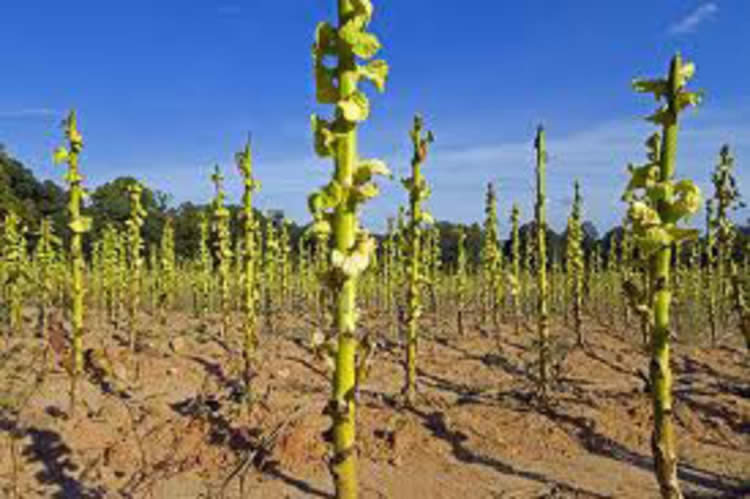
Senior Farming Reporter
TOBACCO farmers in Manicaland have defied the Tobacco Industry Marketing Board by failing to comply with its statutory directive to destroy tobacco stalks and re-growths from their fields. Tobacco re-growths can be effectively destroyed by spraying glyphosphate. The deadline for the destruction of the tobacco residue, which is meant to help minimise carryover of diseases and pests from one year to the next, was May 15.
Two months after the expiry of the deadline, most fields in Manicaland were still infested with the crop residue and re-growths.
Tobacco farmers are busy tendering tobacco nurseries at the moment.
The 2014/15 tobacco season starts on September 1, raising genuine concerns about the passing on of pests and disease into the next season.
This is most effective when tobacco stalks are destroyed immediately after the final harvest.
The major reason for poor crop residue destruction is poor supervision and monitoring by TIMB.
The fines imposed were too low to act as a deterrent while the process was deemed expensive by most farmers.
Tobacco growers who fail to destroy stalks should be reported to the department of Research and Specialist Services (Plant Quarantine Services Institute), Agritex, Tobacco Research Board or TIMB.
First offenders are fined $100 per hectare.
Repeated offenders risk a fine of imprisonment and $200 fine.
Provincial Agritex Officer for Manicaland Mr Godfrey Mamhare on Wednesday decried the poor tobacco residue by farmers.
He said the problem was prevalent in new and old resettlement areas like Nyamazura, Mapembe, Nyazura and Odzi – which are the major tobacco farming areas in Manicaland.
“This is a statutory requirement which these farmers are failing to comply with. We are in August already, barely a month into the next tobacco season, and some farmers have not even removed tobacco stalks from last year,” said Mr Mamhare.
According to the Plant Pests and Diseases Act (Chapter 19: 08) all farmers must clear their fields of tobacco stalks by May 15 of every year.
“Our investigations have revealed that tobacco farmers in Nyamajura, Odzi, Mapembe and Nyagundi area have not complied either due to ignorance or arrogance. This will compromise the quality of the next crop,” said Mr Mamhare.
In the past, the problem was perceived as the farmers’ lack of understanding and appreciation of the reasons for destroying crop residues.
However, all farmers were aware that the statutory requirement.
Some of the reasons for inaction include the desire for an undisturbed soil surface to prevent soil erosion while were prepared to risk prosecution because other operations had a higher priority at the time.
Slashing tobacco stalks and spraying the subsequent regrowth with glyphosphate was effective, but many farmers complain that it was expensive.
For the offence, a first offender risks being penalized $100 per hectare of imprisonment for a year or both.
A second offender faces double the penalty and jail term.
In a statement recently, TIMB said tobacco pests and diseases are effectively controlled when farmers destroy stalks immediately after the final harvest.
“The destruction of stalks helps reduce carryover of diseases and pests. This is most effective when tobacco stalks are destroyed immediately after the final harvest,” reads the statement.



 Online Reporter