Online Reporter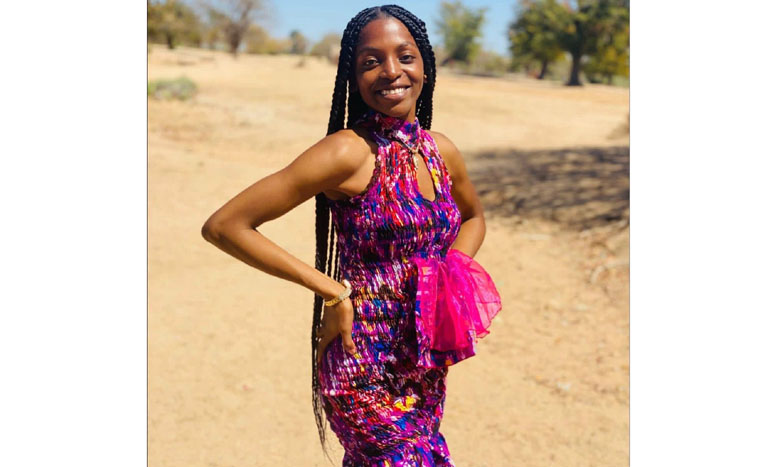
Lloyd Makonya
Correspondent
FROM digging sweet potatoes in the fields of Bwizi Village in Bocha, Marange to becoming one of only 16 young women in the world honoured for excellence in Science, Technology, Engineering and Mathematics (STEM), Daisy Kudzai Tsenesa has transformed a rural dream into an international success story that is inspiring a generation of Zimbabwean girls.
At a time when the Zimbabwean girl child is increasingly breaking barriers in Science and Innovation, the young woman from Marange has emerged as another shining symbol of resilience, brilliance and hope.
Only last week, The Manica Post carried the remarkable story of Nicolate Leven from Makoni, the young innovator who developed a plant-based prototype vaccine against tick-borne diseases, earning national recognition, admiration from Vice President Kembo Mohadi and a Government scholarship to study Animal Health Sciences at National University of Science and Technology.
Now, another daughter of Manicaland has captured international attention.
Born and raised in Bwizi Village in Bocha, Marange, Daisy recently received the prestigious Zonta International Women in STEM Award, becoming one of only 16 women globally recognised for outstanding contributions to Science, Technology and Innovation.
The award is administered by Zonta International, a leading global organisation dedicated to building a better world for women and girls.
The organisation champions women’s rights, equal access to opportunities, leadership representation and a world free from violence against women.
For Daisy, the award represents far more than personal achievement.
It is the triumph of a rural girl who once walked dusty village roads with little more than determination, discipline and faith in God.
She remembers Christmas holidays spent at Bambazonke Growth Point, digging mbambaira (sweet potatoes) in her grandmother’s garden and participating in Easter activities at Bwizi Anglican Church.
Those humble beginnings would later shape the values that now define her global journey.
Growing up was not easy.
“Finances were not always enough. My parents were working hard to educate all of us and life often required sacrifice,” she recalled.
Yet amid the hardships, Daisy encountered what she calls “angels in human form”, teachers, mentors and community members who believed in her long before she fully believed in herself.
After breaking a school record in Grade Seven with five units, Daisy enrolled at St Dominic’s High School in Mutare.
The transition from rural life to elite academic spaces came with painful challenges.
“I still remember being mocked during my first days because of my rural background and my strong Bocha accent,” she said.
For a while, the ridicule made her withdraw into silence, but instead of crushing her spirit, the experience sharpened her determination.
Supported by close friends and inspired by dedicated teachers, Daisy immersed herself in relentless study sessions, weekend lessons and disciplined preparation.
She eventually obtained 11 straight As at Ordinary Level, before later becoming Zimbabwe’s top Mathematics student in the Cambridge examinations, earning the prestigious Cambridge Outstanding Achievement Award.
Teachers who taught her still speak proudly of her discipline and humility. According to Daisy, educators such as Mrs Mazhomba, Mrs Muradzikwa and Mr Simba Kapuya played a transformative role in her life by constantly pushing students to dream beyond their circumstances.
Through opportunities introduced by her teachers, Daisy later earned a scholarship through Education Matters, and proceeded to the prestigious USAP Community School for her Advanced Level studies.
It was there that her passion for solving community problems deepened.
One of her projects focused on drug abuse among young people, inspired by some of the difficult realities she had witnessed while growing up in different high-density communities around Mutare including Sakubva, Dangamvura and Chikanga.
Today, Daisy stands at the forefront of Africa’s emerging technology revolution. Currently pursuing a Computer Science Degree at Ashesi University in Ghana under the prestigious Mastercard Foundation, she has already established herself as one of the continent’s rising innovators.
Her academic brilliance also earned her the highly competitive Generation Google Scholarship, awarded to exceptional female students who demonstrate academic excellence, leadership and commitment to transforming communities. But perhaps even more remarkable is the work she is now doing in Artificial Intelligence (AI).
Daisy is the co-founder and Chief Executive Officer of Mrika AI Studio, an African technology company developing AI systems designed to assist businesses and ordinary people through accessible digital tools.
Together with her team, she developed “Agent Mrika,” technology that enables computers to perform tasks almost like human assistants by autonomously managing customer interactions for businesses operating on social media platforms.
The company has already launched “SecondMemory,” an AI-powered WhatsApp assistant helping users store and retrieve important information directly through WhatsApp.
Beyond AI, Daisy is also co-founder of SheaGlow, a health-tech start-up working to bridge the gap between dermatologists and African communities living with skin conditions.
Her innovations reflect a growing movement of young African scientists determined to create home-grown solutions for African challenges. During an exchange semester at the University of California, Berkeley, Daisy says her belief in African-driven innovation became even stronger.
“If anyone is going to solve Africa’s challenges, it is Africans themselves,” she said.
Friends and mentors describe Daisy as deeply humble, disciplined and grounded in faith despite her growing international recognition. Those who know her say she has never forgotten her roots. Even as she prepares to graduate with honours in the coming weeks, Daisy insists her achievements are not hers alone.
“To me, that achievement means honouring my family, my community, my country and my continent,” she said.
Her story arrives at a critical time when Zimbabwe continues pushing for greater participation of girls in STEM fields as part of broader national development goals anchored on innovation, industrialisation and Education 5.0.
Across the country, more young women are beginning to challenge stereotypes that once confined girls to limited career paths. For many rural girls, Daisy’s journey now stands as living proof that brilliance knows no geography. That a village girl can compete with the best minds in the world. That poverty is not destiny. And that dreams born in the dusty pathways of Bocha can one day reshape the future of Africa through science and technology.
“I share these achievements not to boast,” Daisy said, “but for the young girl somewhere in a rural village who may feel like she wants to fly but has no wings yet, do not give up.”
As The Manica Post, we hope, another young girl in a quiet classroom or under a dim paraffin lamp in rural Manicaland may read this Daisy Tsenesa’s story and begin to believe that the world, too, can one day know her name.