Vusumuzi Dube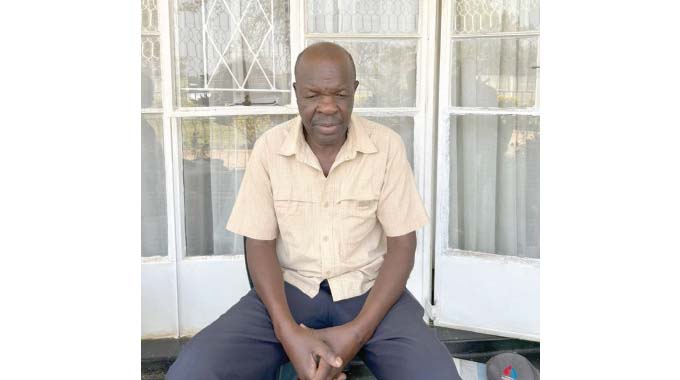
AT the tender age of 23 now Lieutenant-Colonel (Rtd) Jackson Thuli Matiwaza pseudonym Cde Jackson Chokwadi or Njabulo Mtolo was entrusted with commanding one of the five ZPRA battalions based at Mlungushi in Zambia. His was the third battalion, the first being under now Major-General (Rtd) Stanford Khumalo (Madliwa), the second taken care of by Cde Moffat Tshuma, the fourth under the stewardship of now late former military attache to Malawi, Colonel Polate Maphenduka Moyo (Soneni) and the fifth led by Cde Butho Nkomo. Mlungushi accommodated ZPRA regular forces.
The five battalions were later deployed along the Zambezi River with the aim of storming into then Rhodesia as ZPRA inched towards carrying out its daring military operation code named the Zero Hour, which was not to be as talks at Lancaster House in Britain led to the ceasefire in the process putting an end to the protracted struggle that was being waged by ZPRA and Zanla against the rebel Ian Smith regime.
On Thursday last week our Assistant Editor Mkhululi Sibanda (MS) spoke to Lt-Col (Rtd) Matiwaza about his exploits during the armed struggle. Lt-Col (Rtd) Matiwaza said despite living a relatively comfortable life as he came from a family that was known for its business acumen in Bulilima District, Matabeleland South Province, the Matiwaza sons, about seven of them left the country to join the armed struggle.
Besides running businesses deemed successful during that time the Matiwazas had also attained decent education.
However, the Matiwazas looked at the bigger picture and left that comfort zone to join the armed struggle. Those who also took part in the armed struggle are now Brigadier-General (Rtd) Ben Matiwaza, Situlo, Roy, Austin, Casper and Ran.
Today Lt-Col (Rtd) Matiwaza opens his account by narrating how he joined the armed struggle, training and deployment to the front before he was recalled to go for further training in the then Soviet Union to do a battalion commander’s training. Below are excerpts from the interview.
MS: May we please start this interview by introducing yourself, give us your brief background.
Lt-Col (Rtd) Matiwaza: I was born on August 12, 1956 koNdolwane in Bulilima District of Matabeleland South Province. I started off my education at the local Gonde School before moving to Ndolwane where I completed my primary education. For my secondary education I enrolled at Empandeni Mission, a Catholic school where I did my Form One to Two. After Form Two I moved to Bulawayo where I completed my Ordinary levels.
While in Bulawayo I was living in Tshabalala suburb, which itself was a hot-bed of nationalist politics. I then moved back to my rural home to start a job as an accounting clerk as during my stay in Bulawayo I had also done a Pitman Course in Book Keeping, Accounts and Commercial English. I had done well in my O-levels.
When I returned home I joined Matiwaza Enterprises Private Limited in Plumtree. The company, running over 10 shops and butcheries was owned by uncle, my father’s brother. He was the father of Brig-Gen (Rtd) Ben Matiwaza. I worked there until I left the country to join the armed struggle in 1975.
MS: What motivated you to join the armed struggle?
Lt-Col (Rtd) Matiwaza: It was the general political injustices in the country where blacks were being discriminated against. I was also motivated by the fact that my brother, Ben uBrigadier-General had left for war. Ben left the country to join the armed struggle in 1969 and was followed by the other brother, Situlo who joined in 1970. To me, that was a big motivational factor to join my brothers in the exercise of decolonising the country.
MS: Then take us through your journey of joining the armed struggle.
Lt-Col (Rtd): For me it was a simple task as I had a passport. So I boarded a train at Plumtree Town to Francistown. I had a relative called Stephen Ndlovu, a brother in actual fact who was teaching at Mater Spei College in Francistown. I had lived with Stephen in Bulawayo when he was teaching at Ihlathi Secondary School in Bulawayo. It was in Botswana where I met some guys who were coming from Tegwani (Thekwane) Mission who were on their way to join the armed struggle.
They included comrades like Nyaladzani Nleya. We were later flown to Zambia where we were taken to Nampundwe Transit Camp. I think we stayed at Nampundwe for two months before we were driven to Morogoro in Tanzania for our military training. That could have been August of 1975. We were escorted to Tanzania by now Brigadier-General (Rtd) Abel Mazinyane.
Our group is commonly known as the Group of 137 as we were 137. Like I said there were guys who had left Tegwane Mission, that is Cde Munyaradzi Machacha whom we travelled together from Zambia to Tanzania. However, Cde Machacha who is now the Principal of the Herbert Chitepo School of Ideology joined Zanla.
Initially our group travelled to Tanzania under the Zimbabwe Liberation Committee (ZLC) which was made up of both ZPRA and Zanla recruits. That is why we had comrades like Machacha who were Zanu. Also among us was Cde Austin Chirisa and Tiger. We trained at Morogoro under the tutelage of Cdes Tjile Nleya, uDubhu, Gedi, Rodwell Nyika, now CDF Philip Valerio Sibanda, Stanley Gagisa Nleya and Jack Daki Mpofu. We finished our training around May or June. We were then taken to Zambia where I was deployed to the front.
MS: Where did you operate from?
Lt-Col (Rtd) Matiwaza: I operated on the southern part, an area that covered areas such as Jambezi, Sikube, Matetsi. My immediate commander was Cde Todd Mpisi while the regional commander was Cde Roger Matshimini. Other comrades I operated with included Marshal Mpofu and John Nyamupingidza. We would cross from Zambia and carry out operations then move back to Zambia to replenish our supplies.

We would ambush the enemy, plant landmines and make surprise attacks. Our operations were a typical guerilla warfare of surprising and taking the enemy by surprise. We had many successful battles in areas around the Victoria Falls and Matetsi. I stayed at the front for one-and-a-half years as I was later on recalled to the rear for another assignment. By that time I was already a hardened guerilla having seen a lot of action at the battlefront.
MS: What was your next assignment?
Lt-Col (Rtd) Matiwaza: It was in December 1977 when I was part of a group of 10 comrades who were sent to the Soviet Union to do a battalion commander’s course. Of the 10, five including myself were trained as battalion commanders while the other five were trained as battalion commissars. We were based at Odessa Red Banner Military School. Besides myself the other four who were trained as battalion commanders were now Lt-Col Barnabas Sibanda who is also famous for his Zimcopter Project, Valerie (Tonderai Shingai Mudzi), who unfortunately was killed when the Freedom Camp was bombed, there also was Cde Socks who before joining the armed struggle had been teacher, there was also Thesius Moyo.
Those who were trained to be battalion commissars were Cdes Siziba, Cairo, Toney, a Mabhena guy and Nimrod who had come from Mozambique after the collapse of Zipa.
To be continued next week


 Online Reporter