


 Andrew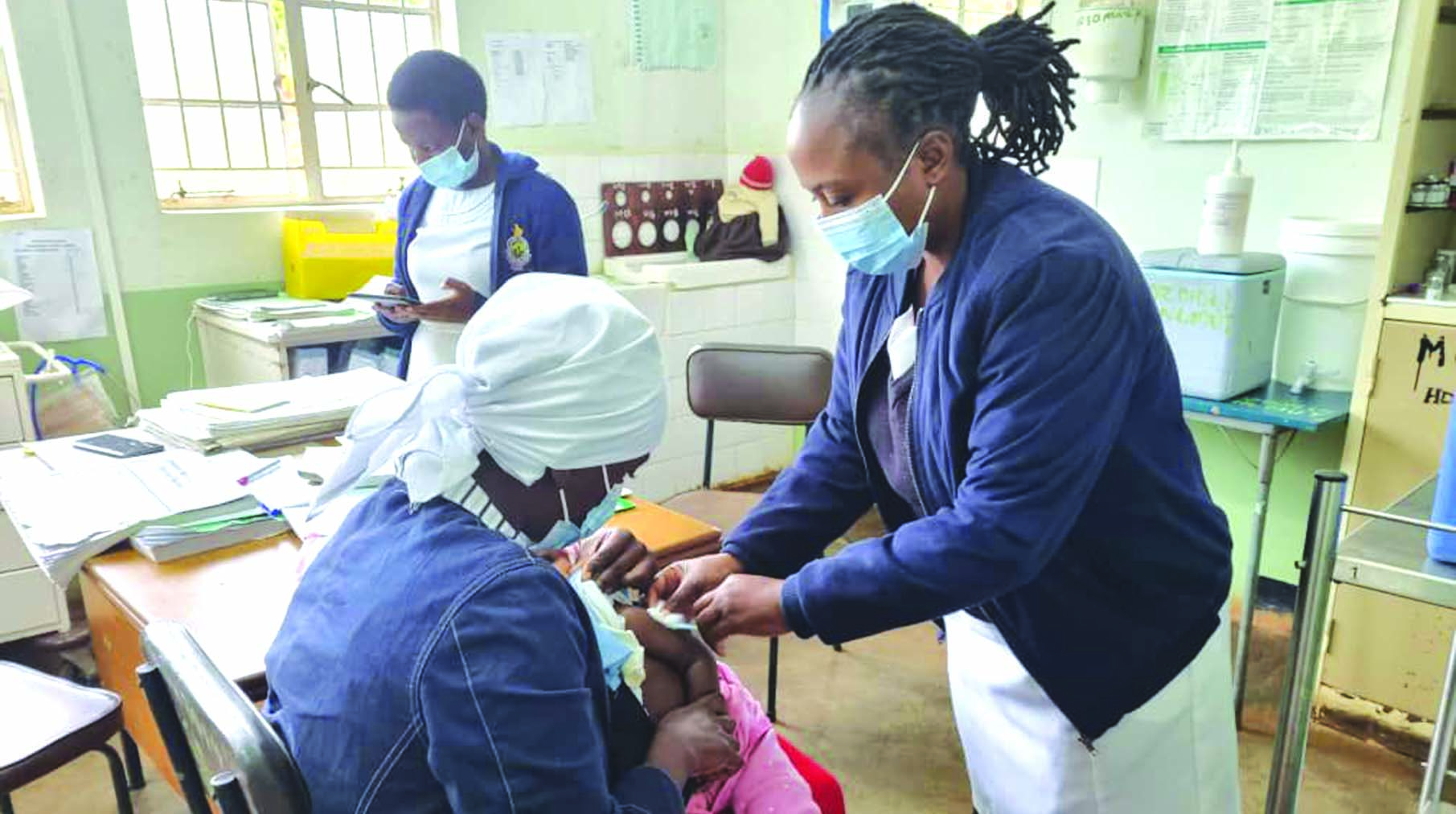
Roselyne Sachiti
Assistant Editor
Madzimai Clara Saruchera (30) of Mutasa, Manicaland Province, is a relieved mother.
When her five-year-old son fell ill in June last year, the family’s immediate reaction was to take him to their church shrine for prayers.
The child’s condition worsened despite assurance that he would be fine.
In the dead of night, Madzimai Clara took a bold decision, left home and travelled to Mutare where her child was immediately hospitalised.
“His condition was critical. My husband was out for night prayers and I left a note telling him I was going to a hospital, but did not mention which one. I lost another child to measles two years ago,” she revealed.
She does not regret making the brave call to seek medical help, as it saved her child`s life.
“He could have died from measles had I spent one more day at home. I am happy I made the decision to seek help when it mattered most,” she told The Sunday Mail.
While her child’s life was saved, some mothers who have not made the decision to take their children for measles vaccination or treatment have paid the heavy and unbearable price of losing their kids.
This year alone, 34 children have died from 348 cases of measles reported in Mutasa District, Manicaland Province, between January and May 2022.
Madzimai Clara’s experience shows that women in apostolic sects have an important role to play in safeguarding their children’s health by ensuring they are vaccinated against measles.
According to the World Health Organisation (WHO), measles is a highly contagious and serious disease caused by a virus in the paramyxovirus family.
It is normally passed through direct contact and through the air.
The virus infects the respiratory tract then spreads throughout the body.
Apostolic Women Empowerment Trust (AWET) national director Tendayi Gudo said they have been using social and behaviour change communication (SBCC) within apostolic communities to create a mindset shift with regards to accessing modern health services.
“As females within the apostolic community, we will be holding dialogue with other women from the apostolic community.
“We are raising awareness on the importance of vaccination against not only measles, but all other inoculations deemed necessary for the protection of children,” she said.
AWET, she added, will also use social mobilisation in apostolic communities to reach out to larger numbers of the apostolic men, women and children as well.
“We believe this is an issue that also involves men and the children who are at the centre. AWET has been and is still working in Mutasa districts on risk communication and community engagement,” she said.
Gudo added that since the outbreak of measles in Zindi Ward, Mutasa, AWET has been working with behaviour change facilitators (BCFs), apostolic leaders since the most affected children were from the apostolic community.
“There has been a lot of sensitisation, knowledge sharing on the disease with the support of the United Nations Children’s Fund (UNICEF) and Ministry of Health and Child Care (MHCC).”
Gudo added that a multi-sectoral approach is needed to make a breakthrough.
This, she said, can be achieved through availing mobile services by the healthcare system and for access to be granted even at odd hours for those that cannot be seen at health centres during the day.
“If one changes his or her mind on accessing health services, we should address issues of stigma and confidentiality.”
According to Gudo, it is crucial for all stakeholders to come together and work on a feasible plan that will ensure the right of the child to healthcare and quality life is guaranteed.
“This would be through supporting us with the necessary resources to be able to engage and raise awareness in these apostolic communities.”
A community health worker (CHW), Mr Lemson Mulolo, who works at Kubatana Clinic, said some people do not vaccinate their kids against measles because of religious beliefs.
He also believes distances between villages and health facilities, negligence by parents and sometimes non-availability of medicines prohibited them.
To promote behavioural change, they have been working with other stakeholders to raise awareness on why it is important to vaccinate children.
“We are having one-on-one meetings with apostolic sect members to encourage them to bring children for vaccination. Some take up the information and come to clinics, but do not want other church members to know,” he explained.
The awareness programmes have also resulted in more children coming for vaccination at schools, health facilities and surrounding estates, Mr Mulolo further said.
Another CHW, Mrs Shupikai Saidi, who works from Selbourne Estate which also has a number of apostolic sect members, said awareness campaigns have helped change attitudes towards measles vaccinations.
Some people in the apostolic sects, she added, are now taking their children for vaccination in areas that include Nyakupinga and Mutarazi estates and CD Main Village, among others.
“I have seen many at clinics. When they come, they do so discreetly so that other church members do not spot them,” she said.
Community Working Group on Health executive director Mr Itai Rusike said CHW have been playing a central role by raising awareness, mobilising communities during outreach programmes and for measles immunisation. By being the link between the community and the health department, CHWs advise and refer the community to seek medical attention early.
This, he noted, is helping to close the gap between public health services and communities at local levels.
CHW also bring health services outreach to communities and facilitating community roles in the health delivery services.
“The religious objectors are also being engaged through their various leadership and being reminded on the dangers of not getting their children vaccinated.”
Mr Rusike further said unvaccinated young children under five-years-old are at highest risk of measles and its complications, including death.
Unvaccinated pregnant women are also at risk, he pointed out, adding that any non-immune person (who has not been vaccinated or was vaccinated but did not develop immunity) can become infected.
The Public Health Act Chapter 15.17 allows for the compulsory immunisation of children and incapacitated persons.
Where there are compelling reasons of public health specifically regarding minors and legally incapacitated individuals, the Minister (of Health and Child Care) shall give notice in the Government Gazette to declare the date on which compulsory immunisation shall take place, the Act states.
Government in partnership with the World Health Organisation (WHO) will soon embark on intensified polio and measles vaccinations campaigns.
WHO Zimbabwe said this was a response to a measles outbreak in the country, as well as risk of polio importation.
“In response to Zimbabwe’s measles outbreak and risk of polio importation from neighbouring countries, Ministry of Health and Child Care together with WHO Zimbabwe are conducting support supervision visits in different health facilities across the country to strengthen routine immunisation and surveillance. “The immunisation support supervision visits are being done in preparation for the upcoming intensified polio and measles vaccination campaigns,” reads part of the statement.


 Online Reporter