Online Reporter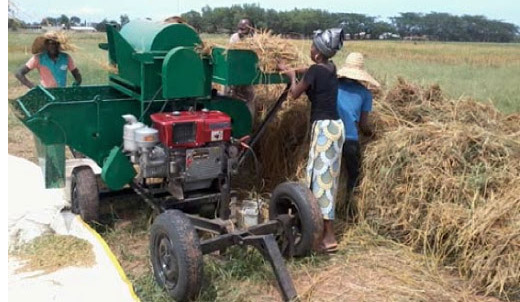
Lovemore Kadzura
Post Reporter
COMMUNAL farmers in Manicaland rural areas have received a significant boost in their agricultural pursuits, thanks to a collaborative effort between Government and one of its development partners.
The Ministry of Lands, Agriculture, Water, Fisheries, and Rural Development, in partnership with CARE, through its programme. Takunda, handed over modern agricultural equipment to 20 farmer groups from 10 wards under Mutare District.
The equipment includes 20 threshers, 20 earth augers, 20 hay balers, and 20 shellers.
The beneficiaries, comprising the elderly, women and youths, are expected to benefit from improved farming methods and reduced post-harvest losses.
Mutare District Agricultural Extension Officer (DAEO), Ms Bertha Mashayamombe expressed her appreciation for the initiative, arguing that the equipment will significantly support the Pfumvudza programme, which involves digging holes and grass for mulching.
The equipment will go a long way in enhancing farmers’ productivity and efficiency, she said.
The Pfumvudza programme is an agricultural initiative aimed at promoting sustainable farming practices and improving crop yields and the introduction of modern equipment is expected to alleviate labour-intensive tasks and enable farmers to cultivate larger areas, ultimately contributing to increased food security and income generation.
CARE’s Takunda programme, which facilitated the equipment donation, focuses on supporting vulnerable communities, including women and youths, to improve their livelihoods and resilience to climate change.
The handover ceremony marked a significant milestone in the efforts to modernise and enhance agricultural productivity in Manicaland’s communal areas, with potential benefits for local food security, income generation, and environmental sustainability.
“We handed over equipment to 20 farmer groups, each consisting of 20 members. The equipment includes threshers, shellers for small grains and maize, hay balers, and earth augers. Fifty-two percent of the beneficiaries are women and forty-eight percent are men,” said Ms Mashayamombe.
She added: “The earth augers will be used to dig Pfumvudza holes, which farmers were previously digging manually using hoes. The equipment will be used to shell and thresh small grains and maize after harvest. The hay from the small grains and maize will be baled for stock feed, and they will also bale grass to use as mulch on Pfumvudza plots next season. This will help improve the ease-of-farming, as machinery makes farming easier. Small grain production was declining in the district due to the labour associated with shelling. We hope to see an improvement in the production of small grains such as finger millet, sorghum, pearl millet and rapoko, as these farmers will be hiring out the machines to others.”
Mrs Bridget Manjengwa, a 62-year-old beneficiary from Chapeyama Village in Ward 13, said: “Our group received a thresher, which we will use to shell maize and other small grains. Shelling manually is difficult and time-consuming, and we lost a lot of produce in the process.
We will now earn extra income by hiring out the machine to other villagers.”
Mrs Susan Sikangata, from Gandayi Village, whose group received a basin digger, said the machine covers work that was previously done by 10 people manually, enabling them to have more Pfumvudza plots.
The importance of mechanising poor, disadvantaged, and drought-prone rural communal farmers in Zimbabwe cannot be overstated.
Mechanisation is a crucial step towards enhancing agricultural productivity, reducing labour intensity, and improving food security in these areas.
By providing access to modern farming equipment, the Government can empower small-scale farmers to increase their yields, reduce post-harvest losses, and improve their livelihoods.
The Government’s thrust towards mechanising rural communal farmers is a welcome move, aimed at promoting agricultural development and reducing poverty.
By supporting farmers with modern equipment, Government can help them adapt to climate change, improve their resilience, and increase their incomes. Mechanisation can also help to attract young people to farming, thereby ensuring the sustainability of agriculture in these areas.
Furthermore, mechanisation can help to reduce the drudgery associated with manual farming, freeing up time for farmers to engage in other activities, and improving their overall well-being.