Patrick Chitumba, Midlands Bureau
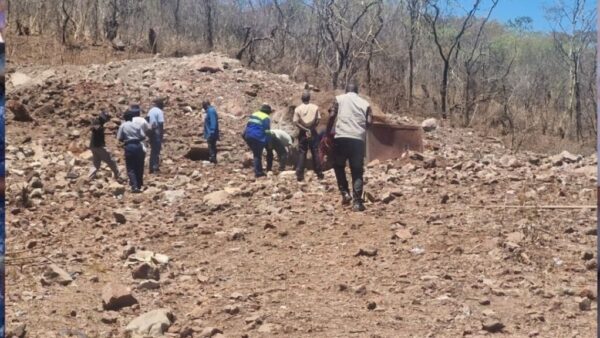
THE Midlands Province has recorded remarkable growth in gold production from 2018 to date, thanks to the introduction of innovative heap leaching technologies and the issuance of additional permits to miners.
These initiatives have resulted in a consistent monthly output of 100 kilogrammes of gold.
The Government has set ambitious targets for the mining sector, aiming to transform it into a US$12 billion industry, with gold expected to play a significant role in achieving this goal. The Ministry of Mines and Mining Development is also actively promoting sustainable investment and exploration across the sector.
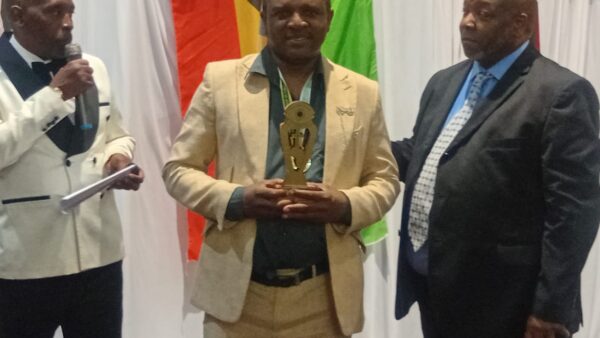
This progress is detailed in the Midlands Province Compendium of Projects (2018–2024), recently released by the Minister of State for Provincial Affairs and Devolution, Owen Ncube.
According to the report, a combination of technological innovation, administrative efficiency, and targeted support for small-scale miners is expected to drive further growth in the province’s mining sector.
The establishment of a one-stop milling centre in Shurugwi, for example, is set to significantly improve access to gold processing facilities. With its rich gold deposits and expanding investment opportunities, the Midlands Province is well-positioned to become a major contributor to Zimbabwe’s economic development.
As the Government continues to encourage sustainable investment and exploration, the province is likely to experience further increases in gold production and economic activity.
“Gold production in the Midlands Province increased due to heap leaching technologies, which are consistently producing 100 kilogrammes of gold per month,” reads part of the report.
The report also highlights that the surge in output is partly due to the successful clearance of a backlog of 6 500 mining titles by the local mines office — an achievement that has positively impacted gold declarations to Fidelity Gold Refineries.
Under the Formalisation of Small-Scale Gold Miners programme, 16 small-scale miners have been formally registered and integrated into the formal mining sector.
In the chrome mining sector, 10 small-scale miners have been capacitated and equipped under the Small-Scale Chrome Miners’ Capacitation Project, aimed at boosting chrome production.
“The local mines office has also made notable strides in clearing a substantial backlog of 6 500 mining titles.
This development has had a positive impact on the declaration of gold to Fidelity Gold Refineries, ensuring a more streamlined and efficient process,” the report states.
“Under the Formalisation of Small-Scale Gold Miners programme, 16 artisanal miners have been formally registered and integrated into the formal mining sector. The initiative aims to promote responsible mining practices and enhance the overall productivity of small-scale miners in the region.”
In a parallel effort, the report notes that 10 small-scale chrome miners have benefitted from a capacitation project designed to enhance their operational capabilities.
“The project has equipped these miners with the necessary skills and resources to boost chrome production in the province,” it adds.
The document also reveals that exploration of the Sengwa area has been completed, with an estimated mining lifespan of 18 years for thermal coal, according to RioEnergy a subsidiary of the RioZim Group.
According to the compendium, over 1 500 MSMEs) have been provided with decent workspaces across the province through devolution and council-funded projects, including market stalls and sheds in Gokwe South, Mandava in Zvishavane and Prince Park in Kwekwe.

“Construction of Gweru Mtapa SME factory shells is complete. Over 10 000 MSMEs and co-operatives were exposed to markets through market linkages. About 7 500 women were exposed to markets under various Women in Trade initiatives, linking women’s businesses to markets.
“Over 21 000 women were trained in entrepreneurial skills in 2024 alone. The establishment of the Kaguvi Smallholder Dairy has improved employment opportunities and skills acquisition for the youth,” the report states.
On tourism development, the document notes that interventions such as ZimBho and Domestic Tourism Festive Campaigns, along with Amai’s Traditional Cook-out Competitions, have contributed to growth in the sector.
The document further highlights positive economic growth following the Covid-19 pandemic, with Gross Domestic Product (GDP) growth rates of eight percent, 10,9 percent and 4,9 percent for the years 2021 to 2023 and a projected 5,8 percent for 2024.

Minister Ncube stated that the Second Republic remains committed to improving the livelihoods of Zimbabweans.
“In this regard, strategic policy direction was coined through the Transitional Stabilisation Programme and National Development Strategy 1, which is currently underway.
The Midlands Province is one of the richest provinces in Zimbabwe, boasting vast mineral and other natural endowments, as well as a substantial human capital base,” he said.