Online Reporter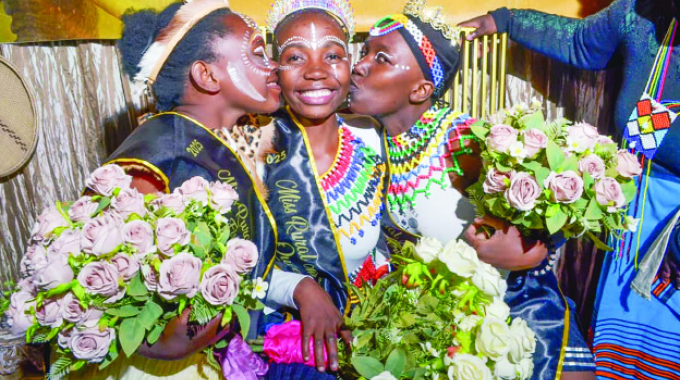
Trust Khosa
Zimpapers Arts, Entertainment Hub
MODELS competing for Miss and Mr Rural Zimbabwe 2025 can now prepare in earnest, following the announcement of a comprehensive itinerary by the pageant organisers.
The initiative seeks to provide traditional chiefs with ample time for preparations while ensuring that the models remain alert and ready.
Pageant founder Sipho Mazibuko, who has actively engaged local chiefs, believes that this initiative is a significant step in promoting our cultural heritage.
Last weekend, Mitchell Ngwenya of Mhlahlandlela Village in Lupane was crowned Miss Rural Zimbabwe for the Matabeleland North Province in Ntabazinduna.
The event turned into a rich celebration of culture, bringing together Ndebele, Xhosa, Tonga and Nambya contestants.
After the Matabeleland North finals, Mazibuko announced the date for other provinces. “We decided to announce the dates in advance to ensure we receive support from our sponsors and other affiliates.
“The Mash West preliminaries have been set for June 28 at Chief Ngezi’s homestead in Mhondoro, with the Manicaland finals taking place on July 12.
“On July 2, we are going to the Midlands, followed by Masvingo on August 5. The next round of preliminaries will take place on August 31 in Mashonaland Central, followed by Matabeleland South on September 6,” Mazibuko shared.
Her itinerary has also shown that they have set aside September 20 as the launch dinner for the pageant in Harare.
“We will meet our partners at the national finals launch on September 20 in Harare. We also want to ensure that the national finals of Miss Rural and Mr Rural Zimbabwe are staged on September 27, World Tourism Day, at Binga Beach, pending the approval of the date by our main affiliates,” she stressed.
She noted that the idea of engaging chiefs is a game-changer meant to empower girls from marginalised communities by actively involving local chiefs. This initiative aims to promote collaboration with these cultural custodians, fostering positive change and development within these communities.
Earlier this year, Mazibuko told Zimpapers Art and Entertainment Hub that by engaging local chiefs, her initiatives would align with community values, traditions values and traditions.
To streamline my efforts, I actively engage with local chiefs and resident ministers, ensuring that I have the necessary clearances to carry out my work effectively. I believe in establishing proper structures in all my initiatives.
“So far, I have visited every corner of Zimbabwe, where my ideas have been embraced after approaching the National Council of Chiefs to bless my initiatives,” she emphasised.
She also expressed deep gratitude for the support she has received from local chiefs, which has enabled her to scout for talent across various regions.
“It’s not easy to be granted permission to work with people in rural communities who still uphold their traditions. It is challenging to penetrate these communities, where traditional leaders value their cultural heritage. By engaging local chiefs, I ensure that I do not disrupt their customs.
“It is essential that we respect and embrace what our traditional leaders uphold and believe in.”
This respect for tradition is a cornerstone of her mission, emphasising the importance of cultural sensitivity in her work.
With nearly three decades of experience in the industry, Mazibuko is dedicated to empowering rural girls through pageantry.
Miss Rural and Mr Rural Zimbabwe have been revived at a time when modelling enthusiasts are calling for more pageants.
Notable pageants on the local calendar include Miss World Zimbabwe, Miss Universe Zimbabwe, Miss Earth, Miss Culture, Miss Albinism and Miss Supranational.
Over the years, Zimbabwe has hosted a number of pageants that have since been shelved, including Miss Summer Strides, Mr Ugly and Miss Malaika, which are no longer on the modelling calendar.
Zimbabwe has proven to be a hotbed of fine models who have gone on to conquer the world.
One of the pageants that has kept the hopes of models alive is Miss Rural Zimbabwe, famed for its uniqueness in promoting marginalised talents, courtesy of Mazibuko’s initiatives.
Through her efforts, Mazibuko is not just creating a platform for beauty; she is fostering a movement that empowers young women, instils pride in their heritage, and promotes community development.
As she continues her mission, the future looks bright for rural girls in Zimbabwe.