Online Reporter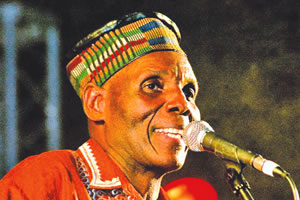
Ranson Madzamba
The Frenchman, Napoleon Bonaparte, a brilliant military strategist and tactician in the history of the West, once said: “Give me control over he who shapes the music of a nation, and l care not who makes the laws.”
While, to many, the observation might be remarkable more for its wit than for its inherent wisdom, it is, in effect, a incisive and seminal observation in the history of music scholarship.
It would be folly to take Napoleon lightly. He was a conqueror par excellence. He conquered swathes of Europe around the 1800s. The imperialist general, who understood the dynamics of power perhaps more than most people, was dead on target. The human being is an emotional animal and it appears nothing moves human emotions more powerfully than music.
Music is a dynamic and potent social force in every society.
In some African societies, it is a driving force that animates the life of the entire community.
Since time immemorial, it has been, and continues to be, the cornerstone of happiness.
It plays an important role in traditional African society. It is an integral part of the life of any African individual. In Africa, every great event, such as the triumphant return from battle, observance of agricultural rites, installation of kings, preparation for war or a major hunting expedition, victory celebrations and re-enactment of historical events of significance, was accompanied by songs and music suited for the purpose.
Music has a number of attributes, including the ability to command attention and the capacity to facilitate self-expression and stimulate socialisation.
Some scholars argue that music is so naturally united with humanity that we cannot be free from it even if we so desired.
It is one of the most powerful forms of communication known to humanity.
It shapes societies, influences thought and drives social change.
It is true that, beyond entertainment, music educates, informs, heals and unites people across generations.
Coming back home to Zimbabwe, any meaningful discussion of our liberation struggle and independence would be incomplete without acknowledging the vital role played by music and musicians.
Well, during the liberation struggle, music became a safe, yet powerful medium through which people could resist oppression and speak truth to power.
It inspired courage and unity among the oppressed black majority, encouraging them to rise and fight for freedom, equality and dignity.
Liberation songs by artistes such as Zexie Manatsa, Cde Chinx and groups like the ZANLA and ZIPRA choirs played a crucial role in mobilising the masses.
Songs like “Maruza Imi” became anthems of hope, inspiring fighters, mujibhas and chimbwidos, and the general populace to persevere in the face of hardship.
Sung largely in indigenous languages unfamiliar to the colonial regime, these songs carried messages of resistance, bravery and determination.
Zimbabwean culture, on the other hand, also played a central role in the liberation process.
Spiritual leaders and traditional figures urged communities to resist colonial domination.
The enduring influence of spirit mediums such as Mbuya Nehanda and Sekuru Kaguvi dates back to the First Chimurenga, where they inspired resistance against colonial forces. Their legacy reinforced the importance of African spirituality as a unifying and motivating force in political and social life.
As Zimbabwe commemorates national occasions such as the forthcoming Independence Day, it is essential to preserve the cultural values and traditions that define us as a nation. These cultural foundations not only contributed to independence of our country, but continue to shape Zimbabwe’s development.
Indeed, a nation without culture struggles to thrive.
Music’s role in shaping society did not end with independence.
The late Oliver Mtukudzi, a national hero, stands as a towering figure in using music as a tool for social transformation. Through his lyrics, he addressed critical issues such as child abuse, domestic violence, HIV and AIDS, education and family values.
His work promoted peace, reconciliation and cultural pride.
Mtukudzi’s legacy extends beyond music. Through initiatives like the Pakare Paye Arts Centre and his role as a UNICEF regional goodwill ambassador, he mentored young artistes and uplifted communities.
A teacher, mentor and unifier, Mtukudzi used his voice to inspire wisdom, hope and direction across generations.
His recognition as the first musician to be declared a national hero reflects the profound impact of music and culture on nation-building.
Though he is gone, his music and message will live on forever.
Similarly, Soul Jah Love remains a beloved figure, especially among Zimbabwe’s youth.
Known for his vibrant performances and heartfelt lyrics, he brought joy to audiences while addressing real-life struggles.
His music offered healing, unity and messages of love, peace and reconciliation. As Zimbabweans, regardless of our political affiliations, it is our responsibility to honour and respect the sacrifices made by both living and departed heroes and heroines.
Their courage ended a long period of colonial rule and gave birth to a nation founded on freedom and equality.
We will continue to honour and salute all those who sacrificed their lives for a free and independent Zimbabwe. It is everyone’s duty to always celebrate, preserve and promote the music and culture that define us as a people.
Long live our beloved Zimbabwe!
Ranson Madzamba is a communication science DPhil student at Bindura University of Science Education.