


 Tinaye Agere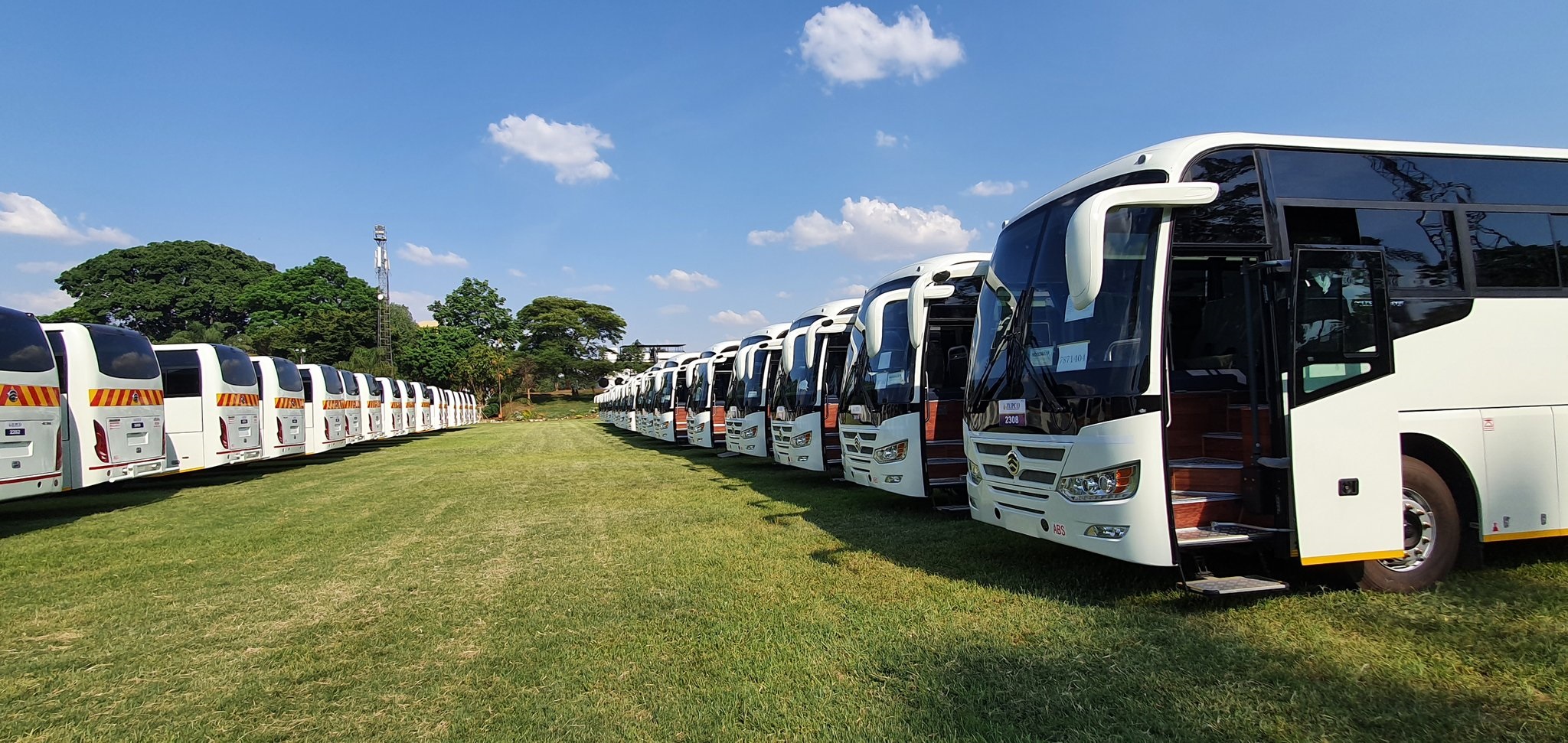
Dr John Mangudya
The Mutapa Investment Fund (MIF) last week poured US$10 million into Invictus Energy, the company prospecting for oil and gas deposits in Mashonaland Central province. This has been seen as one of the biggest investments yet to be made by Zimbabwe’s sovereign wealth fund. Our News Editor LINCOLN TOWINDO talked to MIF chief executive officer DR JOHN MANGUDYA on the significance of the investment and other developments at the fund. Here we reproduce excerpts of their conversation.
********************
THE Mutapa Investment Fund is a strategic investment arm of the Government of Zimbabwe, which was capitalised through the transfer of State-owned enterprises to the fund.
The whole idea of the sovereign wealth fund is to sweat those assets, which we now call investee or portfolio companies.
In some countries, sovereign wealth funds are capitalised using surpluses, which was the arrangement previously in Zimbabwe before the establishment of the MIF.
The idea was to invest balance of payment and fiscal surpluses into the fund, but, as you are aware, that never took off the ground because we do not have fiscal and balance of payment surpluses.
The Government then changed the law to ensure that we use the model of an investment-based sovereign wealth fund.
Previously, it was a commodity-based sovereign wealth fund, but now it is an investment-based fund.
So, the companies that were transferred to the fund are now the investments — the investee companies.
What we are charged with doing is to preserve and create value from the companies, ranging from the National Railways of Zimbabwe (NRZ), Zupco to Zesa. We need to sweat them so that they become commercially viable. When they make money, that money is for the current and future generations of Zimbabwe. We are using this as an investment to build national savings.
Investing in oil, gas
The fund recently supported the ongoing oil and gas exploration being undertaken by Invictus in the Zambezi Basin.
One of the assets under the fund is Invictus.
The Government, through Mutapa, has got a shareholding in Invictus.
Because we have a footprint in that, though at a lower level, because we have got about 10 percent as a local partner, it stood to reason that we support the company through the issuance of the US$10 million capital call that they wanted to further exploit the Zambezi Basin.
They have two holes, which have proved to be very resourceful, so it means it is a good asset.
What we want to do in the long-term is to help increase the supply of energy in the country from gas.
Energy is an enabler of any economy.
We are hopeful, as they continue to drill, we get more resource because this project is a game-changer for our economy.
Turning around
We have finished undertaking diagnostic assessments of all the entities under Mutapa.
What we have found is that some of them are actually cash cows; others we need to sweat them; others we need to put a bit of capital in them and others we are looking at joint ventures and BOTs (build, operate and transfers).
For those that need a bit of work, it means we need to upscale their operations with speed.
For example, if you look at Zupco, it is clear that the company needs more buses.
That means we need to look for capital to improve on their equipment and to ensure that the routes they are doing are profitable.
The one division that needs a bit of support at Zupco is the urban transport.
So, we are looking at using money generated from the intercity division to support the urban division and, therefore, reduce the burden on the fiscus.
This is because one of the duties Mutapa is charged with is to reduce the burden on the fiscus by making these companies viable so that we accrue savings for the national fiscus.
One of our critical key performance indicators will be the quantum of money that we help save for the fiscus.
So, in the medium to long term, the Mutapa Investment Fund should create its own savings by addressing the bottlenecks that are in the system.
We are charged with the strategic leadership of these entities, so we are providing guidance to their boards and we are also involved in their top management.
This is because there is need for alignment of the shareholder direction and that of management and the boards.
This does not mean we want to duplicate the role of management and the board.
We are there to provide strategic leadership to ensure financial returns are assured for Zimbabwe.
At the end of the day, we would like to reduce the companies’ dependence on the fiscus.
So, we have got plenty of ideas and strategies to turn around the companies.
State of affairs
We have since ascertained that most of the companies are stable while a few need recapitalisation.
If you look at the National Oil Infrastructure Company of Zimbabwe (NOIC), it is a cash cow. If you look at Allied Timbers, they are not struggling, while ZHL and POSB have all declared dividends.
We have got a mixture in terms of performance.
What is crucial about having all these companies under Mutapa is that we can leverage on the balance sheet to support those that need a bit of help.
The balance sheet is made up of companies that are cash cows and others that need support.
So, for those that need support, you can leverage on the balance sheet, get money and deploy it to those where there is need for support.
Previously, they were all standalone companies and now they have been consolidated.
Right now, we are busy finalising assessing the value of all the assets under the management of the fund.
We have outsourced accountants who are now working on establishing the actual value of the fund.
After a month from now, we will know that the fund is valued at X billion dollars, which is the total value of assets under the fund.
From there, we will now chart ways on how to grow the fund.
So, we will be measuring ourselves to see whether we are growing or shrinking.
Currently, we are looking at the base, because we need to know our opening balance.
So, that is being done by auditing firms.
Logistics hub
His Excellency, the President, has a vision of making Zimbabwe a regional logistics hub.
We are working on attaining that vision.
We do not want Zimbabwe to be a bottleneck in the region; we want the country to be a regional hub of logistics, energy and transport.
So, how do you do that?
With respect to NRZ, we have had an assessment of what is required.
We have ascertained that there are four things that are needed at NRZ.
The first one is to sort out the track, to deal with cautions or restrictions.
For a train to move faster, we need to sort out the cautions, which result in reduced speed of movement of cargo.
The second part is to have the locomotives in place.
To ferry cargo, say for Dinson, or any other company, we need locomotives, the ones that pull the wagons, which are the third component.
Fourthly, we need signals.
We need a high-tech signalling system to know exactly where the trains are and where they are coming from so that we have a robust tracking system.
So, we need rolling stock, signalling and repair.
So, what the President is advocating is that we need to sort out these four.
Once they are sorted out, it means we have an efficient railway system to ensure that export cargo is moved efficiently.
What we have also done is to look at the railway corridors.
We have two major corridors — one covering Harare-Mutare-Machipanda-Beira; the other one covers Harare-Dabuka-Chicualacuala-Maputo.
This means we need to sort out these two main corridors.
From there, we can then expand organically, doing the feeder ones.
For example, from Manhize, we will need a new line running from Mvuma to Manhize, and it is about 50 kilometres long.
That is why we are going out scouting for possible financiers.
We have gone to a number of places, including Afreximbank (African Export-Import Bank), for support.
This is because we need a lot of money.
Let me give an example. If you look at a locomotive, it costs between US$3,5 million and US$4,5 million.
For wagons, one costs around US$100 000.
So, if you need 75 wagons, you need about US$7,5 million.
And if you need about 10 locomotives, it means you need about US$45 million.
That is why we need long-term finance.
But the whole idea is that we need to link the product movement to the payment because we are also trying to minimise debt to the Government and the nation of Zimbabwe.
This debt should be self-liquidating.
It means if you are going to buy the locomotives and wagons, there should be enough cargo to move and there should be enough off-takers of the service, who are the ones who will service the loan.
This is the case so that we do not use taxpayers’ money.
So, we want to actualise the President’s vision that Zimbabwe must not be a bottleneck to the region.
Mozambique and Botswana have done their part and we want to do the same as Zimbabwe.



 Bongani Ndlovu
 Online Reporter