admin
admin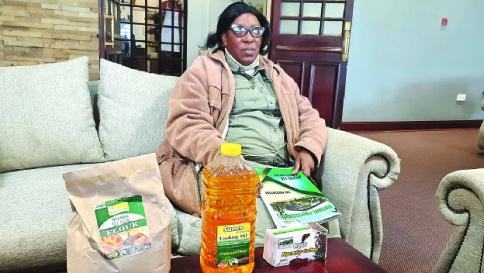
Cletus Mushanawani
News Editor
MUTARE Polytechnic has embarked on a number of import substitution projects like the manufacturing of stadia bucket seats, cooking oil, flour and tea in a move that will see the country saving millions of dollars from imports.
In an interview on the sidelines of Mutare Polytechnic’s Research and Innovations Association Conference in Nyanga last week on Friday, the principal, Ms Poniso Watema, said her institution has totally embraced Education 5.0 and has embarked on a number of value addition programmes.
“As a polytechnic which trains students in skills that are broad, we have gave our students a challenge to come up with innovations to showcase our competencies to the world. Polytechnics are the DNAs for industrialisation and Mutare Polytechnic is playing a leading role in this regard.
“We have a 100-hectare farm in Vumba where we are growing nyemba (cowpeas). We decided to add value to our nyemba starting in 2021 as we realised that it is monotonous eating them the traditional way.
“Last year, we exhibited at the Zimbabwe International Trade Fair (ZITF) where we showcased the crude oil, so we went further to refine the crude oil to come up with our own cooking oil brand which is cholesterol free. From the by-products of nyemba, we have come up with our own flour which can be used just like any ordinary flour, while the residues are used to make stock-feeds which are good for pigs, rabbits and chickens,” said Ms Watema.
The college also boasts of a thriving macadamia nuts plantation which has 2 000 plants.
“Besides the macadamia plants, we also have bananas. We are now adding value to the bananas to come up with chips. We also have a tea plantation which we also want to value add to produce our own tea brand. We also produce maize, pigs, rabbits and fish.
“We have partnered with the Zimbabwe Prisons and Correctional Services (ZPCS) to utilise their Little Kraal Farm where we grow maize and nyemba and in return we equip the inmates with survival skills which they will use upon their release,” she said.
“Our wood and mechanical departments were given a national project by our parent ministry (Ministry of Higher and Tertiary Education, Science and Technology Development), to furnish the Manicaland State University of Applied Science’s Pathology Centre.
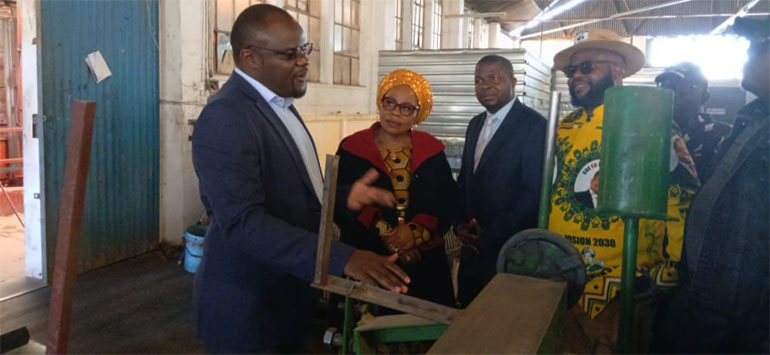
“We really produce quality work which matches what is produced by well-equipped industries. We are now an industry in our own right as we are in the process of coming up with our own industrial hub which will have three sub business units.
“The first one will be for wood and construction so that we will able to produce more furniture, the second one will be for fibre glass manufacturing. We are already manufacturing canopies for vehicles.
“The last one is the stadia bucket seat project. We have demonstrated that we are able to produce these bucket seats. We have done the flip bucket seats and we are currently working on the concrete bucket seats as per the Ministry of Youth, Sports, Arts and Recreation specifications so that we can furnish our stadia across the country.”
She added: “Polytechnics are institutions that can transform the economic fortunes of the country. We are also into partnership with Chimanimani Rural District Council to refurbish the Nyanyadzi Hot Springs, which are in shambles.
“This place can be a cash-cow for the local authorities and Manicaland tourism at large. We are working with the community, councillors and traditional leadership in this project. We also carried out a needs analysis so that we can train youths on protecting the environment around the Hot Springs.
“Our Tourism Department will man the Hot Springs, including the chalets, so that it’s a total tourism package.”
Permanent Secretary in the Ministry of Higher and Tertiary Education, Science and Technology Development, Professor Fanuel Tagwira said colleges should thrive on innovation and industrialisation, teaching, research and community engagement for the country to attain Vision 2030.
“Knowledge plays a pivotal role in economic transformation. Economies are transformed by knowledge which can be converted into goods and services. Mutare Polytechnic has the responsibility of driving sustainable infrastructure development through research, innovation and synergies with industry.
“We must go beyond papers to produce goods and services. Our nation is under sanctions and is in need of quick interventions and solutions that can only come from applied research,” he said.
Prof Tagwira added: “This was the approach used by the Department of Research and Specialist Services before and soon after independence to transform agriculture.
At the beginning of every year, the researchers would sit down with farmers to find out the key challenges the farmers were facing and research would be formulated to solve those challenges.
“If farmers have challenges with crop or animal diseases, allow research to solve those problems.
“If the country is not getting value for money due to the exportation of raw materials instead of finished goods, that should inform some of our research.
“Unfortunately, our biggest challenge as a country is on brain drain,” said Prof Tagwira.



 Online Reporter