Chronicle Editor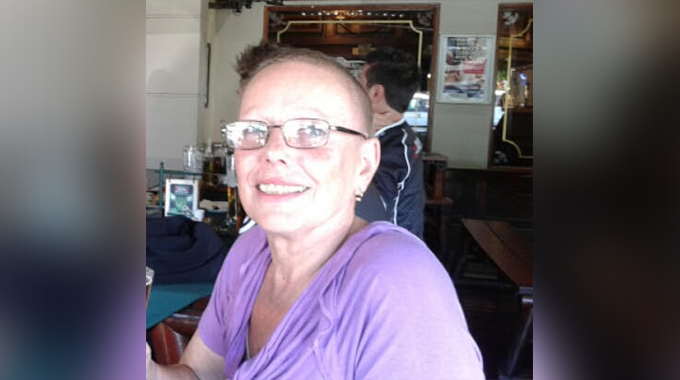
Robin Muchetu, Senior Reporter
MS Margaret Duckworth, an administrator at a local retirement home in Bulawayo, sat with a lump in her breast that wouldn’t go away for a year. Initially, she dismissed it, thinking it wasn’t an issue. However, when she finally decided to act on it, she was shocked to learn that the lump was cancerous — something she never imagined would affect her.
According to the National Cancer Registry, over 2 000 women present with breast cancer annually in Zimbabwe, making it a serious concern.
“I knew I had a lump in my right breast but kept thinking it would go away. Eventually — and I mean eventually — one year later, I went to see the doctor, who sent me for tests. I had the fine needle biopsy on a Monday and was to come back on Wednesday for the results. The wait wasn’t too bad at first; I thought, ‘Me? This couldn’t happen to me. Nothing in the family. Not me,’” she recalled.
The initial denial and low-risk perception Ms Duckworth had at that time made the news of her cancer diagnosis even more devastating. When Wednesday, November 20, 2013, arrived, she remembers that day vividly.

“The feeling was indescribable. Your very soul is drained. Thoughts like, ‘I don’t want to die. I’m only 58, and I have my two boys to look after’ flooded my mind. ‘These things are sent to make you stronger’— a saying that just didn’t cut it at that moment. I had endured so much turmoil in my life that I couldn’t believe, after finally being happy and settled, life had thrown me another curveball. Hadn’t I proven that I was strong?” she questioned herself.
Her spirituality was put to the test, and looking back, she reflected that cancer had nothing to do with God or life but was about one’s body and how it works. There was no one to blame, she asserted.
“The next few days, I was in a flat spin. I didn’t know which way to turn or what to do. I cried more than I ever had in my life. Then it was time to pull myself together. I had to sit down and work out a plan — a plan that involved how I would beat this thing and come out smiling. So that’s what I did. I dried my tears,” Ms Duckworth said.
After her diagnosis, she devised a coping mechanism that she believes should be adopted by anyone facing a disease like cancer.
“I think the most important thing is to gather your troops. Tell everyone you have cancer. Let them know you need their support through everything. Never isolate yourself; it gives you too much time to feel sorry for yourself. The mind is a strange piece of equipment and will play tricks on you. Every little bump or lump will convince you it’s another tumour,” she added.
She emphasised that a strong support system from friends and family is vital for healing.
Taking a leap of faith, she signed up for chemotherapy locally.
“My plan involved first finding someone who could tell me more about breast cancer and the way forward. I found the right person, Dr Samukeliso Vuma, the oncologist. We discussed everything there was to discuss. I wanted to know everything. So, find yourself a very good doctor — one you can ask a million questions and who will patiently give you a million answers, even drawing pictures if necessary. I opted for chemotherapy first to shrink the tumour,” she explained.
However, during her treatment, she encountered many opinions about how one would feel afterwards.
“You hear all kinds of stories about chemo — how sick you’re going to be, the hair loss, and how some people just gave up after the first session because they couldn’t take it anymore. The stories were horrendous and scary. I gritted my teeth, went for my blood test, and walked into the Royal Women’s Clinic on December 19, 2013,” she recounted.
Thus began her chemotherapy journey.
“I had to have four sessions of chemo three weeks apart. I was very tired after the first session. Luckily, I wasn’t sick but felt queasy all the time. I lost my hair after the second session; it came out in chunks. When I walked down the road, the wind would blow, and my hair would be left trailing behind. After a few days of this, I just got it all cut off. I decided I wouldn’t wear a wig, hat, or doek. This was me — take it or leave it,” she stated.
Sadly, Ms Duckworth was unable to have her third and fourth chemotherapy sessions on time because her white blood cells had plummeted to an all-time low.
During this time, the 6cm tumour had shrunk, but she wanted it removed from her breast in South Africa.
“I was booked for surgery on Friday, April 11, 2014. I was told my right breast could not be saved, and I would have to lose it and undergo radiation. I was cut from my breastbone to under my arm, with a large dressing across it. I started physiotherapy the very next day,” she said.
The road to recovery has been long but has yielded positive results.
“When I got back the results, I was told I have hormone-receptive cancer, meaning my cancer is fed by oestrogen. They told me this was good, and I wouldn’t have to undergo any more chemo, but I did need heavy-duty radiation. I had 15 lymph nodes removed, seven of which were cancerous,” she explained.
Despite the strength and positivity she initially had, the removal of her breast affected her deeply.
“I had a meltdown. I looked in the mirror, and all the strength of mind I had built up went straight out the window. I felt like a boy. I had a bald head and half a flat chest. No one would ever look at me the same way again. I couldn’t stop crying; I was miserable,” she said.
She received 14 doses of radiation therapy after the surgery.
Ms Duckworth described her journey from diagnosis through treatment to recovery as “all shades of grey.”
“Has it made me stronger? I think it has. Has it made me appreciate life? In some ways, yes. When you’re walking the path of cancer, it feels like you’ll never reach the end. But you do, and looking back, it wasn’t as bad as I expected.
It’s over in the blink of an eye,” she reflected.
Today, Ms Duckworth has been cancer-free for the past 10 years.



 Online Reporter