

 admin
admin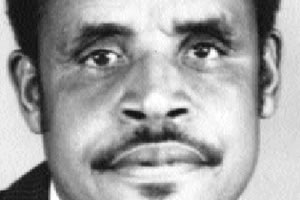
“We acted quickly on receiving information from Bulawayo and had a round robin and consulted all members of Politburo. All members of the Presidium said yes. Forty-one Politburo members also said yes while two members were out of the country and 14 were not reachable. Thus 46 members of the Politburo said yes out of 62 members,” Cde Mutasa said.
“He will be buried at the National Heroes Acre on Friday morning. We hope everything will be done as quickly as possible,” he said.
Cde Mutasa described Cde Ncube as an outstanding member of Zapu who became involved in the fight for the country’s liberation from British colonial rule as early as 1959.
ALSO SEE
“He was an outstanding person in Bulawayo, particularly in Zapu where he held a number of positions. He also got involved in the integration of Zapu and Zanu-PF,” Cde Mutasa said. On his working relations with Cde Ncube, Cde Mutasa said: “I worked very well indeed with Cde Ncube. He was not a difficult person. He was helpful and quite understanding.”
Cde Mutasa said a committee of ministers chaired by Home Affairs co-Minister Kembo Mohadi was handling burial arrangements.
Cde Ncube, who died at Mpilo Hospital, was born on December 28, 1938 in Tsholotsho District.
Widowed, he is survived by five children, four boys and a girl.
Cde Ncube did Standard 1 to 3 at Matshudula School in Tsholotsho before going to Luveve School in Bulawayo for his Standard 4 to 6.
He did his Ordinary Level by private study.
A teacher by profession, Cde Ncube was a schoolmaster from 1959 to 1969 and taught at Daramombe Mission in Buhera.
“In February (1959), I was confronted by two white policemen who wanted to know my relationship with the banned ANC. That kicked off my political career up to today,” reads Cde Ncube’s curriculum vitae.
From 1960 to 1965 he taught at Mpumelelo Primary School in Bulawayo and in 1969 he was imprisoned while teaching at Maphisa Primary School for three years at Khami Prison on charges of breaching law and order.
Cde Ncube joined the ANC in February 1959.
He later joined other political parties such as the NDP and Zapu before he rejoined the ANC.
Cde Ncube took part in protests against colonial rule in Bulawayo in 1960 following the ban of the NDP.
He was first arrested in 1965 for resisting the Unilateral Declaration of Independence and was imprisoned for 18 months under the Law and Order Maintenance Act.
Cde Ncube was also imprisoned at Khami Prison from 1969-1972 for rising against the Referendum of the Republican Status by the Rhodesian Front.
He mobilised people against the Pearce Commission and the result was a resounding NO.
Cde Ncube was restricted to a radius of 15 miles from Bulawayo’s Main Post Office (1975-1977) for his political activities and was detained at Marondera Prison from 1977 to 1979 for dealing with freedom fighters who included the likes of Andrew Ndiweni and John Maluzo Ndlovu.
Cde Ncube held a number of positions in Zapu and ANC from branch chairman to provincial chairman and provincial secretary for publicity between 1984 and 1989.
In 1988, he was co-chairman of the Matabeleland North Integration Task Force of PF Zapu and Zanu-PF and was involved in bringing all party organs to form the united Zanu-PF.
Cde Ncube was elected to the Zanu-PF Central Committee when the Unity Accord was signed in 1987 before he was later appointed deputy national secretary for the commissariat and culture, a position he held until 1989.
In the Central Committee, Cde Ncube was a member of the Political and Standing Committee and chairman of a sub-committee of Youth Affairs.
He was elected Zanu-PF Bulawayo provincial chairman in 1998.
In 2001, Cde Ncube served in the interim committee of Bulawayo Province until 2004.
Cde Ncube was elected MP for Mpopoma from 1990-1995 and played a key role in civic matters in Bulawayo.
He was a farmer in Nyamandlovu District, Matabeleland North Province.


 Online Reporter