Online Reporter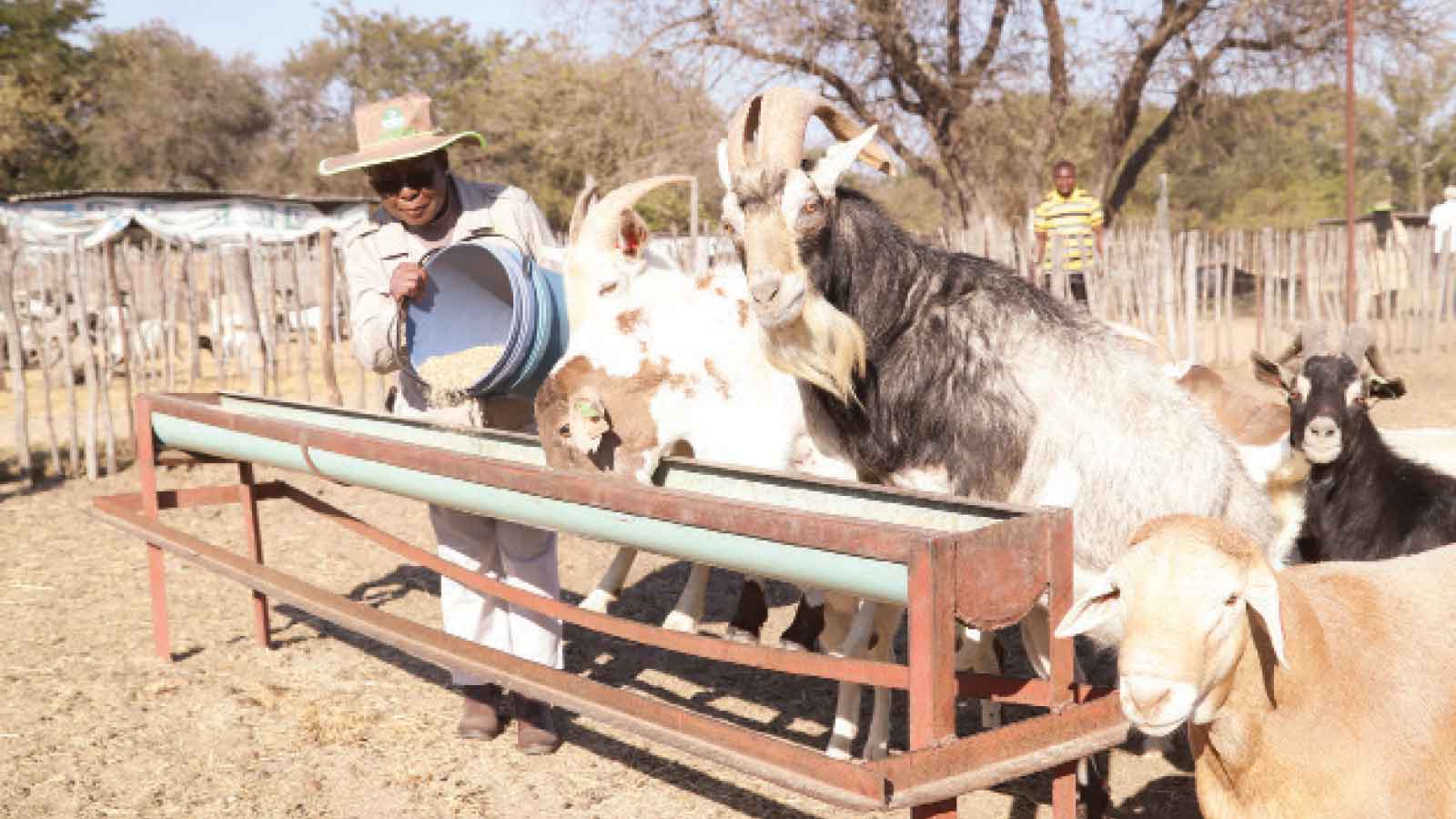
Theseus Mauruki Shambare
Herald Correspondent
BEFORE presenting Zimbabwe’s coveted livestock honour, Agriculture, Mechanisation and Water Resources Development Minister Dr Anxious Masuka, a man more often associated with statistics and big policy figures, set them aside and chose instead to tell a story.
It was about an athlete.
In the first race, the runner was so astonishingly fast that his rivals never really saw him. They followed only the swirling cloud of dust he left hanging in the air.
In the second race, there was no dust at all. His rivals laughed, convinced he had slowed down. Some eased their pace, certain the competition had finally caught up. But as they approached the finish line, officials delivered a startling verdict: the runner had already crossed.
He had become so fast that by the time the rest arrived, even the dust had settled.
Dr Masuka turned towards Dr Divine Simbi-Ndhlukula and allowed the metaphor to settle over the gathering at Zvikomborero Farms in Featherstone.
“That,” he said, “is where Zimbabwean agriculture is heading.”
At Zvikomborero Farms, that metaphor is not abstract. It is visible in the land, in the systems and in the people who move through it before sunrise. The dust of the Minister’s story, however, is not only symbolic.
It is remembered.
Tabeth Rwafa remembers 2019 differently. It was the year the drought tightened its grip on Featherstone and the surrounding communities, when pastures failed and herds became liabilities rather than assets.
The farm, she recalled, was forced into a frantic search for survival feed, hauling dry hay from as far as Goromonzi just to keep animals alive. It was expensive. It was uncertain. It was reactive.
Today, Rwafa’s silhouette framed by the golden light of an early Zimbabwean winter, she moves with a different kind of certainty. Her attention is no longer on the sky. It is on the grass.
“When I first came here, I thought looking after cattle meant feeding them and taking them to drink,” she said, watching a herd of breeding cows enter a fresh grazing block.
“Today I know we are actually looking after the grass first. Without healthy grass, there are no healthy cattle.”
That shift — from reacting to managing — is the quiet revolution that defines Zvikomborero Farms. Here, livestock production begins not in the kraal, but in the soil. For Tabeth, sixteen years on the farm have transformed her role from worker to steward.
The language she uses now belongs to ecosystems, not just animals. In the local Shona expression, Zvikomborero means blessings. But at the heart of this 2 300-hectare estate, 120 kilometres south of Harare, blessings are not assumed.
They are engineered through discipline, planning and restraint. At the centre of this system is a philosophy articulated by its founder and managing director, Dr Simbi-Ndhlukula.
“We do not inherit the land from our parents,” she said, standing at the edge of a paddock where Boer and Kalahari Red goats move in measured rhythm.
“We borrow it from the next generation.”
Her approach is rooted in a deliberate rejection of extractive agriculture. Instead of exhausting the land, the farm is designed to restore it while producing at scale. This is not a conventional ranch.
It is an interconnected climate-adaptation laboratory — a place where the traditional, destructive cycle of fire is replaced by the circular economy of conservation. That philosophy was validated on the national stage at the 2025 Zimbabwe Agricultural Show, where the farm’s champion Simbra stud bull secured top honours in the beef category, earning the coveted National Livestock Award sponsored by Coopers Animal Health.
Yet here, away from trophies and ceremonies, success is measured differently. It is measured in soil cover, in fodder reserves and in the absence of smoke.
Moving through the farm, the visitor is constantly reminded of this philosophy in the smallest of details — handwritten and weather-worn signposts reading “Do not litter,” “Avoid fires,” “Do not throw broken glass anywhere,” and “Keep the environment clean.”
At Zvikomborero, even order itself is part of the system, because burning is not just prohibited — it is replaced with a culture of care for every fragment of the landscape. Across Zimbabwe, the post-harvest season is often marked by fields set alight, a practice that clears land quickly but at a heavy environmental cost — stripping the soil of organic matter, destroying beneficial microorganisms, releasing carbon into the atmosphere and leaving the ground increasingly vulnerable to erosion and declining fertility.
Here, that practice has been deliberately abandoned. Instead, maize stalks, sorghum residues and grasses are collected, processed and stored. The result is a steady flow of silage production — hundreds of tonnes of conserved feed that carry livestock through the dry season without pressure on grazing land.
The air in the storage units is thick and slightly sweet, the smell of fermentation replacing the acrid sting of smoke that hangs over much of the countryside at the same time of year. The machinery that drives this system hums steadily — mills, mixers and pelletisers transforming what was once considered waste into structured feed resources.
Nothing is discarded. Nearby, long-serving livestock handler Eric Mahachi moves between feeding points with practiced precision.
“It used to be that you just threw feed at animals and hoped for the best,” he said.
“Now I check pasture condition, feed formulation and even weather patterns before we move livestock. I am not just a herdsman anymore. I am part of a system that thinks ahead.”
That system extends beyond cattle.
In climate-controlled units, thousands of broiler birds are raised under carefully managed conditions.
The operation is overseen by Queen Mutandakamwe, who describes a shift from intuition-based farming to precision livestock management.
“People see 10 000 birds and think it is overwhelming,” she said.
“But everything is controlled — temperature, airflow, nutrition. We are no longer guessing. We are managing outcomes.”
The same logic applies across species: cattle, goats, sheep, pigs and poultry are integrated into a single system designed to spread risk, maximise efficiency and reduce environmental strain.
This circular design extends even to poultry production, where used chicken bedding — naturally rich in ammonia and organic nutrients after broiler cycles — is carefully processed and repurposed as part of the broader nutrient cycle, ultimately contributing to cattle feed systems rather than becoming waste.
Technology anchors this approach.
Drone surveillance, soil monitoring and market data all feed into decision-making systems that allow managers to respond before problems escalate rather than after damage is done.
For Minister Masuka, this is the direction agriculture must take.
“Zimbabwe has long been called the breadbasket of Southern Africa,” he said.
“But we are moving beyond that. We want to be an agro-industrial hub where value is created, not just extracted.”
The transformation is not only technological. It is ecological. Where grazing is carefully managed, the land is given time to recover. Indigenous grasses are allowed to complete their natural cycles, flowering and seeding before livestock return. This quiet pause has brought subtle but important changes: pollinators are more visible, birdlife more active and ground cover more resilient. It is a reminder that productivity and restoration are not opposing forces, but interconnected ones.
Agricultural experts who have visited the farm say the model represents a shift in thinking.
Provincial Agricultural Director Mr Nomatter Manunure noted that adaptation is often misunderstood.
“Many farmers think adaptation begins when drought arrives,” he said. “Here, adaptation begins long before the rains stop. It is built into planning — pasture management, fodder conservation, water systems and livestock integration.”
Independent technical assessment reinforces this view.
Head of the Grasslands Research Institute, Mr Arcadius “Shortgun” Tigere emphasised that livestock health is inseparable from ecosystem management.
“Good animal health starts with nutrition and reduced stress,” he said.
“When animals enter the dry season in good condition because of proper grazing and conserved feed, disease outbreaks decline. Prevention is always more effective than treatment.”
External breeders, too, have taken notice.
Simmental breeder and Biano Farm owner Mr Obert Chinhamo assessed the herd during a recent visit.
“The animals are in excellent condition,” he observed.
“I would score them at around 3.5 on the Body Condition Score scale. They reflect disciplined management and consistent nutrition. It is the kind of condition that supports breeding efficiency and resilience.”
But perhaps the most telling transformation is not technical. It is human.
The farm has become a training ground for a new generation of agricultural practitioners.
Among them is Mercy Adaya, a former student who completed her attachment at Zvikomborero from 2025 to 2026, recently returned to the spotlight, not as an intern, but as the Overall Best Student at Africa University’s graduation.
Her success is a point of immense pride for the farm’s leadership.
“At college, we learned rotational grazing in textbooks,” Mercy recalled.
“But here, I saw it protecting the land in real-time.
“This experience shifted my perspective — I now understand that true climate-smart agriculture is about managing complex ecosystems rather than simply producing food. Zvikomborero did not just teach me how to farm; it taught me how to think like an innovator.”
Her story reflects a broader culture of learning embedded within the farm — one where classrooms extend into paddocks and data is tested against lived experience.
“Mercy’s achievement showcases the impact of our operations on knowledge creation and employability,” Dr Simbi-Ndhlukula said with pride.
“Our students consistently perform at the highest levels, earning academic awards and demonstrating a work ethic that sets them apart in the professional world. We are not just training workers; we are cultivating the next generation of agricultural leaders.”
This knowledge does not remain within the farm boundaries.
Through outreach programmes, groups of women in the Featherstone communal area have been supported to establish broiler production projects using day-old chicks and technical assistance.
For many households, this has created alternative income streams in a region where rainfall has become increasingly unreliable.
It is a small but significant extension of the farm’s philosophy: resilience must be shared if it is to be meaningful.
As the day draws to a close, the paddocks settle into stillness.
Livestock move into resting positions, feed systems slow and the machinery of production softens into background rhythm.
Tabeth Rwafa walks through the quieting landscape once more.
Earlier in the day she had received recognition for her work “Worker of the year” — a moment of acknowledgement in a routine defined by repetition and responsibility.
But she does not dwell on ceremony.
Her attention remains on the land, on tomorrow’s grazing plan, on the animals that will move before dawn returns.
The Minister’s story of the runner lingers over the farm like a shadow.
A race so fast that dust never had time to rise.
At Zvikomborero, the meaning has shifted.
The race is no longer against others. It is against drought, against degradation, against waste.
And in that race, the farm has learned something simple but profound: the fastest way forward is not to burn what came before, but to build what comes next.
Here, the smoke has gone.
The grass is returning.
And the dust, for now, has finally settled.