


 Online Reporter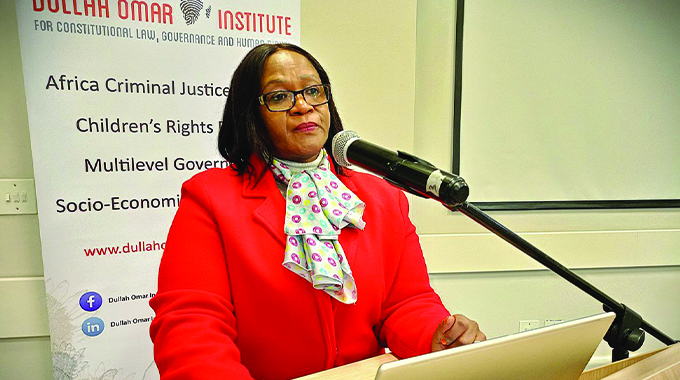
Moses Magadza in CAPE TOWN, South Africa
A SADC regional seminar on children’s rights and climate change got underway here on Wednesday, with the Deputy Speaker of the Parliament of Botswana, Mrs Helen Manyeneng, challenging regional parliamentarians to reimagine climate governance through the eyes of the region’s most vulnerable — its children.
Speaking at the opening of the seminar, Mrs Manyeneng, a member of the SADC Parliamentary Forum, made a call to action, warning that “the storm is already upon us” and children are bearing the brunt.
“We meet here not out of routine,” she told delegates gathered at the School of Public Health at the University of the Western Cape.
“We gather because the impact of climate change is neither abstract nor remote. It is immediate, it is devastating and it is disproportionately borne by the most vulnerable among us, our children.”
Held under the theme “Championing Collective Child-Responsive Climate Action”, the three-day seminar brings together researchers under the SADC PF Sweden-funded SRHR, HIV and AIDS Governance Project researchers, parliamentarians, civil society actors, academics and climate justice advocates to align regional strategies on child-sensitive climate governance.
Mrs Manyeneng highlighted the regional toll of climate change, including Cyclone Freddy’s devastation in Malawi, drought-induced food insecurity in Angola and Zimbabwe, as well as the destruction of over 6 000 classrooms in Madagascar.
She warned that such events are not isolated disasters but systemic assaults on children’s rights to health, education, protection and even life itself.
“Let me be abundantly clear: Climate change is a children’s rights crisis,” she declared.
She also criticised existing regional and national climate frameworks for continuing to overlook the distinct and urgent needs of children.
“This must change,” she said.
Citing the draft SADC Protocol on Children, especially Article 37 which outlines climate protections for children, Mrs Manyeneng said the legal framework exists but needs political will and concrete action.
“Protocols are only as powerful as the political will behind them.”
She appealed to national parliaments across SADC to use their constitutional mandates to integrate children’s rights into all climate-related laws, National Adaptation Plans (NAPs), and Nationally Determined Contributions (NDCs).
“Let us enshrine in our laws the right of every child to grow up in a healthy, safe and sustainable environment,” she added.
“Let us ensure that the voices of children — often spoken about but rarely spoken with — are central to decision-making processes on climate policy.”
The seminar focuses on practical solutions such as just energy transitions, climate financing, loss and damage, and legal innovations.
Mrs Manyeneng stressed that civil society and parliamentary collaboration would be vital.
“Legislation is where intention becomes obligation,” she said.
The regional seminar continues until July 4.



