tawandamusarurwa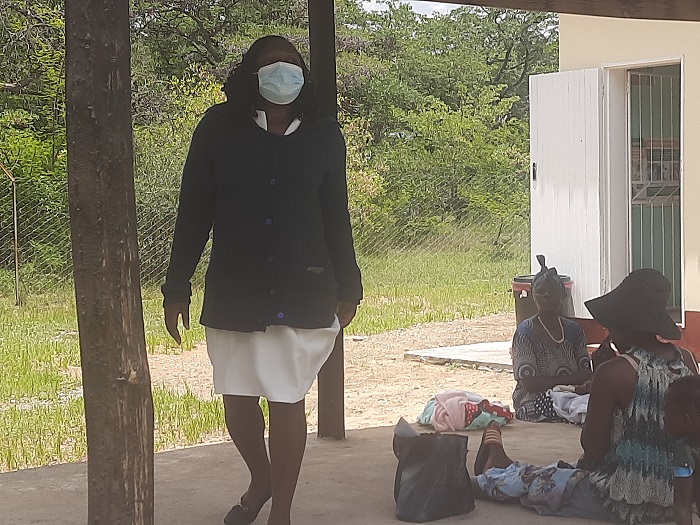
Online Reporter
RIVERDALE Health Care Centre, which was built last year in Vhungu district (Gweru Rural), is a product of a public-private partnership that has turned out to be a critical lifeline for residents in the resettlement area.
Those who previously struggled to access anti-retroviral treatment (ART), for instance, are now back on a consistent regimen.
The partnership involved Government, which donated a 6,2-hectare piece of land, while the Japanese Embassy funded construction and equipped the clinic.
Vhungu Rural District Council and a non-governmental organisation, Jointed Hands Welfare Organisation (JHWO), mobilised funds for a laboratory through the USAID Tuberculosis (TB) programme.
JHWO is a partner of the National Aids Council (NAC).
As the coordinating authority for the national response to HIV, NAC is operating with 15 partners targeting various groups in the district.
With the new health facility offering primary healthcare and laboratory services, community members no longer have to pay a hefty US$8 bus fare to travel to Gweru Provincial Hospital to access ART, as well as screening for sexually transmitted infections (STIs), HIV, malaria and TB.
Although the unique state-of-the-art health facility still requires about US$22 300 for completion, the clinic is solar-powered.
The facility also provides clean water from a borehole and conducts its own viral load testing, among other laboratory services.
This has reduced delays associated with travelling long distances by patients, as well as the time patients can be initiated on ART.
Ms Ennes Dube, her husband Mr Vusani Muyambo, their daughter Annie and niece Tsitsi Lois, who are all on ART, would typically require at least US$24 for bus fare to consult doctors at Gweru Provincial Hospital.
“There are times I missed taking my ARVs because I did not have any transport money to go to Gweru Hospital.
“At one time, I stopped taking my pills for three days and I had severe headaches and vomited as a result,” said Ms Dube.
“My husband was the one who got sick to the extent of being bedridden, but when he resumed his treatment, he never fell ill again.
“As for our child, she was sick and admitted because we did not have the money for these trips to and from Gweru Hospital to collect pills.
“This clinic is a relief to the four of us since it is within walking distance.”
With HIV prevalence in the area standing at 13,51 percent and with a high incidence rate of 0,32 percent – according to the 2021 National HIV estimates – the clinic plays a vital role.
Surrounding mining areas are hotspots for commercial sex work, which also pushes demand for STI and HIV medical services.
Ward 9 headman Mr Alex Mudzingwa said the clinic has thrown a lifeline for residents who now find it easier to access health care within walking distance.
“It is now easier for those on ART, as some were failing to get pills because of the distances in making the trip to Gweru urban.
“From here to Ascot, one needed at least US$3, and then from there into town, another US$1.
“So, imagine the burden. Now, we are thankful that the burden of sickness is now limited,” said Mr Mudzingwa.
The new resettlement area has a population of 10 000 people and is about 40 km from Gweru.
“Public-private partnerships are an initiative that we want to magnify to complement Government efforts by coming up with such facilities as we spread around the country,” said Mr Peter Dube, the JHWO programmes manager.
“It might not be a clinic, but a school or any social service.”
Built in a resettlement area dominated by commercial farming as well as mining activities, the clinic also houses nurses within its premises.
Ms Precious Nyarumbe, the only nurse at the clinic, said the workload had increased as more people are coming in their numbers.
“On a busy day, like Thursdays, I serve an average of 20 people. It is a good problem, because we know that people are aware that a healthcare facility is available for them,” she said.
Even community health workers like Ms Musa Matizanadzo now find it easier to carry out health education within the community, as she confidently knows a health facility is available to meet the various medical needs of the residents.



 Online Reporter