


 tawandamusarurwa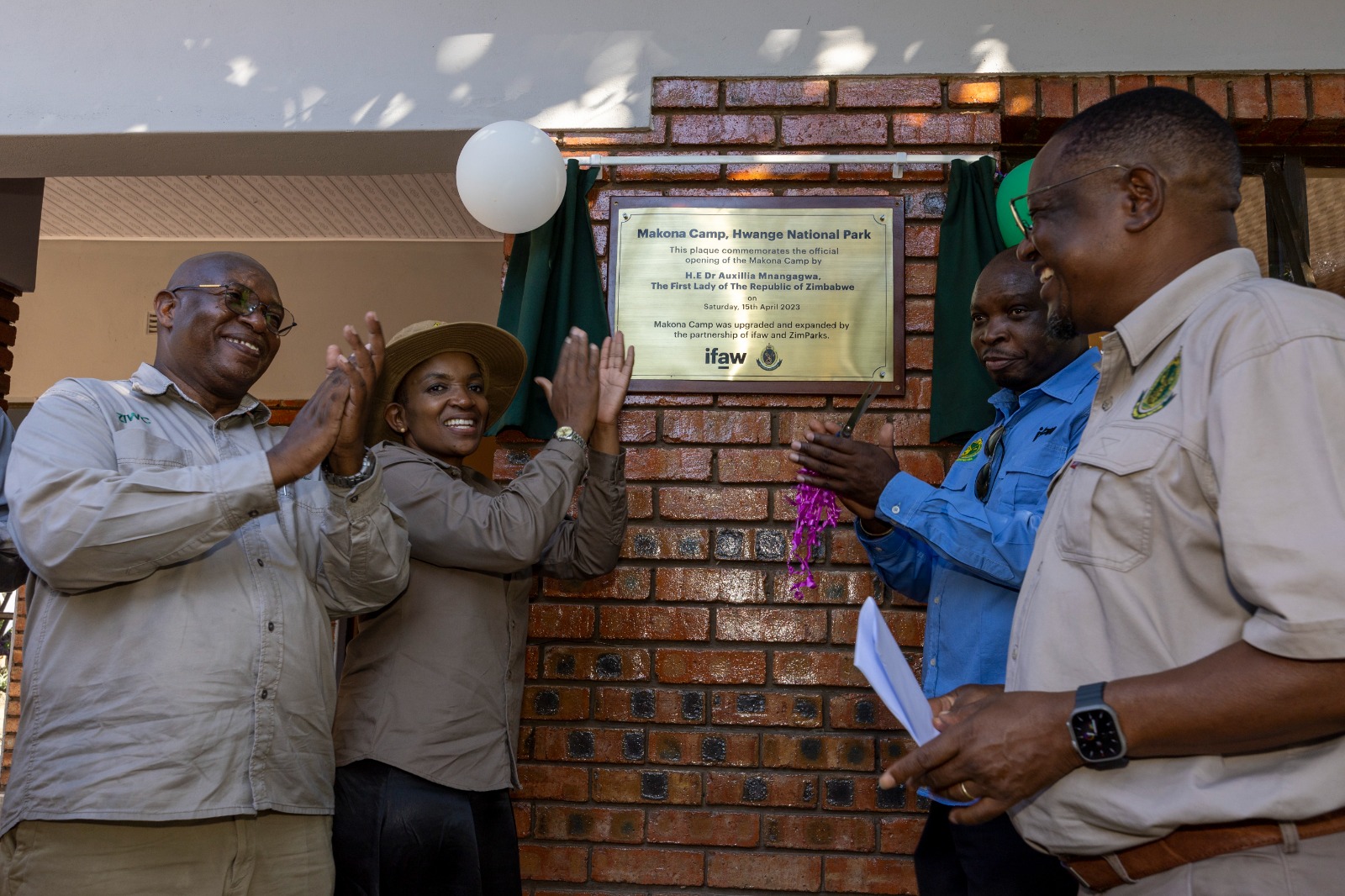
Online Reporter
Completion of the Makona Rangers Camp in Hwange National Park is expected to reduce poaching activities and help deal with high incidences of human-wildlife conflict in and around one of the country’s main tourist attractions.
The camp was built under a US$5 million facility agreed between the International Fund for Animal Welfare (IFAW) and the Zimbabwe Parks and Wildlife Management Authority (Zimparks) to undertake various animal conservation projects over five years.
IFAW has since disbursed US$3 million.
Development of the camp entailed construction of administration offices and eight houses to accommodate 16 rangers and their families.

Makona Camp, which is located about 95km south-west of the Hwange Main Camp, will be used to manage 4 500 square kilometres of the game park.
It is envisaged that the substation will also safeguard local communities from human-wildlife conflict through facilitating swift response from animal rangers.
Speaking during launch of the camp recently, Environment, Climate, Tourism and Hospitality Industry Deputy Minister Barbara Rwodzi said: “We are more than grateful to have IFAW as a partner. What I have seen here is not what I really expected. It is overwhelming to know that we can actually have an international partner who can assist with such a development.
“The Second Republic is geared to start projects, follow them through and, of course, finish them and get them to be as tangible as we have seen here.”

Zimparks director-general Mr Felton Mangwanya said the development was a step towards attainment of Vision 2030.
“The wildlife industry contributes significantly towards economic development, hence maximum efforts towards wildlife conservation goes a long way in contributing towards socio-economic development in Zimbabwe,” said Mr Mangwanya.
“Most importantly, our partners have also rendered support to improve the welfare of our rangers, who continue to tirelessly safeguard this precious resource.
“Ultimately, adequate protection of major ecosystems, key species and their habitats will yield an accrual of benefits to the people coexisting with wildlife and to the nation at large.”
IFAW vice president (global programmes and institutional giving) Dr Jimmel Mandima said the organisation was committed to working with Zimbabwe.
“As an organisation, we strongly believe that the planet is left with a few places that have healthy ecosystems, and Zimbabwe is one such country,” said Dr Mandima.
“We also acknowledge that most countries that are vested with global heritage have limited resources.
“So, our interest is to ensure that wildlife populations will thrive in perpetuity for future generation, hence the need to address people and wildlife issues.”


 Bongani Ndlovu
 Online Reporter