

 Chronicle Editor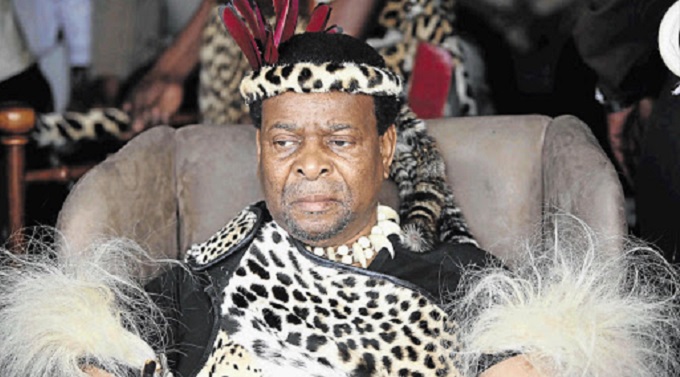
Cuthbert Mavheko
When Zulu king, Goodwill Zwelithini, made a statement in 2015 ordering foreigners to leave South Africa, he detonated a fire-bomb of xenophobic violence against foreigners, which played out like a script from a Hollywood horror movie.
Legions of Africans from Zimbabwe, Zambia, Nigeria, Mozambique and other countries suddenly found themselves at the mercy of marauding gangs of blood-thirsty hoodlums, who destroyed their homes, properties and businesses.
Some foreigners lost their jobs while others were butchered in cold blood.
In a similar vein, when Nelson Chamisa, the self-anointed “king “of opposition politics in Zimbabwe, threatened “kudira jecha musadza” (to make the country ungovernable) if he lost the harmonised elections last year, he torched a storm of violent protests which, on August 1, 2018, saw bands of unruly MDC-Alliance supporters, led by the notorious Vanguard, wreaking havoc in Harare’s Central Business District.
They viciously assaulted vendors, looted shops and destroyed property worth thousands of dollars. Six lives were lost during this horrific explosion of violence.
To add salt to injury, Chamisa’s militant supporters were at it again when, on January 14 this year, they went on an orgy of violent, countrywide demonstrations, epitomised by the wanton destruction of property, looting of shops and the barricading of roads with stones and burning tyres.
Again there was loss of innocent lives.
One distinctive feature, which characterises the deadly “afro-phobic” clashes in South Africa in 2015 and the recent anti-Government protests in the country is that they were all triggered by the inflammatory utterances of political demagogues, who seem to derive political dividend by whipping up the emotions of the generality of the citizenly.
Indeed, it presents a painful paradox to note that while President Mnangagwa is pursuing an aggressive re-engagement process to set the country’s economy on a growth trajectory, the MDC-Alliance is throwing a spanner into the works by organising illegal demonstrations intended to scare investors away.
It is crucially important to point out that those with money to invest in Zimbabwe to create jobs and national wealth will only do so if they are assured of the security of their investments.
One does not need to be well-versed in economics to know that the capacity of the economy to create and provide jobs is premised on its ability to grow in a stable environment.
When peace, unity, and stability prevail in the country and Zimbabweans from across the political divide work together as a team, the economy will grow, expand and create jobs, leading to greater prosperity for the nation.
Conversely, if Zimbabweans work at cross purposes, the economy will stagnate and it is ordinary Zimbabweans, in particular the unemployed youths, who will bear the brunt of suffering as there will be no jobs for them.
It is extremely sad, and indeed tragic, that some of our youths, for all their heralded education, are allowing themselves to be used as cannon fodder by selfish, power-hungry politicians who do not have the interests of the nation at heart and view political office, not as a means to serve the public, but as a means to personal glory and self-aggrandisement.
While it is an open secret that the Zimbabwe Congress of Trade Unions (ZCTU), the MDC-Alliance and some NGOs organised last month’s countrywide demonstrations it would, however, be naivety of monstrous dimensions to exonerate the US, whose meddling in the internal affairs of developing nations continues to stoke the fires of social and political unrest in many African countries.
The role being played by the US and its Western allies in the destabilisation of the economies of Third-World countries was unravelled in an article published in The Sunday Mail on February 23, 2014.
The article titled: “Solving the Great Conundrum …, How Africa Can Own Its Resources,” spells out, in clear and unambiguous terms, how the West creates crises in some African countries to cheaply access their natural resources.
“In 1974, the Government of President Hamani Diori of Niger was ousted because Diori, a staunch pro-West leader, asked for a better deal for Niger’s uranium ore resources, which were being mined by a French multinational company. Of course, the official reason for the coup was corruption, but if you believe that, you might also believe pigs can fly. Today, Niger is still producing uranium ore, which is still being mined and purchased by the French, but the country remains one of the poorest in Africa,” reads part of the article.
It is worth noting that while most African countries attained their political independence many years ago, economic independence has remained a pie in the sky.
Powerful nations, among them the US, France, and the UK continue to call the shots in these countries by controlling their economies.
The sad reality on the ground is that the grim reapers of hunger, disease, illiteracy, poverty and civil strife continue to wreak havoc on the African continent, leading to under-development in the midst of a vast ocean of natural resources.
It is generally accepted that Africa is the richest continent in the world in terms of natural resources. And yet, the majority of Africans today are sweltering in the scorching heat of poverty and repression. No wonder why one author described Africans as the world’s “richest poor people.”
In 2000, Zimbabwe broke the West’s stranglehold on its economy when it launched agrarian reforms, which saw land, which had been owned by a few white commercial farmers, being acquired by the Government and distributed to the landless indigenous citizenry.
However, this had a cost to it; the US, Britain and other Western and European nations hit back by imposing punitive economic sanctions against the country.
The sanctions, which were imposed against Zimbabwe, with the full support and backing of the MDC, have caused a lot of misery and suffering to ordinary Zimbabweans.
It is extremely difficult for me as a black African to understand the logic of the likes of Nelson Chamisa and Tendai Biti, who lobby for sanctions against their own motherland.
What satisfaction do they derive from the suffering of their own people?
It is clear that Chamisa and his cronies in the sinking MDC Alliance ship have never stopped to deeply ponder and reflect on the so-called aid “worth billions of US dollars”, which their snake charmer allies in the US are dangling before their greedy eyes.
The question they should ask themselves is this: How many African countries, which are purportedly in good books with the US, have attained economic development as a result of such “aid” from the imperial super power?
The simple answer is, none.
The bitter truth, which the leadership of the MDC-Alliance should swallow in huge gulps, is that the US will never give anything on a platter, unless they will take a banquet in return.
Parting shot: Zimbabwe has a plethora of minerals which include gold, silver, diamonds, chrome and some of the world’s largest platinum and lithium reserves. For so long we have watched these minerals being exploited for a song by multinational companies from the US, Britain, France, and so on.
It is this scribe’s humble submission that the time has now come for our Government to put its foot down and negotiate with multinational companies fair deals that will benefit the local citizenly economically.
– Cuthbert Mavheko is a freelance journalist based in Bulawayo and has contributed articles and short-stories to the Chronicle, Sunday News and other publications. Contact details: mobile phone- 0773 963 448; e-mail [email protected]



 Bongani Moyo
 Online Reporter