Online Reporter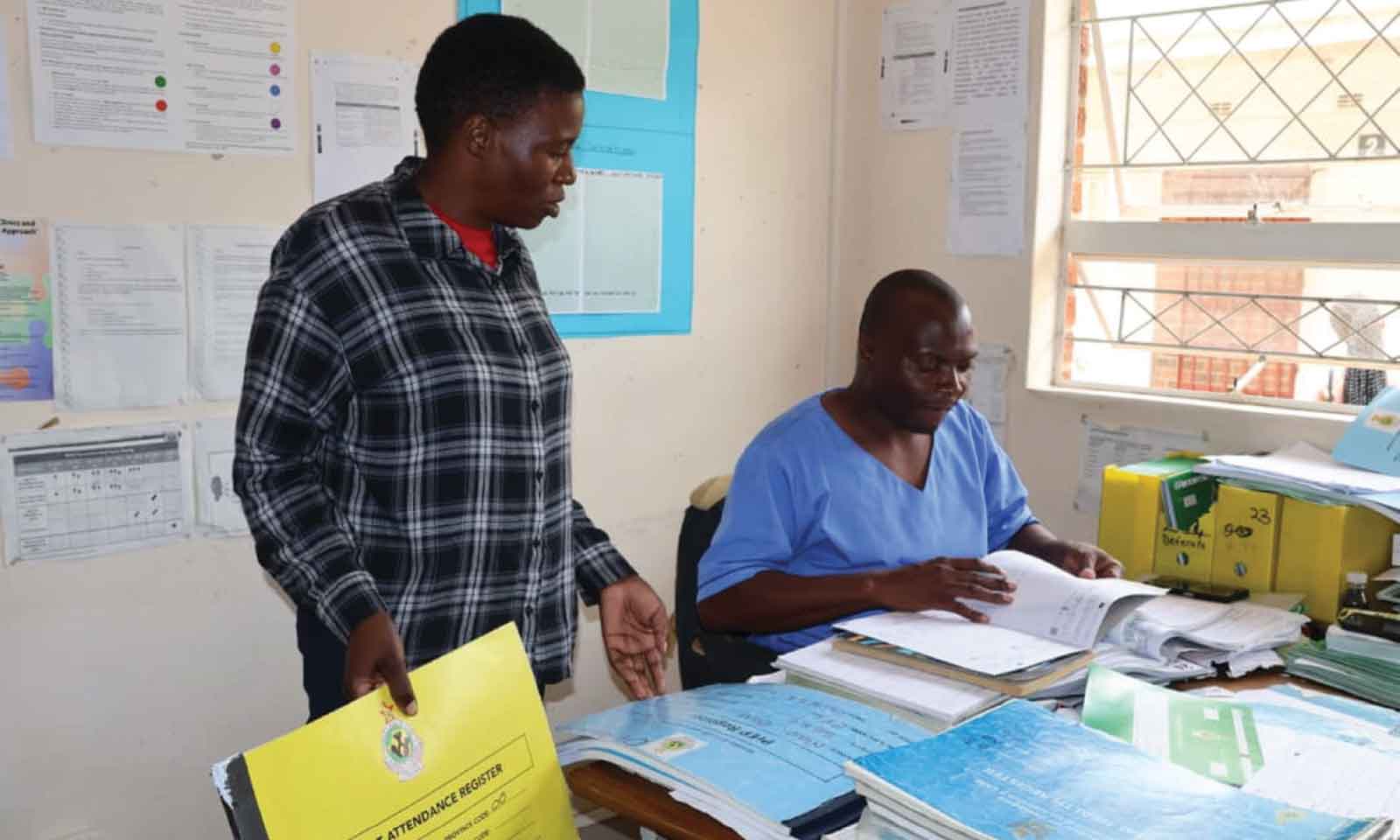
Theseus Shambare
Features Writer
ON a hot September afternoon in 2017, Beauty Magora stood outside a mobile HIV testing tent in Epworth, a bustling settlement located about 15 kilometres east of Harare, her palms sweating as she waited for the results she already knew.
She recalled the moment the counsellor gently pulled the paper strip aside and paused.
“I just knew it,” she told The Herald recently.
At 33, after 14 years in sex work, Beauty had tested HIV-positive. What followed was not just illness but exile.
Her family whispered. Neighbours avoided her and some clients vanished. And at the clinic, the place where she was supposed to receive healing, she met another form of suffering.
“The nurses would look at me like I wasn’t human,” she said. “Some refused to touch my health card. Others made me sit for hours, even when the queue was short.”
Her voice cracks once, then steadies.
“I thought HIV was going to kill me. But the stigma almost killed me first.”
Today, at 41, Beauty walks the same Epworth streets with a different purpose: to find others who are afraid — others who are hiding from treatment, from stigma, and from themselves.
She is no longer a victim. She is now a community champion, a lifeline for hundreds of sex workers and other key populations navigating the same terrain she once walked alone.
This is the story of one woman’s transformation — and how it sparked a quiet revolution in one of Zimbabwe’s most marginalised communities.
Zimbabwe’s HIV response has long been hailed as a global model. According to the Ministry of Health and Child Care, the country has surpassed the UNAIDS 95-95-95 targets.
Over 95 percent of HIV-positive people know their status, over 95 percent of those diagnosed are on treatment, and over 95 percent of those on treatment are virally suppressed.
National HIV prevalence has dropped to about 11,1 percent, mother-to-child transmission continues to decline, and community-led programming is increasingly recognised as essential to ending AIDS by 2030.
But progress is uneven. Key populations, including sex workers, men who have sex with men, transgender persons and people who use drugs, carry HIV prevalence rates several times higher than the general population.
A 2024 UNAIDS report showed that more than 60 percent of African sex workers have avoided healthcare at least once due to discrimination.
Beauty Magora was once one of them.
A life unravelled
After her diagnosis, Beauty struggled to accept her reality. She was a single mother of three — two sons and a daughter — all of whom depended entirely on her.
But her body grew weaker as she defaulted on treatment, sometimes skipping appointments simply to avoid humiliation.
“Imagine being told to wait until everyone has been served just because you are a sex worker.
Imagine people covering their noses when you walk in,” she said.
Her world collapsed inward. But Epworth Poly Clinic, backed by national policy shifts and development partners, was beginning its own transformation. The facility had started receiving training to better serve key populations.
Peer educators were being integrated and stigma-free service delivery models were being rolled out.
And that is where Beauty’s story began to change. One day, after weeks of defaulting, a nurse trained in KP-friendly care sat her down and spoke to her differently.
“She did not judge me. She treated me like a mother, a woman, a person,” Beauty recalled.
That conversation, and the counselling that followed, became her turning point. She returned to treatment and regained her strength.
She learned about viral suppression and how antiretroviral therapy (ART) could help her live long enough to see her grandchildren. And as her confidence grew, clinic staff encouraged her to join community structures.
She understood the fears sex workers lived with. She understood the nights they worked. She understood why many defaulted.
“I had walked that road. So, I knew where to find them,” she said.
A foot soldier in the fight against HIV
Beauty soon became an enhanced peer mobiliser (EPM) — one of the community cadres trained to identify, support and navigate sex workers back into care.
Her job was never easy. She moved through Epworth’s informal settlements — the crowded yards, dimly lit shacks, brothels and bars — looking for women who had stopped taking medication.
Sometimes she walked long distances between 11pm and dawn, hours when sex workers were most accessible.
“They trusted me because I never judged them. If they cried, I cried with them. If they were scared of nurses, I escorted them,” she said.
In one month alone, she personally traced 27 defaulters. Many returned to care and some avoided AIDS-related illnesses because of her intervention.
Her work provided something the formal system lacked: lived experience.
Clinic transformed, a community reborn
Epworth Poly Clinic’s matron, Elizabeth Chifuna, acknowledged that the facility itself had to change if people like Beauty were to survive.
During an online webinar recently organised by Epworth South legislator in partnership with Springs of Life Zimbabwe (SLZ), she said: “We embraced every person without discrimination. Key populations are not peripheral; they are central to achieving the 95-95-95 goals.”
The clinic introduced specialised rooms for key populations, fast-track systems to reduce stigma, sensitisation training for nurses, differentiated service delivery models and community dialogues and support groups.
The changes worked. Treatment uptake among sex workers increased and defaulting decreased, while peer navigation became an anchor.
Beauty became one of the strongest pillars in that ecosystem.
From sex worker to community champion
Her consistency, compassion and courage led to her promotion to community champion — the highest community-led position within the clinic’s KP programme.
In this role, she now mentors peer mobilisers, helps design outreach strategies, facilitates referrals to psychosocial and legal services, works closely with clinical staff on treatment outcomes and participates in dialogues shaping local policy.
Instead of hiding her sex work background or HIV status, she embraced both.
“That openness is my power. People trust the truth,” she said.
National response in transition
Springs of Life Zimbabwe (SLZ), a sex worker–led organisation, says Beauty embodies the future of Zimbabwe’s HIV response — community-driven, rights-based and resilient.
SLZ programmes coordinator, Ms Precious Msindo, said Beauty’s work demonstrates why “community-led models must remain at the centre of the HIV response.”
She explained that sex workers are not passive recipients of services but “experts who understand the barriers and know how to break them.”
Msindo noted Zimbabwe’s key gains, including wider access to ART, PrEP, PEP and sexually transmitted infections treatment, stronger viral suppression and expanded differentiated service delivery models.
She highlighted a major scientific step forward: the introduction of Lenacapavir, the twice-yearly HIV prevention injection.
“For sex workers who face mobility issues, police harassment or irregular clinic access, Lenacapavir is a game changer. But it must be rolled out fairly and without stigma,” she said.
She added that these gains remain incomplete without legal reform.
“Criminalisation fuels violence and keeps sex workers away from clinics. Decriminalisation is essential if Zimbabwe is to fully transform its HIV response,” she said.
At the national level, Health and Child Care Minister, Dr Douglas Mombeshora, has reassured Zimbabweans that HIV medication will remain accessible despite global funding concerns.
“We have ensured uninterrupted services,” he said.
He emphasised community involvement as essential to sustaining the HIV response.
The minister also cited advancements in viral load testing, HIV testing innovations, condom programming, youth-focused interventions and community-led monitoring.
But he acknowledged persistent challenges — stigma, gender-based violence and the criminalisation of sex work.
Zimbabwe’s HIV triumph is a national achievement, but its true heartbeat lies in people like Beauty, women who refuse to be defined by stigma or constrained by fear.
Her resilience has saved lives. Her courage has restored dignity.
And her leadership has become a blueprint for community-driven health systems strengthening.
When asked what she wants most now, she smiled.
“I want to live long. I want to see my grandchildren. And I want every woman like me to live long enough to see theirs too,” she said.
As Zimbabwe joins the international community in marking World AIDS Day, Beauty stands as a reminder that behind every statistic is a human life.
Progress is not measured only by targets met, but by the lives reclaimed, the dignity restored and the voices once silenced now leading the way.