Online Reporter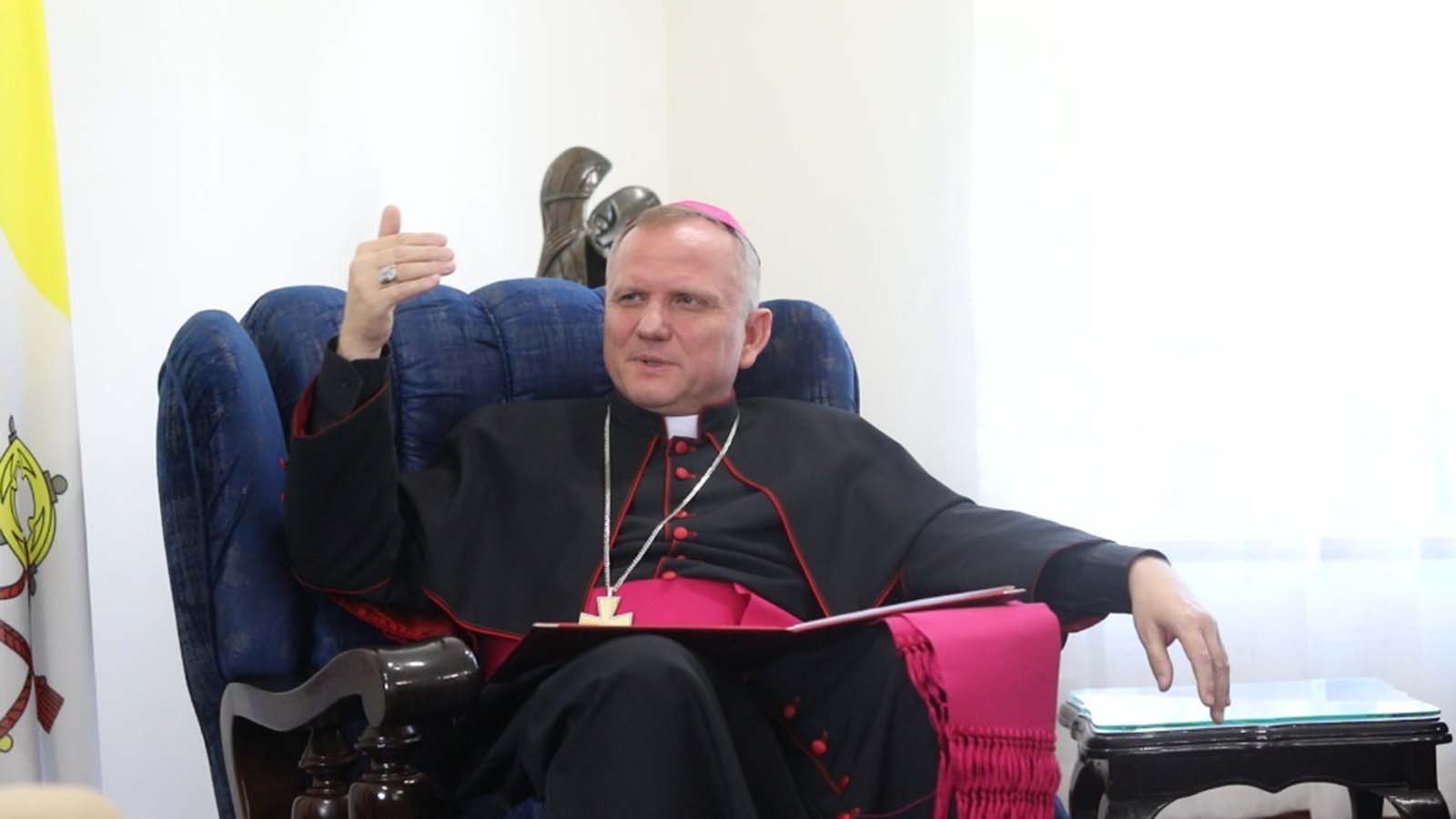
Gibson Nyikadzino
Zimpapers Politics Hub
Young Zimbabweans should focus on working together for their country’s success rather than seeking opportunities abroad, as no other place can truly address their expectations, the Vatican’s Ambassador to Zimbabwe, Archbishop Janusz Urbańczyk, has said.
In an interview with the Zimpapers Politics Hub, Archbishop Urbańczyk emphasised the importance of cultural identity for Zimbabwe’s youth, saying that it enables them to become builders of bridges between people, cultures, and religions, while preventing marginalisation, exclusion and isolation.
He noted that the key dimensions shaping Zimbabwe’s future economy will be realised when young people embrace the values necessary to build a better future for all.
“I would like to think and to imagine young people of Zimbabwe that they really want to have a home here in Zimbabwe, that they will not look for a home abroad,” Archbishop Urbańczyk said. “Zimbabwe is the country that can address their expectations, their needs, and that they can work together to build a better future.”
He advised young Zimbabweans to remain hopeful and never compromise on values, as these are prerequisites for achieving a better life and ensuring that Zimbabwe grows in a genuinely African manner. He added that national development is not merely about money, but about truth, charity, moral responsibility and solidarity.
“I advise the young people of Zimbabwe not to lose hope and never to compromise the values and high standards that are prerequisites for the achievement of a better life,” he said. “In the teaching of the Church, we learn that national development is not only about money, projects, or politics. Instead, it is about the integral development of the whole person, guided by truth, charity, moral responsibility and solidarity, so that Zimbabwe can grow in a way that is genuinely African, respectful of cultural identity and open to cooperation across communities and nations.”
Archbishop Urbańczyk also highlighted that relations between Zimbabwe and the Vatican are strengthened by the Catholic Church’s practical contributions to education, health care, and social services—all aimed at the integral development of the human person, especially those most in need.