peter
peterVincent Gono, Features Editor
THE recent drive by the Second Republic where it is opening up airwaves and giving the country’s communities a voice is enhancing democracy, development and the devolution agenda while reinforcing cultural identities.
Prior to the coming in of the Second Republic, the airwaves have been shut to players both community and commercial.
The country only had Zimbabwe Broadcasting Corporation (ZBC) — a state broadcaster and several of its radio stations from where the “pluralism without diversity” phrase was academically premised.
The phrase meant that there were more radio stations under the same banner and propagating the same message.
In other words, there was no diversity of views in the content carried.
Regionally, the country was behind in filling the important gaps of a true democratic society in as far as guaranteeing freedom of expression through providing the necessary platforms for such.
Other areas had no access to the national broadcaster due to lack of efficient transmission.

They existed as isolated parts of the whole while border areas had access to radio and television programmes from neighbouring countries.
This had a serious identity creation effect in the country’s communities as people identified more with media products they were exposed to since identity is largely a social construct.
Media therefore, plays an important role in the socialisation of individuals and through the process of socialisation, identities are created and maintained.
The coming in of the Second Republic saw the country getting into the fast lane — opening up airwaves and the media space in general to enhance democracy, pluralism and diversity of views as well as reinforcing national and cultural identities.
Zimbabwe, has so far through the Ministry of Information, Publicity and Broadcasting Services issued 14 community radio stations countrywide in addition to a number of commercial radio stations, a loud statement that the Government is eager to empower its communities in line with the devolution agenda.
It is also walking the talk in ensuring “no one and no place is left behind” in the national development programmes.
The radio stations both community and commercial are expected to amplify the people’s voices and broaden the public sphere from where national development discourses are shaped.
Buttressing the work of the Second Republic, Minister of Information, Publicity and Broadcasting Services, Senator Monica Mutsvangwa said the community radio stations should be used to promote sustainable development as well as local languages.

Commissioning Nyangani FM in Nyanga in the Manicaland Province, she said the new community radio stations should promote national culture, development and should not lose sight of the rich historical narratives that defined the country urging that the liberation struggle should be part of the stations critical content.
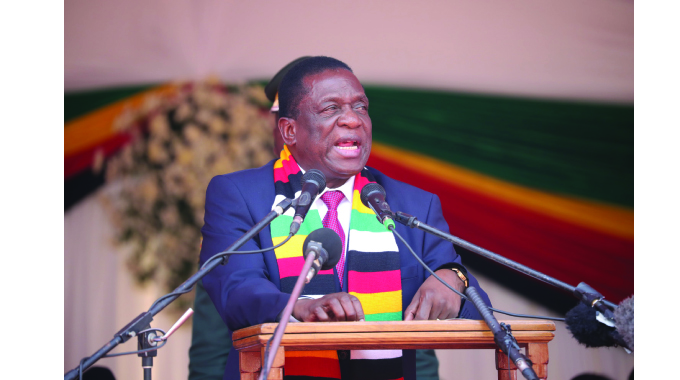
The commissioning of Nyangani FM follows the launch of Avuxeni FM in Chiredzi as part of President Mnangagwa’s drive to give everyone a voice.
“To date, the Second Republic through the Ministry of Information, Publicity and Broadcasting Services has licensed 14 community radio stations and seven campus radio stations.
The Government also repealed the Access to Information and Protection of Privacy Act (Aippa) and replaced it with the friendly Freedom of Information Act.
Early this year we launched one of the community radio stations, Avuxeni FM, in Chiredzi.
The radio station is now fully functional and has been warmly received by the Chiredzi community and those from surrounding areas.
“It brings joy to us to be able to give a voice to the marginalised and previously left out communities.
The aim of all the above-mentioned efforts is to make sure that we give voices to everyone in our country and to make sure that we leave no one and no place behind,” said Minister Mutsvangwa.
The idea where community radio stations are established in diverse and previously minority language territories should also be highlighted to mean a desire to preserve languages.
Language is another important marker that people use to identify themselves as belonging to a certain culture and to identify those who do not belong.
A language is a significant part of a person’s culture and cultural values and norms are often best expressed in a culture’s own language.
Language therefore, is an undoubted marker of one’s identity and the media play a role in ensuring that languages do not die in an effort to preserve identity and diversity through broadcasting in those languages.

Media lecturer and analyst Dr Gift Gwindingwe lauded efforts of the Second Republic saying the opening up of airwaves particularly community radios was a positive drive in achieving a pluralist media.
“We applaud the Government drive to open up the airwaves through the licensing of radio and television both community and commercial and this is for quite a number of reasons.
We want to look at the media as invited spaces and as participatory platforms where in community radios people willingly participate, where people have access to air their views concerning their own local resources, how those resources must be utilised, how those resources must be shared and how they should benefit local people.
This is an enlargement of the public sphere for the local people,” he said.
He noted that plurality of media platforms was quite beneficiary because it enhances cross-pollination of ideas amongst locals.
“Media is a market place of ideas and aid development.
It also promotes democracy.

So, we applaud this because we say Zimbabwe has now walked the talk in aligning herself with international best practices on media freedom and freedom of expression as enunciated in the United Nations Charter, as enshrined in Article 19 of the Universal Declaration of the Human Rights,” said Dr Gwindingwe.
He submitted that community media provided information and education on local heritage sites, on personal identities and local cultural artefacts adding that there was enhanced use of media in communities for economic development.
“There is also a participatory developmental approach which identifies with local people thereby creating a sense of belonging and a sense of pride,” he said.
Dr Gwindingwe said freedom of expression was going to be enhanced as community media makes certain marginalised identities visible.
“When you speak to particular local identities you are raising their awareness culturally as well as economically so we are saying the Government is holding one of the fundamental human rights which is freedom of expression.
And when the Government expands the invited space inform of opening up airwaves it is a giant step that brings Zimbabwe to drink from the same universal tap as well as regional tap which is the Windhoek Declaration of 1991 which puts thrust on press or media freedom.

There was a landmark Windhoek Declaration on promoting independent and pluralistic media which was issued on May 3, 1991 at a seminar that was organised by Unesco and we are saying Zimbabwe is walking in the same path,” said Dr Gwindingwe.
Veteran journalist and journalism lecturer Mr Methuseli Moyo said opening up of the air waves would help deepen democracy as it increases access to the media, especially local media by local communities to express local aspirations and mobilise each other towards goals.
“This is critical as it will anchor the move towards devolution from the centre to everywhere and make sure no one is left behind.
Access to media is key,” said Mr Moyo.
He posited that opening up airwaves would also create platforms for local talent to express itself in community media, thereby encouraging creativity.
“Local media will also help communities to express themselves culturally so as to enjoy and celebrate their identity.”
Renowned artiste Raisedon Baya weighed in saying the opening up of airwaves was quite welcome.
“It creates more opportunities and competition.
It is a very welcome development.
However, we are hoping that those who got the licences have resources to create programmes and pay creatives.
Our complaints as artistes with previous set up were limited opportunities and non-payment,” said Baya.



 Online Reporter